

The short version
Two filings, one direction: more spending, more gas, and coal that runs longer
Ameren Missouri, the state’s largest electric utility, is asking the Missouri Public Service Commission for two very different things at the same time. In a rate case filed on June 26, 2026, it wants permission to collect about $343 million more each year from electric customers, an increase of roughly 10.4%. The company estimates that an average home using 1,011 kilowatt-hours a month would pay about $13 more on its monthly bill. If approved, it would be the fourth electric base-rate increase since 2021. Three months later, on September 28, 2026, the company filed a new 20-year integrated resource plan — its roadmap for what power plants to build and close — that adds 10.6 gigawatts of new natural gas generation, keeps two units at its Labadie coal plant running six years longer than previously planned, and delays the retirement of its Sioux coal plant to the end of 2035.
The link between the two filings is demand. Since the start of 2026, Ameren says, it has signed electric service agreements with large customers — overwhelmingly data centers — totaling 2.8 gigawatts of expected demand by 2030. Its previous plan, filed just a year earlier, assumed 1.5 gigawatts of large-load demand by 2032. In the company’s words, the new contracts are “well above” what it planned for. Ameren now forecasts that base customer sales will rise 60% between 2027 and 2030.
The rate case and the plan are not the same kind of document, and they should not be confused. The rate case is a formal request to change what customers pay; the commission must decide it by June 1, 2027, after testimony, hearings and, often, a negotiated settlement. The resource plan is not an approval of anything. Under Missouri’s rules it is a planning filing that commission staff and outside parties review for deficiencies; individual power plants still require separate certificates from the commission, and their costs are reviewed in later rate cases. Some pieces of the plan have already been approved that way. Others are proposals that may change.
This article also examines three questions readers have raised about these filings: whether data centers are pushing up natural gas bills as well as electric bills, what the U.S. Environmental Protection Agency thinks about utilities keeping coal plants open longer, and what testing is — or is not — being done on the pollution from Ameren’s plants, and why. The answers are more specific, and in places more surprising, than the debate around them suggests.
What the record shows, in six lines
- Pending, not approved: a $343 million (10.4%) electric increase, case ER-2026-0291; Ameren estimates about $13 a month for an average home. A decision is due by June 1, 2027.
- No gas base-rate case is pending. Ameren’s last gas case raised delivery rates by $31.5 million on September 1, 2025; its purchased-gas charge rose about 7.6% on November 1, 2025.
- A plan, not an approval: the 2026 resource plan adds 10.6 GW of gas plants by 2045, up from 6.1 GW in the 2025 plan, and makes gas about 60% of Ameren’s energy mix in 2045.
- Coal runs longer: Labadie’s four units would all retire by the end of 2042 (two were set for 2036); Sioux by the end of 2035 (it was 2032 in the 2023 plan).
- Gas bills and data centers: no study found quantifies a data-center effect on residential gas bills; federal data tie 2025–2026 gas price swings mainly to weather, exports and storage. The documented data-center cost pressures are on the electric side.
- The EPA is loosening, not tightening: it finalized repeal of most 2024 power-plant carbon standards in September 2026, repealed the 2024 mercury-rule tightening, and delayed coal-ash and wastewater deadlines.
The company
Who Ameren Missouri is, and who it serves
Ameren Missouri is the Missouri subsidiary of Ameren Corporation, a St. Louis-based holding company that also owns Ameren Illinois and a transmission business. According to Ameren’s March 2026 corporate fact sheet, Ameren Missouri provides electric service to approximately 1.3 million customers across central and eastern Missouri, in about 60 counties and more than 500 communities; more than half of those customers are in the greater St. Louis area. It is a vertically integrated utility, meaning it owns the power plants as well as the wires, and it earns a regulated return on the money it invests in both.
On the gas side, Ameren Missouri is much smaller. The same fact sheet describes it as the state’s second-largest distributor of natural gas, serving approximately 135,000 customers in more than 90 communities, mostly towns in southeast, central and eastern Missouri. That distinction matters for anyone trying to connect Ameren’s plans to their gas bill: most households in St. Louis city and St. Louis County buy their gas from Spire Missouri, a different company regulated in separate cases, not from Ameren.
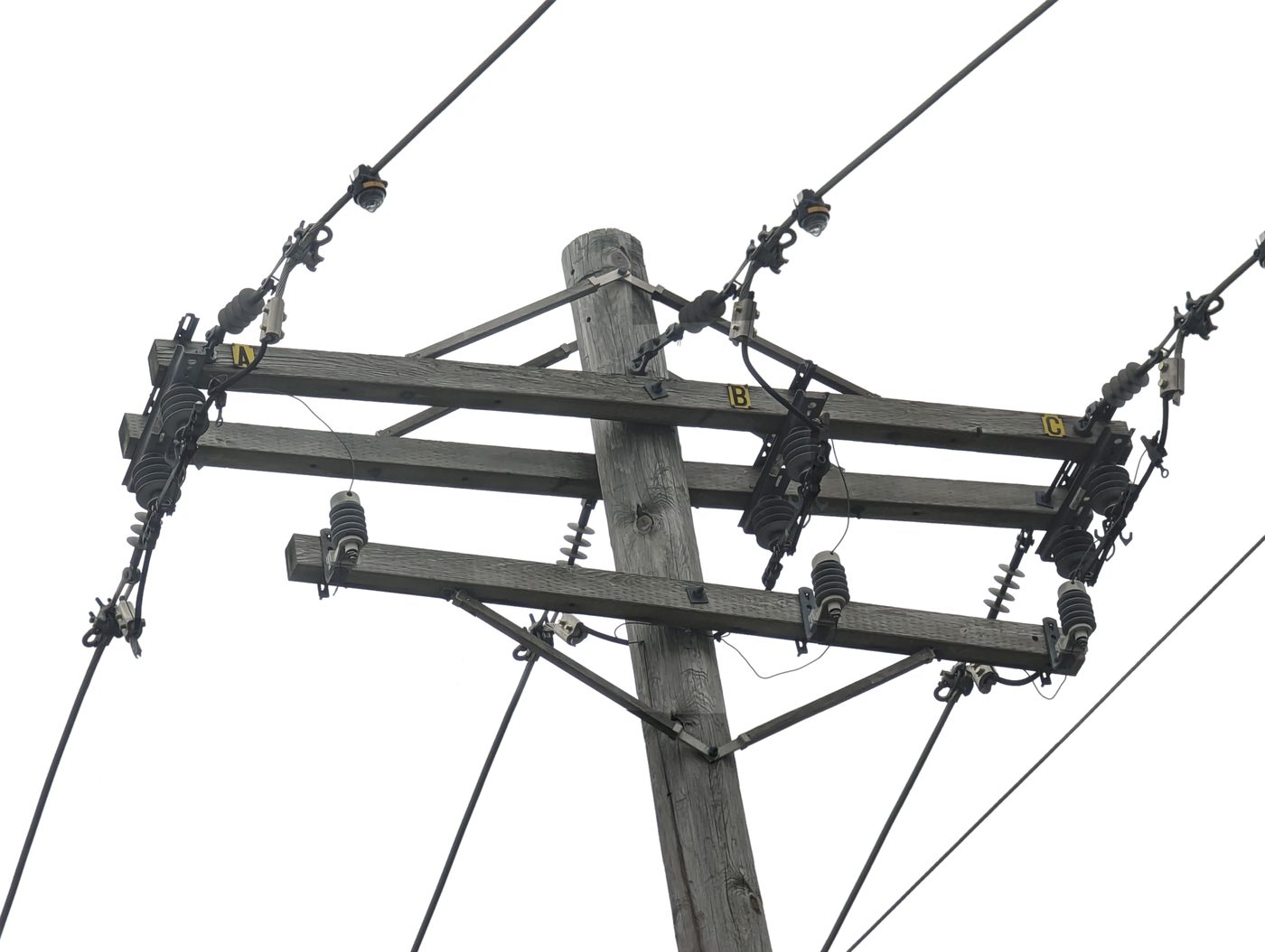
Ameren Missouri’s generating fleet is dominated by a few large plants. The fact sheet lists the Labadie Energy Center in Franklin County, a 2,372-megawatt coal plant that began operating in 1970; the Sioux Energy Center in St. Charles County, a 972-megawatt coal plant that began operating in 1967; and the Callaway Energy Center in Callaway County, a 1,194-megawatt nuclear plant that began operating in 1984. It also owns natural-gas or oil-fired combustion turbines, including the 608-megawatt Audrain Energy Center in Audrain County and the 438-megawatt Goose Creek Energy Center in Piatt County, Illinois, as well as hydroelectric, wind and solar facilities. Two older coal plants are gone: Rush Island in Jefferson County was retired in October 2024, and the Meramec plant in south St. Louis County, whose site now hosts a new gas plant under construction, closed earlier.
The company’s leadership has changed recently. Mark Birk, its longtime president, retired effective October 2, 2025, according to an Ameren securities filing. On May 21, 2026, Ameren announced that Aaron Melda, who came from the Tennessee Valley Authority, had been named chairman and president of Ameren Missouri. Melda is the executive quoted in both the rate case announcement and the resource plan announcement.
The rate request
What Ameren is asking customers to pay, and why it says it needs the money
The pending electric case is docketed at the Public Service Commission as ER-2026-0291. In its filing letter, Ameren’s counsel wrote that the proposed tariffs were designed “to increase Ameren Missouri’s electric base rate annual revenues by approximately $343 million.” A schedule attached to the letter puts the precise figure at $342,883,000, “an overall increase of approximately 10.4%.”
The increase would not be spread evenly. According to the company’s own schedules, residential customers would pay about $171.2 million more, a 10.2% increase that works out to roughly $154.53 a year for the typical residential customer. Small general service customers would see 10.6%, large general service customers 10.7% and large primary service customers 10.6%. The filing also proposes a new rate class, 14(M) Large Load Customer Service, for the data centers and other very large users that the commission ordered Ameren to treat separately in an earlier case.
Inside the residential rate, testimony filed with the case shows the fixed monthly customer charge rising from $9.00 to $9.96, and the summer energy charge rising from 15.60 cents to 17.27 cents per kilowatt-hour. Those figures come from proposed tariff sheets and could change in a settlement.
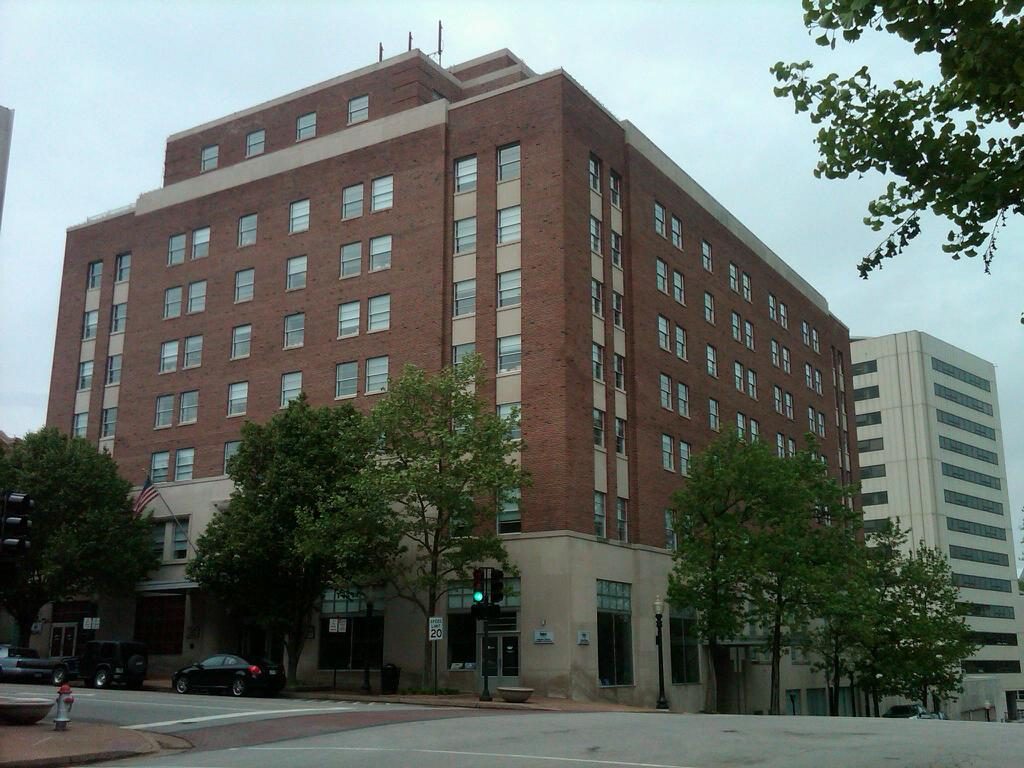
The company’s reasons. Ameren’s filing letter attributes the request to “investments in the Ameren Missouri grid and generation resources, increases in the cost of capital since the Company’s last rate review, and changes in other costs.” Its quarterly report to investors lists transmission and distribution investment and “investments in existing generation resources and 400 MWs of new generation,” partly offset by “accelerating the return of investment tax credits.” The June 26 news release adds storm rebuilding after the spring 2025 tornadoes in North St. Louis and Southeast Missouri, upgrades at Labadie, a conversion of the Audrain gas plant to run on two fuels, and three new energy centers totaling 400 megawatts expected in service by the end of 2026.
“Our responsibility is to provide safe, reliable and affordable service for Missouri families and businesses,” Melda said in the release. “The investments we are making today are supporting reliability and strengthening storm resilience.” Rob Dixon, Ameren Missouri’s vice president of regulatory, legislative and external affairs, told St. Louis Public Radio: “There’s never a good time to ask to adjust electric rates, but it’s necessary to maintain the grid. … This request reflects the infrastructure investments that we’ve already made.”
The return on equity. Utilities do not earn profit on electricity sales the way a store earns profit on goods; they earn a return on the capital they invest, set by regulators. Ameren is asking for a 10.25% return on equity. Its cost-of-capital witness, Bulkley, testified that “a range for the Company’s ROE from 10.25 to 11.25 percent is reasonable” and described the request as “at the low end.” According to the company’s second-quarter report, the case assumes a capital structure of 52% common equity, a rate base of $16.7 billion, a test year ending March 31, 2026, and a true-up through December 31, 2026. Commission staff and the Office of the Public Counsel, which represents residential and small-business customers, have not yet filed their own recommendations; those are due December 4, 2026. In Ameren’s last electric case, the commission approved a settlement that did not specify a return on equity, and Ameren told investors that staff’s midpoint recommendation in that case had been 9.74%.
The data-center question in this case. Because the rate request comes amid Ameren’s data-center contracts, the company has gone out of its way to separate the two. Dixon’s written testimony says flatly: “Data centers are not driving this request.” He testified that revenue from large-load customers would “lower the revenue requirement in this case by more than $10 million annually.” Ameren’s release puts the figure at about $11 million a year, or $21 million in projected base-rate savings over two years, and says the company “is not currently serving any large load data center customers.” Dixon added in the release: “New data centers receive no discounts on their electric rates and are already beginning to pay for infrastructure that benefits all customers.” Those are the company’s claims; staff and other parties have not yet tested them in testimony. A television report in September cited different figures for the data-center effect that do not reconcile with Ameren’s and could not be verified for this article.
The issue has drawn political attention. State Rep. Brad Christ, a Republican from St. Louis County, filed comments in the case on September 14, 2026. “Homeowners should not be asked to finance the infrastructure needed for a massive new data center,” he told KCTV5.
A new low-income discount. The filing proposes an income-eligible rate: households with income below 150% of the federal poverty level would receive 20% off base-rate charges, and households between 150% and 200% would receive 10% off. “Our proposed new income-eligible discount rate would offset this proposed adjustment for our most vulnerable customers,” said Joe Solari, Ameren’s vice president of customer experience.
Who is at the table. On July 30, 2026, the commission granted intervention to a group of parties that itself tells a story about the case: Consumers Council of Missouri, the Sierra Club, three locals of the International Brotherhood of Electrical Workers, the Missouri Industrial Energy Consumers, the Midwest Energy Consumers Group, Google, Amazon Data Services and two entities named Warrenton DC Owner 1 and Warrenton DC Owner 2. Renew Missouri, a clean-energy advocacy group that has participated in earlier Ameren cases, was denied intervention because it filed late; its filing said it had “misread the test year response date … as the intervention deadline.” The commission’s order records Chairman Hahn and Commissioners Coleman, Kolkmeyer and Mitchell concurring.
| Date | Step | Status |
|---|---|---|
| June 26, 2026 | Ameren files request (~$343 million, 10.4%) | Done |
| July 8, 2026 | Commission suspends tariffs until June 1, 2027 | Done |
| Dec. 4, 2026 | Staff and other parties file revenue-requirement testimony | Scheduled |
| Dec. 18, 2026 | Rate design testimony | Scheduled |
| Jan. 19–26, 2027 | Local public hearings (Cape Girardeau, St. Charles, St. Louis, Jefferson City, Sunset Hills, two virtual) | Proposed Oct. 9, 2026; not yet ordered |
| Feb. 18–19, 2027 | Settlement conference | Scheduled |
| Mar. 15–26, 2027 | Evidentiary hearing | Scheduled |
| By June 1, 2027 | Commission decision; new rates take effect | Statutory deadline |
Source: Missouri PSC orders of July 8, July 30 and Aug. 5, 2026, and the joint proposal for local public hearings filed Oct. 9, 2026, in ER-2026-0291 (EFIS). Dates for local hearings are a proposal by staff, Ameren and the Public Counsel and may change when the commission rules.
Customers who want to comment can call the commission at 800-392-4211 or submit comments through the commission’s electronic filing system, citing case number ER-2026-0291.
The pattern
Requested versus approved: Ameren’s rate cases since 2019
The phrase “yet another rate increase” is accurate as a description of the trend, but the record shows something more specific: Ameren has asked for more than it received in every electric case since 2021, and the commission has approved substantial increases each time. Since 2021, electric base-rate increases took effect in February 2022, July 2023 and June 2025. The 2026 request is the fourth in about five years. Some news coverage has described it as the third; that count appears to leave out one of the earlier cases.
| Case | Type | Requested | Approved | Rates effective |
|---|---|---|---|---|
| ER-2019-0335 | Electric | $1 million decrease | $32 million decrease | Apr. 1, 2020 |
| ER-2021-0240 | Electric | ~$299 million | $220 million | Feb. 28, 2022 |
| ER-2022-0337 | Electric | $316 million | $140 million | July 9, 2023 |
| ER-2024-0319 | Electric | ~$446 million (15.5%) | $355 million | June 1, 2025 |
| ER-2026-0291 | Electric | ~$343 million (10.4%) | Pending | By June 1, 2027 |
| GR-2019-0077 | Gas | Not confirmed | ~$1 million decrease | Sept. 1, 2019 |
| GR-2021-0241 | Gas | ~$9.4 million | $5.0 million | Feb. 28, 2022 |
| GR-2024-0369 | Gas | $39.6 million | $31.5 million | Sept. 1, 2025 |
Source: PSC orders and Ameren SEC filings for each case (listed in Sources). Period: cases filed 2021–2026, labeled by filing year. Unit: change in annual base-rate revenue, millions of dollars. Muted bars = requested; solid bars = approved. Method: requested = amount in the original filing (2021 figure approximate); approved = amount in the commission’s order or approved settlement. Limitation: base-rate changes are only part of a bill; fuel-adjustment, securitization and other riders change separately, and the dollar figures are not adjusted for inflation or customer growth.
The approved-versus-requested gap is not unusual in utility regulation; companies typically open with their full case, and settlements and commission orders cut it back. But the trend in what customers actually pay is unambiguous. Across the three electric increase cases filed from 2021 through 2024, Ameren asked for about $1.06 billion in annual increases and received $715 million — about two-thirds. In the 2024 case, the commission approved a “black box” settlement — one that sets a total without specifying every underlying number — for a $355 million increase, effective June 1, 2025, and left the $9.00 residential customer charge unchanged. That case drew seven local public hearings, and the parties in the current case have asked for a larger room in Sunset Hills because the 2024 venue “was too small.”
Charges outside the base-rate case. Base rates are not the only way bills change. Three other mechanisms move Ameren Missouri bills between rate cases:
The fuel adjustment clause lets Ameren pass through 95% of changes in its net fuel and purchased-power costs without a full rate case. In an order effective June 1, 2026, the commission approved an adjustment covering a period that ended January 31, 2026 — the month of Winter Storm Fern — totaling $94,895,139, which the order said would raise a typical residential bill at 1,000 kWh a month by about $3.54.
Plant-in-service accounting, a state law known as PISA, allows Ameren to defer 85% of the depreciation on qualifying new grid investments and earn a return on that deferred amount until its next rate case. Ameren’s annual report says the law’s cap on resulting rate increases changed from 2.5% to 2.25% for revenue requirements approved after August 2025, and the program now runs through 2035, with a possible extension to 2040. Ameren describes its roughly $20.8 billion “Smart Energy Plan” for 2026–2030 as “largely recoverable under the PISA.”
Securitization is the third. When Ameren retired Rush Island early, it financed the remaining costs with $476 million in bonds at 4.85%, issued in December 2024 and due in 2039, repaid through a separate surcharge on customer bills. Ameren’s 2025 annual report shows revenues up $46 million that year because of surcharges.
The 20-year plan
What the 2026 integrated resource plan says — and what it does not decide
Missouri requires its large electric utilities to file an integrated resource plan every three years, with annual updates in between, under rules at 20 CSR 4240-22. The plan is the utility’s analysis of how it expects to meet customers’ needs over 20 years at the lowest reasonable cost. Ameren Missouri’s 2026 plan, filed September 28, 2026, is docketed as File No. EO-2027-0098. As of October 12 the case was two weeks old, and no party had yet filed comments or alleged deficiencies. The previous full plan, filed in 2023, was formally closed by the commission in July 2026 after the company and several parties resolved some of the deficiencies that had been alleged.
Ameren says it evaluated “more than 20 potential plans” before choosing the one it labels Plan M. Its “preferred resource plan” combines new natural gas plants, solar, wind, batteries, new nuclear, fuel cells and later coal retirements. Melda described the logic in the company’s announcement: “Reliable service is built on a mix of energy resources that can be called upon under different conditions. … Because no single technology can meet every customer’s energy needs on its own, the IRP evaluates how resources can work together to maintain reliability, adapt as customer energy use evolves, and manage costs over time.” Ameren Corp. chief executive Martin J. Lyons Jr. said the plan “provides a clear path for maintaining reliability, supporting the communities we serve by making the most of existing resources while prudently investing in a mix of additional generation technologies to cost-effectively power the future needs of our customers.”
| Resource | 2025 preferred plan | 2026 preferred plan (Plan M) |
|---|---|---|
| New natural gas (total by 2045) | 6,100 MW | 10,600 MW (1,900 MW simple-cycle by 2029; 2,100 MW combined-cycle by 2031; more combined-cycle and simple-cycle through 2045) |
| Natural gas fuel cells | — | 500 MW by 2030 (not included in the 10,600 MW gas total) |
| Solar (total) | 2,700 MW | 4,500 MW (about 2,200 MW by 2030, including 900 MW in service) |
| Wind | 2,000 MW | 1,500 MW after 2030, reduced “due to difficulty finding suitable wind projects” |
| Battery storage | 1,000 MW by 2030 | 2,400 MW by 2030 |
| New nuclear | 1,500 MW | 1,200 MW by 2040; no site or technology selected |
| Labadie coal retirements | 2 units end of 2036, 2 units end of 2042 | All 4 units by end of 2042 |
| Sioux coal retirement | As early as end of 2031, as late as end of 2035 | By end of 2035 |
| Large-load (data center) demand assumed | 1.5 GW by 2032 | 2.8 GW signed by 2030; base case about 2.9 GW by 2030, 5 GW by 2035 |
Source: Ameren Missouri 2026 IRP executive summary (EFIS doc. 891848), IRP slides of Sept. 28, 2026, and Michels testimony in EA-2026-0226 for the 2025 plan’s coal dates. Limitations: the 2025 plan figures are as Ameren characterizes them; the 10,600 MW gas figure is Ameren’s and excludes the 500 MW of fuel cells, which is why simple addition of the plan’s line items yields about 11,100 MW. Megawatts are capacity, not energy produced.
The change in fuel mix is the headline. Ameren’s slides project that by 2045 its energy will come about 60% from natural gas, 20% from nuclear and 20% from renewables, with coal at zero. Utility Dive, which covered the filing, reported that gas supplies about 5% of Ameren Missouri’s energy today, with coal and nuclear providing most of the rest. St. Louis Public Radio counted nine new gas plants in the new plan, compared with two in the 2023 plan, and reported that planned new generation is almost double the 2023 plan.
The plan also quietly changes the company’s climate framing. A footnote in the filing says that “advancements in carbon mitigation technologies or other mitigations would be needed to achieve net zero emissions in 2045.” Asked about that, Ajay Arora, Ameren Missouri’s executive vice president and chief growth officer, told St. Louis Public Radio: “We are not changing our net-zero targets right now.”
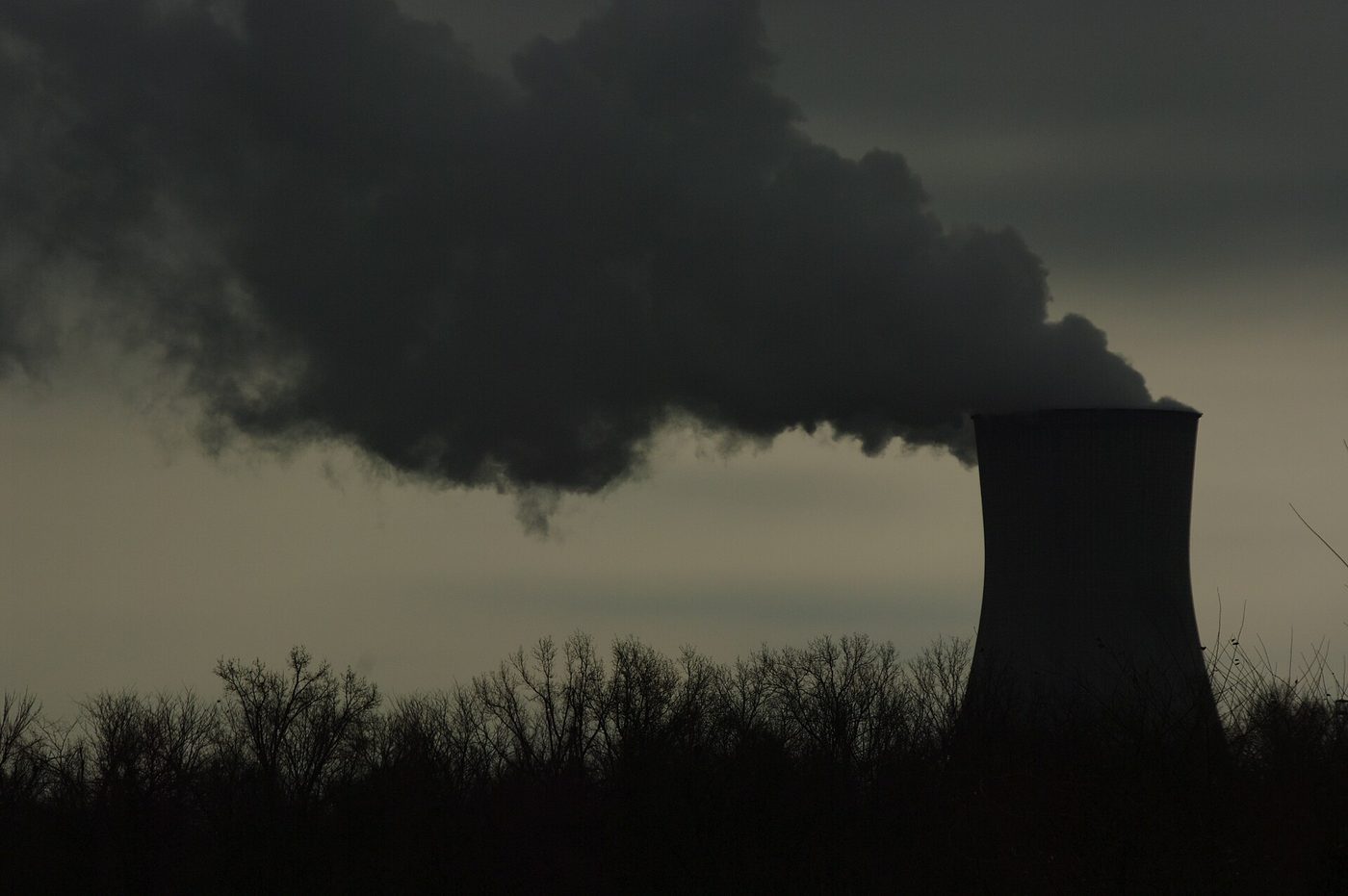
Nuclear is a revealing piece of the plan. Ameren’s own analysis, in chapter 10 of the filing, found that a version without new nuclear, Plan Q, would have levelized rates about 5% lower than the chosen Plan M. The company chose to keep 1,200 megawatts of new nuclear anyway, citing long-term diversity and the eventual need to replace carbon-emitting generation. That is the kind of judgment the plan review process exists to examine, and it is one that commission staff and intervenors may question.
What the plan does not include is a total price tag. Neither Ameren’s public filing text nor its announcement gives a capital cost for the full 20-year plan. The most recent public capital figure is Ameren Corporation’s five-year plan from February 2026: $31.8 billion for 2026–2030 across all of Ameren, of which $21.3 billion is for Ameren Missouri, plus what the company calls a “$71B+” investment pipeline through 2035. Those figures were set before the new contracts and the new plan, and Ameren has said it will update its sales and capital forecasts on its third-quarter earnings call, expected in early November 2026.
Why Ameren says it needs more power
2.8 gigawatts of signed data-center demand, and a forecast that keeps rising
The single biggest change between Ameren’s 2025 and 2026 plans is the demand forecast. The 2023 plan, according to the company’s testimony, assumed no data-center load at all. The 2025 plan assumed 1.5 gigawatts of large-load demand by 2032 and 2.5 gigawatts by 2040. The 2026 plan starts from contracts already signed.
“Since the beginning of 2026,” the plan’s executive summary says, “the Company has signed Electric Service Agreements with large load customers (LLCs) totaling 2.8 GW of expected demand by 2030, well above the 1.5 GW of expected large load demand by 2032 reflected in the 2025 Preferred Resource Plan.” Testimony in a related case says the agreements were signed in February and May 2026. On Ameren’s July 31 earnings call, Lyons put the broader pipeline this way: “In Missouri alone, we have executed 3.4 gigawatts of construction agreements, of which 2.8 gigawatts of projects now have ESAs. And there’s an additional 4 gigawatts of projects in Missouri with completed interconnection studies.” By the time of the September plan, Ameren’s slides described “0.6 GW of construction agreements without an ESA and an additional 5 GW of proposed Missouri projects with completed interconnection studies.”
For a sense of scale: 2.8 gigawatts of round-the-clock demand is more than Labadie’s entire 2,372-megawatt capacity. Ameren’s base case projects large-load demand of about 2.9 gigawatts by 2030, 5 gigawatts by 2035 and 6 gigawatts by 2046; its high case reaches 9 gigawatts by 2046. Headlines that cite “9 GW” are describing that high case, not the preferred plan. The company forecasts that base customer sales will “increase by 60% from 2027 to 2030,” while sales to everyone other than large-load customers grow about 1.2% a year.
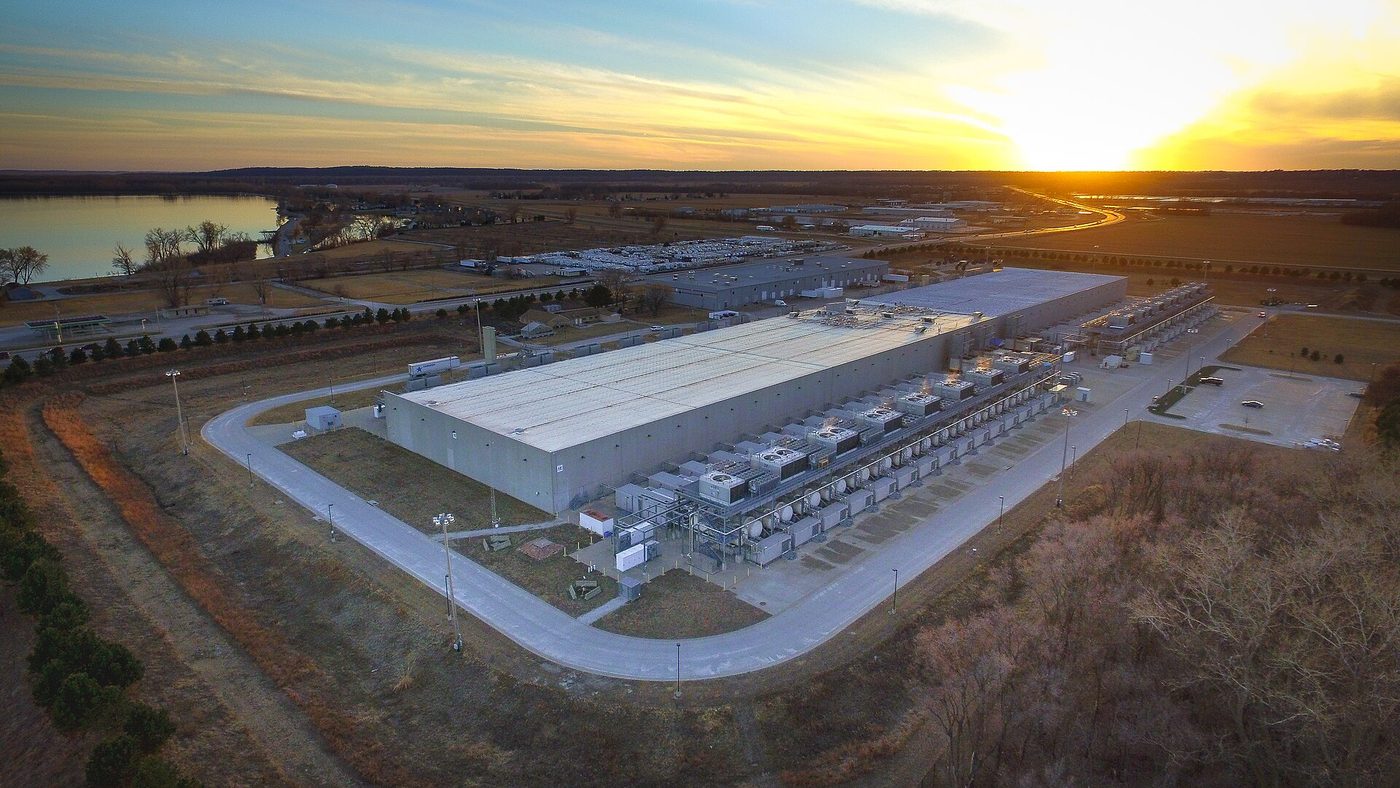
Who the customers are. Ameren has not publicly named the customers behind its contracts; St. Louis Public Radio reported in February 2026 that the names were confidential and that customers had paid $46 million in nonrefundable transmission payments. But the company’s second-quarter investor slides say that “construction began Q2 2026 on both Amazon and Google data center sites located in Montgomery County, MO,” representing “a combined planned investment of $25 billion,” and Lyons said on the earnings call that those projects are part of the 2.8 gigawatts. Google announced a roughly $15 billion project near New Florence in May 2026; Amazon has announced about $10 billion for a campus in Montgomery City. Google and Amazon Data Services are both intervenors in the rate case, as are two entities named Warrenton DC Owner 1 and 2; their owners were not identified in the filings reviewed.
Ameren also stresses that these customers are not yet taking service. “Ameren Missouri is not currently serving any large load data center customers,” Lyons said in July. The company expects the contracted load to begin in the second half of 2027 and reach full capacity by the end of 2029.
The rules for data centers. Missouri’s 2025 utility law, Senate Bill 4, signed by Gov. Mike Kehoe on April 9, 2025, requires utilities to adopt special tariffs for very large customers so that their costs are not shifted to others. Ameren’s large-load tariff, case ET-2025-0184, was approved in November 2025 through a settlement signed by Ameren, commission staff, Google, the Sierra Club, Renew Missouri, Evergy and the Missouri Industrial Energy Consumers, among others. Its terms, as reported at the time, apply to customers of 75 megawatts or more and include a minimum contract term of 12 years with an optional five-year ramp-up, collateral equal to two years of minimum bills, exit fees with 36 months’ notice, a requirement that customers pay for at least 80% of their contracted demand, and a sharing mechanism that returns part of any excess earnings to other customers, half of it to low-income customers.
Ameren cites those protections when asked who pays for the new power plants. “Consistent with the requirements of Missouri Senate Bill 4, these customers will pay for 100% of the power and infrastructure costs driven by their operations,” Lyons said on the July call, adding that the contracts “reflect no discounts” and carry a rate “higher than our standard industrial rates.” Arora framed the growth as a benefit: “Economic development is vital to the state. … It helps us modernize our electric grid to ensure reliability for everybody and have that fixed cost be spread over new customers.” Dixon said: “The safeguards in Senate Bill 4 are meaningful.”
Critics do not dispute that the tariff contains protections; they dispute whether those protections cover the biggest costs. The new gas plants are being built for the system as a whole, not assigned to specific customers, and their costs will be spread across all customers through future rate cases. “Any time they build more generation, it’s going to increase rates,” James Owen, executive director of Renew Missouri, told St. Louis Public Radio. Jenn DeRose of the Sierra Club said in July: “I think that the data centers that Ameren is courting should be required to pay the upfront cost.” John Coffman, a lawyer for Consumers Council of Missouri, put it more bluntly: “These power plants are a big part of why utility rates are going up.” The Office of the Public Counsel’s chief economist, Geoff Marke, offered a different caution earlier this year, telling a reporter that data centers are not responsible for current rates: “Even if a data center never showed up in the state of Missouri,” he said, costs would still be higher because of market conditions.
The new gas plants
Approved, under construction, proposed: where each gas project stands
The resource plan lists gas plants in megawatts, but the commission approves them one at a time, through a certificate of convenience and necessity. Three projects are far enough along to name. Their status differs, and the differences matter.
| Project | Site | Size and type | Commission status | Expected in service |
|---|---|---|---|---|
| Castle Bluff | Former Meramec coal plant, south St. Louis County | 800 MW simple-cycle, dual fuel | Approved Oct. 2024 (EA-2024-0237); under construction | Q4 2027 |
| Big Hollow | Former Rush Island coal plant, Jefferson County | 800 MW simple-cycle + 400 MW battery | Approved Feb. 2026 (EA-2025-0238); under construction | Q3 2028 (battery Q2 2028) |
| West Alton | Next to the Sioux coal plant, St. Charles County | 2,100 MW combined-cycle (three units) | Application filed July 2026 (EA-2026-0226); pending | Q4 2031 |
| Unnamed | Not yet determined | 300 MW simple-cycle | In plan only | By 2029 |
Source: Ameren Q2 2026 investor slides; IRP executive summary; Michels testimony in EA-2026-0226; St. Louis Public Radio and KBIA reporting on the Castle Bluff and Big Hollow approvals. Limitation: construction costs for Big Hollow and West Alton are redacted in public filings; Castle Bluff’s estimated cost of about $900 million comes from Ameren as reported by St. Louis Public Radio.
Simple-cycle plants, also called peakers, are combustion turbines that start quickly and run mainly when demand is high. Combined-cycle plants capture turbine exhaust heat to make additional electricity and are more efficient, so they are built to run many more hours. The West Alton plant would be Ameren’s first large combined-cycle plant. The plan’s first two simple-cycle plants reuse the sites — and the transmission connections — of retired coal plants, a common strategy that reduces the cost and time of connecting to the grid.
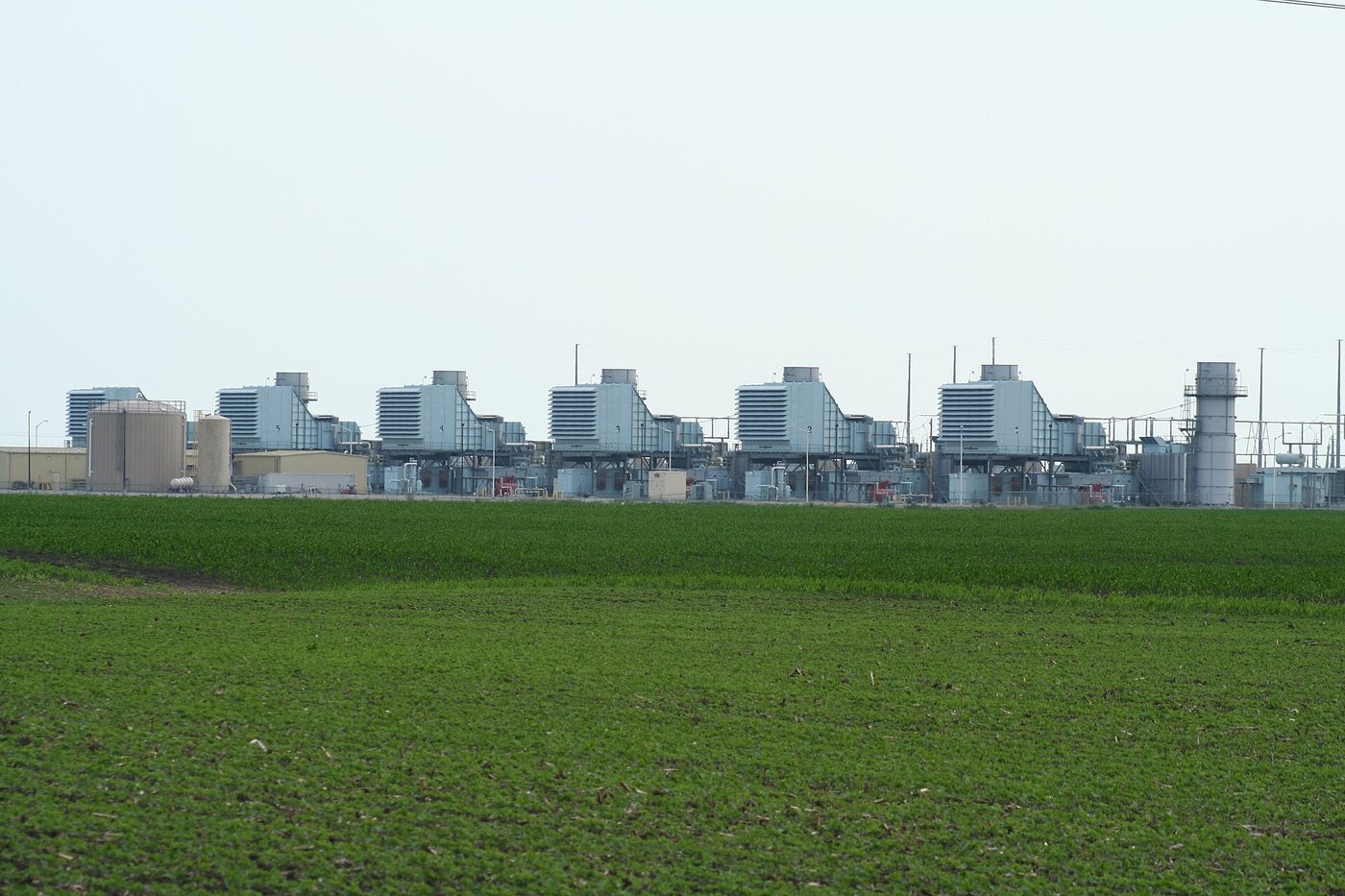
Ameren says the new plants are cleaner than the coal they replace. For Castle Bluff, it claims about 40% less carbon dioxide, 99% less sulfur oxides and 80% less nitrogen oxides per megawatt-hour than the Meramec plant. Those are company figures, comparing a new gas peaker with a coal plant that had already closed.
The approvals have not been uncontested. When Ameren sought the Big Hollow certificate, the Office of the Public Counsel asked for two public hearings, one of them in person; the commission denied the request and held a virtual hearing, at which members of the public pushed back on building a gas plant in part for data centers, St. Louis Public Radio reported in October 2025.
Paying for plants before they run. Senate Bill 4 changed a long-standing Missouri rule. Since voters approved Proposition 1 in 1976, state law (section 393.135) has barred electric utilities from charging customers for a power plant before it is “fully operational and used for service.” The 2025 law, effective August 28, 2025, carves out an exception that allows the cost of construction work in progress — known as CWIP — to be included in rates for new gas-fired plants, a provision that expires December 31, 2035, unless the commission extends it to 2045 after a hearing. Ameren has asked to use it for West Alton. Ryan Arnold, Ameren Missouri’s vice president of power operations, told St. Louis Public Radio that CWIP “could reduce some of the financing costs, which overall would help lower total project costs for customers.” Critics answer that it shifts construction risk to customers, who pay before the plant produces anything. Consumers Council of Missouri has estimated that the law could raise household utility costs by more than $1,100 a year; that is an advocacy estimate, about half of which depends on nuclear construction costs that are not yet in any filing.
New gas plants also need gas. Ameren told investors in July that it has “executed gas supply contracts” for the West Alton plant; the terms were not disclosed.
The coal extensions
Labadie and Sioux: why two coal plants will run longer than planned
The two coal plants whose lives the plan extends are Ameren’s largest and its oldest. St. Louis Public Radio summarized the change: “The Sioux Coal plant would close three years later than planned in 2023, while the Labadie plant would keep all four units operational until 2042, when two were originally set to retire in 2036.”
Labadie. In both the 2023 plan and the 2025 update, two of Labadie’s four units were scheduled to retire at the end of 2036 and the other two at the end of 2042. The 2026 plan keeps all four running to the end of 2042, a six-year extension for half the plant. Ameren’s slides state it simply: “Two units at Labadie extended to 2042.”
Sioux. The 2023 plan set Sioux’s retirement for 2032. The 2025 update widened that to “as early as the end of 2031 and as late as the end of 2035.” The 2026 plan settles on the late end: retirement “by the end of 2035,” timed to the arrival of its replacement, the West Alton gas plant next door. In the 2023 planning case, the Sierra Club argued that Ameren’s own analysis supported retiring Sioux as early as 2028.
Ameren’s reasons. The company argues that keeping the coal plants while adding new resources is the cheaper and more reliable path. The executive summary says that continuing to run them “while swiftly adding new dispatchable resources, enables a stable fleet expansion while maintaining reliability in the face of significant economic expansion and allows us to extract as much production as we can from these facilities through the end of their useful lives.” Chapter 10 of the filing says that “plans with earlier coal retirements result in higher costs,” primarily because replacement generation would have to be built sooner. Ameren modeled alternatives — Plan J, retiring all four Labadie units at the end of 2036; Plan K, burning natural gas alongside coal at Labadie; and Plan L, adding sulfur dioxide scrubbers and selective catalytic reduction for nitrogen oxides — and concluded that “continuing to operate the Labadie units through the end of their useful lives is likely to remain cost effective.”
Arora put the argument in affordability terms: “Labadie remains one of the most affordable plants in the country and recognizing the economic conditions for all our customers and how important reliability and affordability is, that’s really factored into delaying the retirement of a few of the Labadie units by a few years.”
The critics’ answer. Environmental groups say the plant is cheap partly because it lacks modern pollution controls. “Do you know why that plant is so affordable?” DeRose of the Sierra Club asked. “It’s because it doesn’t have any modern pollution controls.” The Sierra Club’s release on the plan called Labadie “the deadliest coal plant in the country,” a characterization based on the group’s own health-impact modeling that this article has not independently assessed. DeRose added: “Their own research shows that solar and wind are the cheapest forms of energy to build, and they’re still choosing gas.” On October 10, more than 50 people marched in opposition to the plan, KBIA reported. “We approached the solution in a peaceful way, but we need to express that we are very angry with these decisions,” said Patricia Schuba, president of the Labadie Environmental Organization.
The Sierra Club’s release also said the plan cut pre-2030 solar by 900 megawatts. That reading appears to compare the plan’s 1,300 megawatts of new solar with the 2025 plan’s 2,200-megawatt total; Ameren’s slides show both plans reaching about 2,200 megawatts of solar by 2030 once the 900 megawatts already in service are counted.
What the emissions data show. The factual core of the pollution dispute is well documented, because every large coal unit in the country reports its emissions hourly to the EPA through continuous monitors. The EPA’s Clean Air Markets data show that none of Labadie’s four units has sulfur dioxide controls. The EPA said the same in a 2024 Federal Register proposal on Missouri’s regional haze plan: “None of the units utilize control for SO2,” and Labadie was the “highest SO2 emitter in 2023” among the sources reviewed. Sioux, by contrast, has wet limestone scrubbers, and its emissions are far lower.
| Plant and year | Sulfur dioxide (tons) | Nitrogen oxides (tons) | Carbon dioxide (short tons) |
|---|---|---|---|
| Labadie 2022 | 44,265 | 7,763 | 17.35 million |
| Labadie 2023 | 39,246 | 7,256 | 16.83 million |
| Labadie 2024 | 32,699 | 6,711 | 15.38 million |
| Labadie 2025* | ~38,232 | ~7,694 | ~17.85 million |
| Sioux 2024 | 1,265 | 3,659 | 3.72 million |
| Sioux 2025* | ~1,704 | ~4,561 | ~4.60 million |
Source: U.S. EPA Clean Air Markets Program Data (CAMPD), annual apportioned emissions, facility IDs 2103 (Labadie) and 2107 (Sioux). Period: calendar years 2022–2025. Units: short tons. Method: facility totals from unit-level continuous emissions monitoring; *2025 values are summed from unit-level data and may be revised as EPA finalizes the year. Limitation: annual totals rise and fall with how much the plants run (Labadie generated about 15.2 million MWh in 2024 and about 17.6 million MWh in 2025), so they measure total pollution, not efficiency; the table does not include particulate matter or mercury.
The table answers a practical question: what keeping Labadie open six more years means in pollution terms. At its 2024–2025 levels, the plant emits roughly 33,000 to 38,000 tons of sulfur dioxide a year — about 22 to 26 times Sioux’s output in the same years — and 15 to 18 million tons of carbon dioxide. Keeping two units open from 2037 through 2042 extends that pattern, at a reduced scale, for six additional years unless controls are added or operations change.
The Rush Island precedent. Ameren has been here before. In 2011 the Justice Department, on behalf of the EPA, sued Ameren Missouri for making major modifications to its Rush Island coal plant without the permits and pollution controls the Clean Air Act’s New Source Review program requires. A federal judge found Ameren liable in 2017 and in 2019 ordered scrubbers at Rush Island and additional pollution reductions at Labadie to make up for excess emissions. The federal appeals court upheld the Rush Island order but sent the Labadie remedy back. Rather than install scrubbers, Ameren retired Rush Island; the EPA says the plant closed “by court order in October 2024.” In December 2024 the court ordered Ameren to spend $61 million on mitigation instead — $25 million for HEPA air-filter vouchers for about 125,000 mostly low-income households and $36 million for electric school buses in St. Louis-area districts. “The rule of law prevailed,” said David Cozad of the EPA’s Region 7 office at the time. The Labadie control requirement the trial court had originally ordered was never imposed.
Gas bills
Are data centers pushing up natural gas bills too? What the evidence shows
It is a reasonable worry. Ameren plans to burn far more natural gas to make electricity, data centers are driving that plan, and gas heats most Missouri homes. If power plants compete with households for the same fuel, the reasoning goes, heating bills should rise. The question deserves a careful answer, because the evidence so far does not support it in the way it is often stated.
How a gas bill works. A residential gas bill has two main parts. The delivery charge pays for the utility’s pipes, meters and service, and changes only in a rate case. The gas supply charge pays for the fuel itself and is passed through to customers at cost, with no profit to the utility, through a mechanism called the purchased gas adjustment, or PGA. Data centers could affect gas bills only through the second part — by raising the market price of gas — and only to the extent that new demand for gas-fired power pushes that price up.
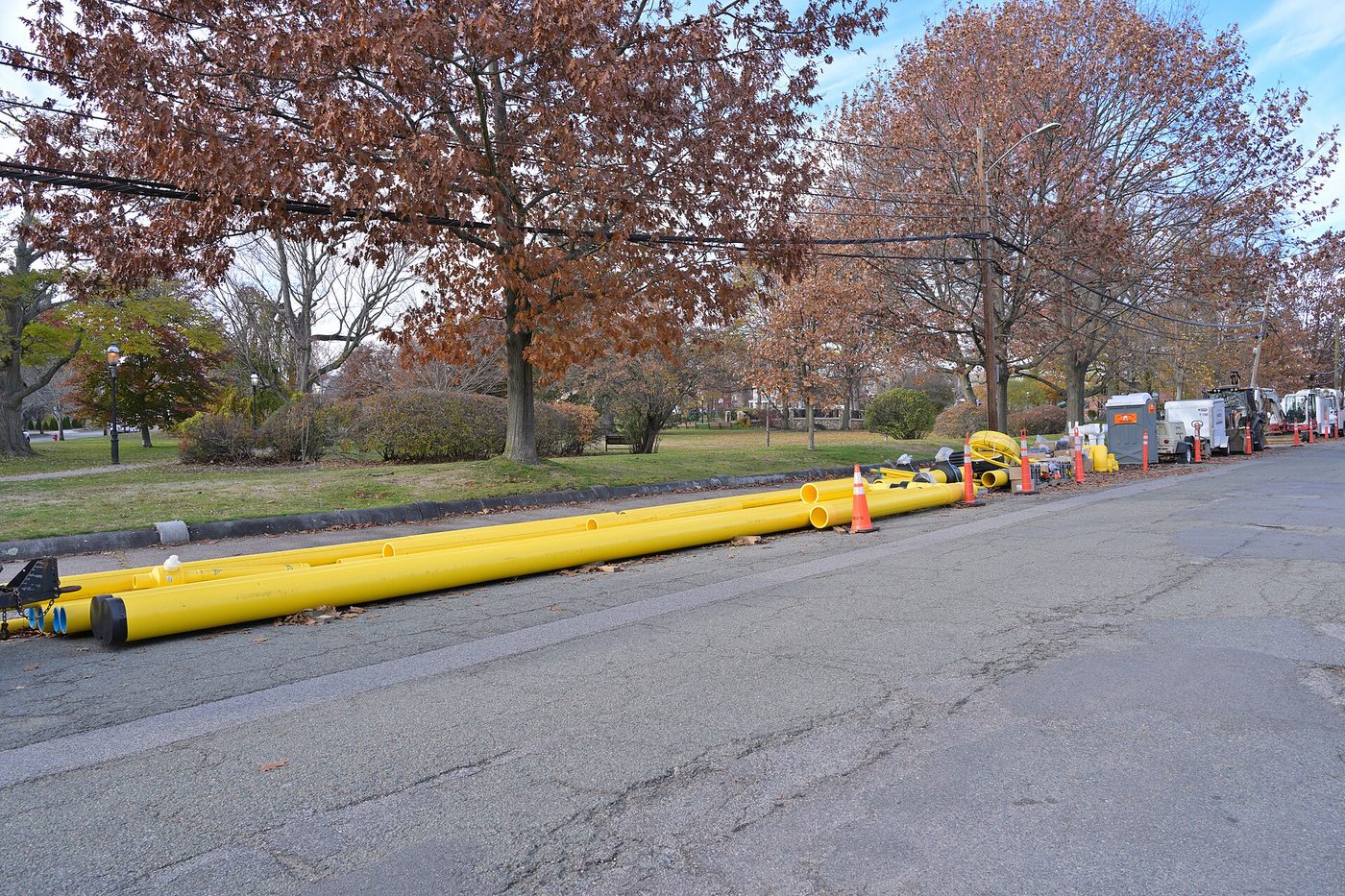
What has actually happened to Ameren gas customers. Two increases are documented. First, Ameren’s last gas rate case, GR-2024-0369, raised annual delivery revenues by $31.5 million effective September 1, 2025; Ameren had asked for $39.6 million. The residential customer charge rose from $15.00 to $21.04 a month and the delivery charge from 35.36 cents to 49.58 cents per hundred cubic feet, according to the approved tariff. For a home using 48 hundred cubic feet a month, that is about $12.87 more a month on the delivery portion alone — this article’s calculation, not a published figure. Second, Ameren’s purchased gas charge for firm residential service rose from 60.38 cents to 64.94 cents per hundred cubic feet on November 1, 2025, about 7.6%, or roughly $2.19 a month at the same usage. Ameren’s filing gave no reason for that change. Neither increase was attributed by the company, the commission or any party to data centers; Ameren is not yet serving any data-center customers.
What happened to gas prices. Missouri households did pay more for gas in early 2026. According to the U.S. Energy Information Administration, the average residential gas price in Missouri was $14.51 per thousand cubic feet in January 2026, up from $11.96 a year earlier, and $14.24 in February, up from $11.82 — increases of about 21% and 20%, larger than the national increases of about 12% and 15%.
Source: U.S. EIA, Natural Gas Prices, residential price, Missouri (series N3010MO3) and U.S. (N3010US3), monthly. Period: January–April of 2025 (muted bars) and 2026 (solid bars); U.S. March–April omitted for space (U.S. March 14.62 → 16.16; April 16.17 → 18.04). Unit: dollars per thousand cubic feet. Method: EIA average of all residential customers statewide, all utilities (Ameren, Spire and others), not Ameren alone. Limitation: per-unit prices rise in warmer months because fixed monthly charges are spread over less gas; compare the same month across years, not months with each other. 2026 data are preliminary.
The federal explanation for that spike is weather and markets, not data centers. Winter Storm Fern hit in January 2026, and the benchmark Henry Hub spot price averaged $7.72 per million British thermal units that month, more than double its level for most of the year. The EIA’s October 2026 Short-Term Energy Outlook says its lower 2027 forecast “largely reflects high prices in January 2026 in the aftermath of winter storm Fern, when the Henry Hub price averaged $7.72/MMBtu as increased heating demand reduced natural gas supply,” and adds that “ample natural gas inventories … limit upward price pressures.” The October outlook does not name data centers or power-plant demand as a price driver.
The national data cut against the simple version of the theory in another way. In 2025, the year the Henry Hub annual average rose from $2.19 to $3.52, the electric power sector actually burned less gas than in 2024. The EIA reported that “electric power demand for natural gas decreased 1.0 Bcf/d to 35.8 Bcf/d,” as new solar and batteries displaced gas and summer was milder, while residential gas use rose about 11% because of a colder winter. Growth in liquefied natural gas exports, which the EIA in January 2026 called “the largest source of demand growth,” was the bigger structural pull on prices.
What the forecasts say about the future. That does not mean data centers will never matter for gas prices. The EIA forecasts power-sector gas use rising to 37.0 billion cubic feet a day in 2026 and 37.1 in 2027. Private analysts project data centers could add several billion cubic feet a day of demand by 2030: RBC Capital Markets estimated “approximately 6.1 billion cubic feet per day by 2030,” while noting that this “remains secondary to planned liquefied natural gas export capacity additions.” For scale, U.S. gas consumption averaged a record 92.0 billion cubic feet a day in 2025. Those are projections of possible future effects, not measured effects on anyone’s current bill. In the near term, the EIA expects relief: its October 2026 Winter Fuels Outlook projects that Midwest households heating with gas will spend about $613 this winter, down 10%, because of “lower natural gas prices.”
Where data centers do show up: the electric bill. The documented cost pathways from data centers run through electricity, not gas. Ameren Missouri sits in the Midcontinent Independent System Operator, or MISO, which runs an annual auction for generating capacity. In Missouri’s zone, Zone 5, summer capacity cleared at $666.50 per megawatt-day for the 2025–26 planning year and $424.30 for 2026–27, far above the roughly $30 summer price of 2024–25. MISO told Missouri regulators in 2025 that “surplus capacity in the summer has reduced from approximately 6.5 GW in 2023, to 4.6 GW in 2024, to 2.6 GW in 2025,” and in 2026 that “capacity additions need to continue, given expected growth from new large loads.”
| Planning year | Summer | Fall | Winter | Spring |
|---|---|---|---|---|
| 2024–25 | 30.00 | 719.81 | 0.75 | 719.81 |
| 2025–26 | 666.50 | 91.60 | 33.20 | 69.88 |
| 2026–27 | 424.30 | 33.92 | 35.97 | 7.61 |
Source: MISO presentations to the Missouri PSC, May 21, 2025, and May 28, 2026 (2025–26 and 2026–27); Enel North America summary of MISO results (2024–25). Period: MISO planning years running June–May. Unit: dollars per megawatt-day of accredited capacity. Limitation: auction prices are not bill impacts. MISO says roughly 90–92% of its load is hedged or self-supplied and “not impacted by these prices”; vertically integrated utilities such as Ameren Missouri can cover much of their obligation with their own plants. The table shows market tightness, not what any customer paid.
Independent research supports the general concern about electricity while showing its limits. A peer-reviewed study by researchers at Carnegie Mellon University and North Carolina State University, published in May 2026, modeled data-center growth through 2030 and found electricity system costs rising “by an average of 6%-29%, nationally,” and as much as 57% in some regions, mostly in the East; it cautioned that “outcomes are highly sensitive to natural gas prices.” Harvard’s Electricity Law Initiative, reviewing about 50 regulatory proceedings, argued in 2025 that special contracts can shift data-center costs to other customers. On the other side, studies by Lawrence Berkeley National Laboratory and the Brattle Group found that from 2019 to 2024, states with the fastest load growth generally saw average real electricity prices fall, as fixed costs were spread over more sales — the same argument Ameren makes — though their 2026 update called the relationship “mixed and uncertain.”
Put together, the record supports a narrower statement than the one often heard. Data centers are one of several pressures on electricity costs in Missouri, chiefly by driving the construction of new power plants whose costs will be recovered from all customers. There is no quantitative evidence yet that they have raised gas bills; the recent increases for Ameren gas customers trace to a rate case for pipe investment, a modest change in gas supply cost, and a winter storm. The risk that heavy gas-fired generation could tighten gas markets later this decade is real enough that analysts are modeling it, and it is a fair question for regulators to ask as Ameren moves toward a fleet that is 60% gas.
The EPA’s position
What the EPA thinks: a federal government rolling back the rules
Readers asking what the EPA thinks about Ameren extending coal plants may expect a regulator’s objection. There is none on record. No EPA comment on Ameren’s resource plans was found for this article, and the agency under Administrator Lee Zeldin has spent 2025 and 2026 repealing or delaying the federal rules that were pushing utilities to retire or clean up coal plants.

Zeldin announced the agenda in March 2025. “Today is the greatest day of deregulation our nation has seen,” he said on March 12, 2025. “We are driving a dagger straight into the heart of the climate change religion.” When the agency finalized its carbon rule repeal in September 2026, he said: “For over 15 years, the Obama and Biden administrations implemented a war on coal to destroy reliable and affordable energy,” and “Americans will see a decrease in electricity prices, but this is just the beginning.” The EPA’s release claimed $310 billion in savings. A widely repeated phrase, “beautiful, clean coal,” is President Donald Trump’s; EPA releases use it in headlines and attribute it to him, not to Zeldin.

Here is where each rule that bears on Ameren’s coal and gas plants stands, distinguishing what is final from what is only proposed.
| Rule | 2024 version | Action since 2025 | Status |
|---|---|---|---|
| Carbon Pollution Standards (Clean Air Act §111) | Required existing coal plants running past 2039 to capture 90% of CO2 by 2032; CCS for new base-load gas turbines | Partial repeal published Sept. 17, 2026 (91 FR 58954); supplemental proposal to repeal all remaining GHG standards (91 FR 59002) | Repeal final, effective Nov. 16, 2026; supplemental proposed, comments due Nov. 2, 2026; challenged in D.C. Circuit |
| Mercury and Air Toxics Standards (MATS) | Tightened particulate limit; required continuous particulate monitors | 2024 amendments repealed (91 FR 9088, Feb. 24, 2026); 2012 limits remain | Final, effective Apr. 27, 2026; challenged by 18 states and others |
| Steam electric wastewater (ELG) | Zero-discharge requirements for several coal wastewater streams | Deadlines extended (90 FR 61328, Dec. 31, 2025) | Final, effective Mar. 2, 2026; zero-discharge deadlines moved to Dec. 31, 2034 |
| Coal Combustion Residuals (coal ash) | Extended monitoring and cleanup to older “legacy” ash sites | Deadlines extended (91 FR 5806, Feb. 10, 2026); further changes proposed Apr. 2026 | Extension final: groundwater monitoring at newly covered units due Feb. 10, 2031 |
| Regional Haze (Missouri plan) | — | EPA proposed partial disapproval of Missouri’s plan, July 3, 2024 | No final EPA action found; Missouri revising its plan |
| Missouri SO2 rule | — | EPA approved Missouri rule reinstating SO2 limits for Labadie (90 FR 42839, Sept. 5, 2025) | Final, effective Oct. 6, 2025 |
Source: Federal Register documents cited in each row; EPA fact sheets and news releases. Limitation: litigation status changes quickly; this table reflects filings found through Oct. 12, 2026. “Final” means published as a final rule, not that the rule has survived judicial review.
Carbon. The most consequential change for Labadie is the carbon rule. The 2024 standards would have required existing coal plants that planned to run beyond 2039 to cut carbon dioxide emissions 90% by 2032, effectively through carbon capture — a requirement that would have made running Labadie to 2042 far more expensive. The final repeal, published September 17, 2026, removes the emission guidelines for existing coal, oil and gas steam plants “in their entirety,” along with the carbon-capture standards for new base-load gas turbines. The EPA’s fact sheet says 90% carbon capture is “not adequately demonstrated.” A companion proposal would go further and rescind all greenhouse gas standards for power plants on the theory that Section 111 of the Clean Air Act does not reach global climate change. Health and environmental groups sued on September 17, 2026, and a coalition of states led by New York filed suit on October 1.
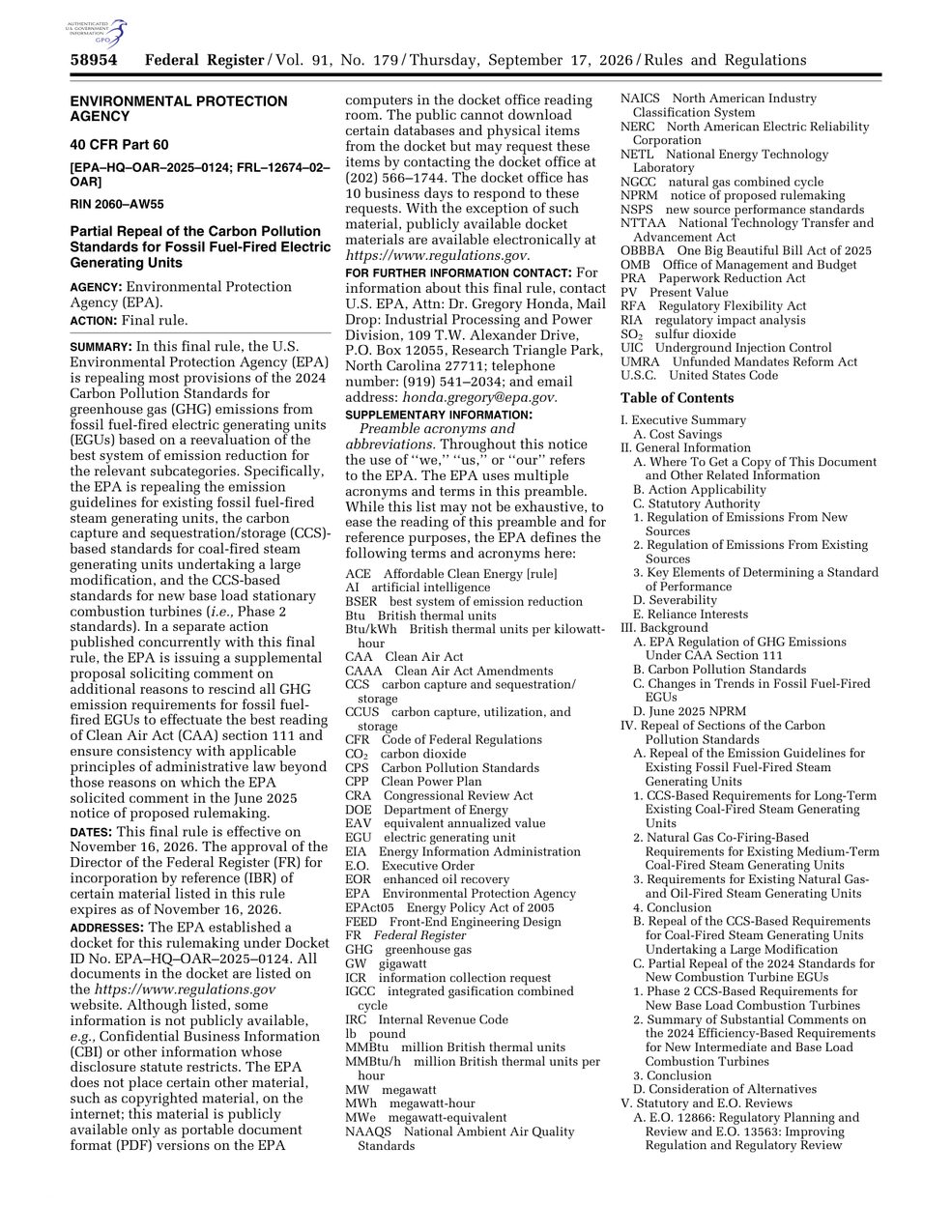
Air toxics. The 2024 amendments to the mercury and air toxics standards tightened limits on filterable particulate matter and required coal plants to install continuous particulate monitors. The EPA repealed those amendments in February 2026, effective April 27. The original 2012 limits remain in force. In its release, which carried the headline “EPA Continues to Reverse Democrats’ War on Beautiful Clean Coal,” Zeldin said: “The Biden-Harris Administration’s anti-coal regulations sought to regulate out of existence this vital sector. … If implemented, these actions would have destroyed reliable American energy.” The agency noted that mercury from coal plants had already fallen about 90% below pre-2012 levels.
Wastewater and coal ash. The EPA moved deadlines for coal-plant wastewater rules: plants now have until December 31, 2031, to commit to stopping coal combustion in exchange for relaxed requirements, and the zero-discharge deadlines for scrubber wastewater, bottom-ash transport water and ash-landfill leachate move five years, to the end of 2034. For coal ash, it delayed the 2024 “legacy” rule, which extended monitoring and cleanup requirements to older ash sites that had escaped the original 2015 rule; groundwater monitoring at those newly covered units is now not due until February 10, 2031, and closure work until 2032.
Where the EPA has acted on Labadie. Two EPA actions point the other way, and both predate or sit outside the deregulatory push. In September 2025, the EPA approved a revised Missouri rule that it said would “reinstate SO2 emission limits applicable to Ameren-Labadie” after rejecting a 2019 state revision that had removed them. And in its 2024 proposal on Missouri’s regional haze plan, the EPA criticized the state’s analysis of whether Labadie should add sulfur dioxide controls, finding that the voluntary agreements Missouri relied on “do not contain the necessary numerical emissions limitations.” The EPA never finalized that proposal. Missouri’s Department of Natural Resources is now revising the plan in a way that, it says, “removes all consent agreements contained in the 2022 plan”; the comment period closed September 3, 2026. The EPA has separately said it intends to “restructure” the regional haze program.
One federal tool that has kept other coal plants open has not been used in Missouri. The Department of Energy has issued emergency orders under Section 202(c) of the Federal Power Act requiring several coal plants elsewhere — in Michigan, Washington, Indiana and Colorado — to keep running past planned retirement dates. No such order covers an Ameren or Missouri plant; Ameren’s extensions are its own decision. A federal appeals court ruled on September 11, 2026, that the Energy Department “cannot invoke Section 202(c) unless it establishes a genuine emergency.”
Testing and monitoring
Is anyone testing? What is measured, what is not, and why
“Are they doing any testing?” has several answers, because different pollutants are governed by different rules, and those rules require different kinds of measurement. Some testing is continuous and mandatory and has not changed. Some has been weakened or delayed. And some has never been required at all.
Smokestack emissions: measured continuously, and still required. Every large fossil-fuel unit, including all of Labadie’s and Sioux’s, must operate continuous emissions monitoring systems under 40 CFR Part 75, the federal rule that supports the Acid Rain Program and the interstate pollution trading programs. Those monitors measure sulfur dioxide, nitrogen oxides and carbon dioxide around the clock and report to the EPA, which publishes the data. That is the source of the emissions figures in this article, and none of the 2025–2026 rollbacks removed it. The EPA’s data show Labadie and Sioux are also subject to the mercury and air toxics standards.
Particulate monitoring: the new requirement was repealed. The 2024 amendments to the mercury and air toxics standards would have required coal plants to install continuous monitors for filterable particulate matter — fine dust that carries toxic metals — instead of relying on periodic stack tests. The EPA’s February 2026 repeal eliminated that requirement. Plants still must meet the 2012 particulate limits and demonstrate compliance under the older methods.
Air quality around Labadie: a company-run network. Ambient sulfur dioxide around Labadie has been the subject of a long fight over whether the area meets the federal health standard. In 2016 the EPA designated the area “unclassifiable,” saying there was insufficient data. Ameren then operated a four-site monitoring network around the plant. When the EPA proposed in 2020 to designate the area as meeting the standard, it reported design values since 2017 of 18 to 38 parts per billion, against a standard of 75 parts per billion. Whether that redesignation was finalized could not be confirmed for this article.
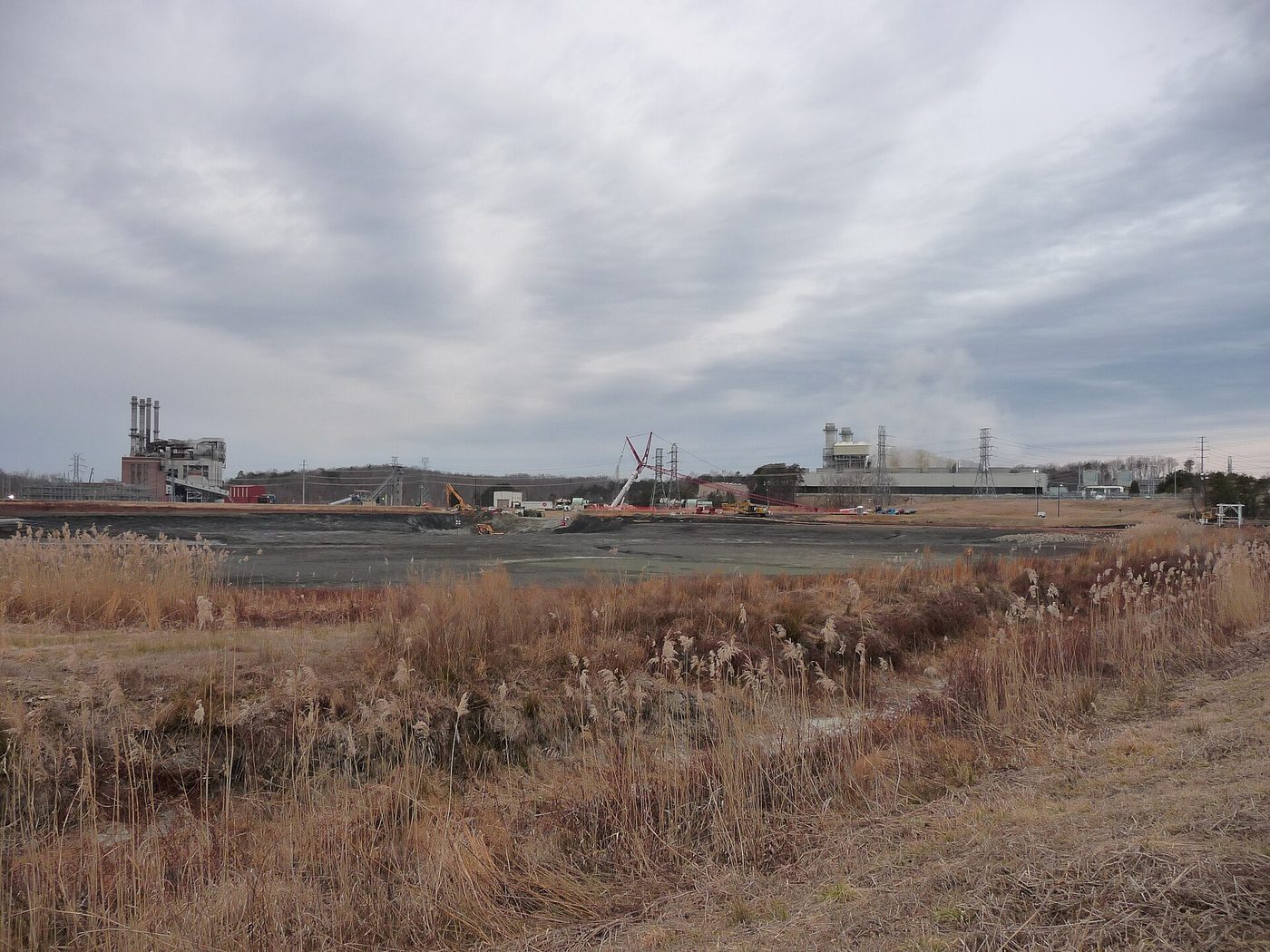
Groundwater at coal ash sites: required, and it shows contamination. The most detailed testing comes from the federal coal ash rule adopted in 2015. It requires utilities to monitor groundwater around coal ash ponds and landfills, post the results publicly every year, and take corrective action when contamination exceeds federal groundwater protection standards. Ameren’s 2025 annual reports, dated January 31, 2026, and prepared by its consultant, show the following.
| Unit | Closure | Monitoring status | What the report shows |
|---|---|---|---|
| Labadie bottom ash pond (LCPA) | Capped Dec. 30, 2020 | Corrective action monitoring all of 2025 | Molybdenum above the groundwater protection standard in 4–5 wells (first found Oct. 2018); arsenic counted as an exceedance at one well; lithium “no longer an exceedance”; Ameren “is evaluating use of a groundwater treatment system” |
| Labadie fly ash pond (LCPB) | Capped Dec. 15, 2020 | Detection monitoring | Statistically significant increases over background for boron, chloride, sulfate, fluoride and pH; Ameren filed reports attributing them to other sources |
| Sioux bottom ash pond (SCPA) | Closed Oct. 14, 2022 | Corrective action | Molybdenum (6–7 wells), lithium (2–3) and cobalt (1–2) above standards; Ameren attributes lithium and cobalt to “natural geochemical variability”; pump-and-treat system running since Feb. 2023 (~56 million gallons treated) |
| Sioux fly ash pond (SCPB) | — | Detection monitoring | Statistically significant increases for boron; alternative-source reports filed |
Source: Ameren Missouri 2025 annual groundwater monitoring and corrective action reports under 40 CFR 257.90(e) for LCPA, LCPB, SCPA and SCPB, dated Jan. 31, 2026. Period: calendar 2025. Method: statuses and findings as stated by Ameren’s consultant. Limitations: these are company-prepared compliance reports; “detection” and “corrective action” are regulatory stages, not health findings; reports for Rush Island and Meramec could not be retrieved for this article.
The reports also describe improvement: Ameren says average boron concentrations at the Labadie bottom-ash pond are down about 21% and molybdenum about 18% since 2019, and at the Sioux pond boron is down about 37% and molybdenum about 39% since 2020. For all four of its coal plants, Ameren chose in 2019 to close its ash ponds by capping the ash in place and relying on monitored natural attenuation, rather than excavating it. Post-closure monitoring must continue for at least 30 years.
Environmental groups read the same kind of data more harshly. Earthjustice, analyzing utility-reported monitoring data, lists contaminants at Ameren’s plants at multiples of federal health-based levels — at Sioux, for example, molybdenum at 162 times and boron at 15 times; at Rush Island, arsenic at 29 times. Those multiples come from the group’s own comparison to health-based screening levels, and the underlying data period could not be confirmed for this article. Ameren has disputed such characterizations; a 2019 consultant memo for the company said claims of “gross contamination” “mischaracterize the known and available record.”
Older ash sites: monitoring delayed to 2031. The 2015 rule covered only ash units that were active when it took effect. The 2024 legacy rule extended monitoring and cleanup to older and inactive ash disposal areas — what the EPA calls “CCR management units.” Earthjustice counts one such potential unit at Sioux, one at Rush Island and four at Meramec. Under the February 2026 extension, utilities do not have to install groundwater monitoring at these units until February 10, 2031, or file the first annual report until January 31, 2032. That is the clearest case where testing that would otherwise be happening now has been pushed years into the future.
No state program, and no health study. Missouri has not adopted its own permit program for coal ash disposal. The EPA’s list of approved state programs, updated September 15, 2026, includes Oklahoma, Georgia, Texas, North Dakota and Wyoming; Missouri is not on it or among the states with proposed programs. The Missouri Department of Natural Resources says it “currently regulates coal combustion residual landfills as utility waste landfills,” which does not cover ash ponds. No federal or state health study specific to the communities around Labadie or Sioux was found for this article. That is the main answer to “why not”: the rules require pollution measurement, not health surveillance, and no agency has chosen to commission one.
The new gas plants. New gas turbines face their own federal rules. The EPA revised its nitrogen-oxide performance standards for new combustion turbines in January 2026, and the 2024 requirement for carbon capture at new base-load gas plants is being repealed. In Missouri, the Department of Natural Resources issues air construction permits. Its public permit tables show a de minimis construction permit for the Big Hollow Energy Center site issued June 26, 2026, and a pending application for a Prevention of Significant Deterioration permit — the federal program for major new sources — at Ameren’s Sioux site in West Alton, received August 12, 2026. That application appears to relate to the planned West Alton combined-cycle plant, though the table does not say so. Whether the simple-cycle plants avoided major-source review by offsetting their emissions against the retired coal units at the same sites could not be confirmed. Once operating, the new gas units will also be subject to continuous emissions monitoring.
Missouri’s rules
The state law that shapes all of it: Senate Bill 4
Much of what is happening at Ameren traces to one state law. Senate Bill 4, passed by the General Assembly in 2025 and signed by Gov. Mike Kehoe on April 9, 2025, took effect August 28, 2025. Its main provisions, as described in Ameren’s annual report and news coverage, include:
- Construction cost recovery: it allows utilities to include construction work in progress for new gas-fired plants in rates, an exception to the 1976 ban, through 2035.
- Future test years for gas utilities: gas companies can set rates based on projected rather than historical costs, starting in July 2026, with later reconciliation. No Ameren gas rate case using it had been filed as of the company’s August 2026 quarterly report.
- Large-load tariffs: utilities must adopt separate rate structures for very large new customers so other customers do not bear “unjust or unreasonable costs.”
- Replacement generation: utilities retiring generating plants must replace them with dispatchable capacity. The exact terms of this requirement, and whether it requires commission approval before any retirement, should be checked in the enrolled bill; this article could not confirm the details.
- Resource planning: rules being drafted under the law would move to four-year resource plans, with the next one due in 2029.

The law also interacts with the federal rollbacks. With the 2024 carbon standards repealed and coal-ash and wastewater deadlines extended, the federal pressure that once pushed utilities toward earlier coal retirements has largely lifted. With Senate Bill 4 in place, utilities can begin recovering the cost of new gas plants before they run. Together, those two changes make a plan like Ameren’s — keep coal longer, build gas faster — easier to finance and harder for regulators to second-guess on environmental grounds. That is an analysis, not a claim Ameren makes; the company’s stated reasons are cost, reliability and the speed of demand growth.
The Missouri Public Service Commission, not the EPA, is where most of these choices will be tested. It will decide the rate case by June 1, 2027; review the resource plan for deficiencies; rule on the West Alton gas plant certificate; and decide whether construction costs can go into rates. Its decisions are made by its commissioners; orders reviewed for this article list Chairman Hahn and Commissioners Coleman, Kolkmeyer and Mitchell. No commissioner has yet voted on any of the 2026 filings discussed here.
Who pays
The argument at the center of both filings
Strip away the technical detail and the rate case and the resource plan pose the same question: who pays for an electric system being rebuilt around a few very large customers?
Ameren’s answer has three parts. First, the current rate request is about investments already made for existing customers — storm repairs, grid upgrades and 400 megawatts of new generation — and data centers will reduce it, not raise it, by more than $10 million a year. Second, the large-load tariff and Senate Bill 4 require data centers to pay for “100% of the power and infrastructure costs driven by their operations,” with long contracts, collateral and exit fees protecting other customers if a data center leaves. Third, growth spreads fixed costs over more sales, which over time should restrain rates for everyone.
Critics accept the first part conditionally — staff and the Public Counsel will test the numbers in December — but dispute the second and third. The new gas plants, they argue, are system resources whose costs will be shared by all customers, regardless of tariff provisions designed to protect them. Construction-cost recovery means customers begin paying for those plants years before they run. And if data-center demand arrives more slowly than forecast, or a customer leaves after its contract ends, the plants will still be there and someone will still be paying for them. The Sierra Club and Renew Missouri also argue that leaning on gas and coal exposes customers to fuel-price swings like the one around Winter Storm Fern in January 2026; fuel-cost changes reach Ameren electric bills through the fuel adjustment clause.
Some of the evidence that would settle the argument is not yet public. The costs of Big Hollow and West Alton are redacted. The resource plan has no total cost. The identities and terms of the data-center contracts are confidential. Commission staff and the Public Counsel have not filed testimony in either the rate case or the plan. What is public is the direction: Ameren expects to spend more, sell more, burn more gas and keep its coal running longer, and customers will pay for the system that results under rules the legislature rewrote in 2025.
What to watch
Key dates through 2031
- Nov. 2, 2026: comments due on the EPA’s proposal to repeal all remaining power-plant greenhouse gas standards.
- Early November 2026: Ameren’s third-quarter earnings call, where it has said it will update its sales and capital spending forecasts to reflect the data-center contracts and the new plan.
- Nov. 16, 2026: the EPA’s partial repeal of the 2024 carbon standards takes effect, unless a court intervenes.
- Dec. 4, 2026: commission staff, the Public Counsel and other parties file their recommended revenue amounts in the rate case — the first independent test of Ameren’s $343 million request and its data-center savings claim.
- January 2027: local public hearings on the rate case, if the commission adopts the proposed schedule.
- Mar. 15–26, 2027: evidentiary hearing in the rate case; by June 1, 2027: decision and new rates.
- Second half of 2027: Ameren expects its first contracted data-center load; Q4 2027: Castle Bluff expected in service.
- 2026–2027: commission review of the West Alton certificate and of the 2026 resource plan.
- Feb. 10, 2031: deadline for groundwater monitoring at newly regulated legacy coal-ash units, under the extended federal rule.
The bottom line
A bigger, gas-heavier system, paid for in advance
Ameren Missouri’s customers are being asked for another rate increase at the same moment the company is redesigning its power supply around data centers. The rate increase, about $13 a month for an average home if approved in full, is for investments Ameren has already made; the company says data centers are not driving it and will even reduce it slightly. The resource plan is the bigger story. It roughly doubles planned new generation, makes natural gas the dominant fuel by 2045, keeps Labadie — a plant with no sulfur dioxide scrubbers — running to 2042, and delays Sioux’s retirement to 2035. Federal regulators are not standing in the way; the EPA has removed or delayed most of the rules that would have made that choice expensive.
The fear that data centers are already raising gas bills is not supported by the evidence available today. Ameren’s gas customers have seen increases, but the documented causes are a rate case for pipe investment, a modest change in gas supply cost and a winter storm. The more credible risk runs through electricity: new power plants, built for new demand, whose costs every customer helps pay. Whether the protections Missouri wrote into law are strong enough to keep those costs where they belong is the question the Public Service Commission will begin to answer this winter.