
Three institutions, one chain of consequences—but no shared chain of command
EPA regulates pollution under American environmental statutes. CDC tracks disease and guides public-health response under HHS. The United Nations and its specialized agencies coordinate international commitments, scientific assessment and health cooperation among sovereign governments. Climate change, contaminated water, disease surveillance and disaster preparedness connect their work, but none of the three can simply command the other two. The Biden–Harris administration emphasized federal emissions controls and multilateral coordination; Trump’s second administration has reduced several domestic climate requirements and ended or sought to end U.S. participation in selected international institutions. The domestic public-health system, however, remains operational and some environmental programs continue.
The most useful dividing line is between an announcement, an administrative proposal, a legally effective rule, a court-constrained action, and a measured consequence. This investigation uses those terms deliberately. It also treats modeled policy savings and modeled climate harms as projections, not completed results.
What happened—and what kind of action it was
Vehicle, power, PFAS and lead rules form the preceding federal framework.
Trump orders U.S. withdrawal process from WHO; Paris withdrawal notice follows.
White House directs steps to end involvement with 66 entities, with different legal mechanisms.
HHS and State say WHO withdrawal is completed; WHO raises governance issues.
Paris Agreement withdrawal takes effect under its notice mechanism.
EPA rescinds 2009 endangerment finding and vehicle GHG standards; the Federal Register specifies April 20 effect.
UN depositary records February 2026 notification of U.S. withdrawal from the UNFCCC; it is scheduled to take effect February 27, 2027.
A court stays selected ACIP decisions and the January CDC schedule revision.
EPA proposes revisions to federal PFAS drinking-water requirements.
EPA partially repeals 2024 power-plant GHG standards and proposes an additional rescission.
A judge vacates EPA termination of Solar for All.
CDC reports 4,410 measles cases as of October 15; mortality reporting remains disputed.
UNEP publishes its 2026 Emissions Gap Report.
Dates are from primary agency and treaty sources where available; legal-effect dates are identified separately from announcements. A partial repeal is not automatically a repeal of every related pollution requirement.
The institutional triangle is not a chain of command
The Environmental Protection Agency, Centers for Disease Control and Prevention, and United Nations are often mentioned together when a government discusses climate change, infectious diseases, air quality, and global cooperation. They are not three divisions of one organization. EPA is an independent federal regulatory agency created to administer laws enacted by Congress. CDC is an operating division of the Department of Health and Human Services, primarily responsible for disease surveillance, technical guidance and public-health support. The United Nations is a multilateral organization of sovereign states. Its specialized-agency system includes the World Health Organization, which has its own constitution and governing bodies. The distinction matters because a presidential decision about the United States' participation in an international body does not by itself repeal a domestic environmental statute or dismantle CDC disease reporting. Nor does an EPA rulemaking automatically determine the United States' obligations under every international agreement. Each change must be traced to the institution with authority to make it, the relevant instrument and the point at which it became legally operative.
A useful way to trace institutional authority is to imagine an outbreak linked to contaminated water after severe flooding. The water provider investigates treatment failures; state environmental officials determine compliance with applicable permits and drinking-water rules; EPA supplies regulatory oversight and technical support where authorized; county and state health officials identify patients; CDC helps establish disease patterns and investigative methods; and overseas laboratories may exchange pathogen information through bilateral or international systems. The United Nations cannot simply take command of the American response. WHO may coordinate information among sovereign governments, yet the domestic legal decision to close a facility, issue a boil-water advisory or reimburse cleanup costs occurs elsewhere. The institutional map determines what officials can promise and who can be held accountable when promised action fails. It also means that cooperation can survive a disputed international relationship through separate operational channels, although their reliability must be tested rather than presumed. When a political speech bundles all these actors together as a single 'global bureaucracy,' it obscures the public's ability to identify precisely which agency possessed the relevant information and statutory authority. Conversely, describing every cooperation mechanism as indispensable also oversimplifies alternatives. What counts is the documented chain of responsibility, technical competence and timely communication.

Why the 2025 handoff matters
The transition from the Biden–Harris administration to the second Trump administration was a change in governing philosophy as well as leadership. Biden’s government placed climate mitigation, environmental justice, clean-energy funding and multilateral coordination near the center of executive policy. Trump's government described many of those priorities as excessive burdens, misallocation of resources or arrangements that constrained national sovereignty. A historian can report both descriptions, but an audit cannot simply adopt either administration's labels as proven facts. The reader needs to know the policy tools involved: executive orders can direct agency priorities, appropriations establish spending authority, regulations change after legally required processes, treaties have their own exit clauses, and courts can pause or invalidate executive action. The inauguration on January 20, 2025 was not a switch that instantly erased thousands of pages of binding administrative law. Implementation has unfolded through separate, contestable steps.
The Biden–Harris label covers the administration of President Joseph R. Biden Jr. and Vice President Kamala D. Harris from January 2021 until January 2025. Trump returned to office as the 47th president on January 20, 2025, following his earlier 2017–2021 term. A historical comparison should therefore avoid mixing first-term Trump actions with actions of the second term unless the continuity is explicitly explained. Likewise, an Obama-era finding still in force during Biden’s tenure was not necessarily created by Biden. These attributions are more than partisan bookkeeping: they indicate which administration made a decision, which inherited it, and which had the opportunity to revise it. The distinction also prevents the common error of crediting a president for outcomes that occurred after a multiyear construction or appropriations process began under someone else. For public-health outcomes, disease trends may be shaped by vaccination coverage and demographic changes long before a new leadership appointment. A comprehensive assessment would use fixed dates, consistent indicators and comparable baseline assumptions instead of selected snapshots chosen to flatter one presidency. It would identify measures that federal officials actually controlled and state or market responses beyond their direct command. That methodological restraint makes the comparison more credible to readers who disagree about the desirability of each agenda.
What the Biden–Harris framework attempted
The preceding administration pursued an approach that linked pollution reduction with economic investment and community-level effects. That link appeared in the way the administration framed clean transportation, environmental-justice grants, federal procurement and international climate commitments. It also supported working with international partners on emerging infections, data sharing and outbreak preparedness. None of these programs was identical in legal form. A grant obligation is different from a final regulation. A nonbinding target is different from a federal statute. A climate pledge is different from scientific evidence supporting the health risks of pollution. Those distinctions become especially important in comparing performance: money announced is not necessarily money spent; a federal standard adopted is not necessarily an emission reduction already achieved; and agency ambition is not itself a measured health outcome. The administration's legacy therefore must be studied through both its enacted measures and its incomplete projects.
To evaluate the older administration fairly, distinguish three layers. The first is statutory authorization, including spending and regulatory instructions Congress supplied through legislation. The second is administrative implementation: agency rules, grant competitions, guidance, enforcement priorities and procurement. The third is realized impact, which may depend on subsequent private investment, state participation, judicial challenges or engineering timelines. A program could be authorized and funded but deliver physical assets only years later. A final drinking-water standard could establish compliance deadlines beyond the end of a president's term. A clean-energy facility could be under construction rather than producing electricity when the transition occurred. Those distinctions also shape claims of policy reversal. Canceling an unspent award is different from stopping a functioning plant, while revising future standards differs from dismantling existing infrastructure. Detailed audit records should name the program, authorizing statute, award date, amount obligated, cash outlays, and actual deliverables. Attributions about successes and failures should use those same milestones under both administrations. Comparing announcements from one side against completed outputs from the other generates a false asymmetry that careful editorial review can avoid.
The 2024 baseline: what actually changed before the election
The most useful baseline is a list of tangible decisions, not a statement that the Biden administration was “pro-climate.” EPA's March 20, 2024 vehicle regulation established multipollutant standards for model years 2027 through 2032. That mattered because automakers plan future fleets, manufacturing investments and supplier contracts years in advance. The regulation was performance-based: it did not literally require every American to buy an electric vehicle. EPA projected more than seven billion metric tons of avoided carbon emissions over the modeled horizon and described nearly $100 billion in annual net benefits, figures that came from the agency's regulatory-impact modeling, not an observed balance in 2024. Consumers still faced purchase decisions shaped by vehicle price, financing, charging access, repair costs and federal or state incentives. A proper before-and-after comparison therefore cannot cite a projected benefit from the 2024 rule as an achieved savings figure. It must track which requirements were legally active, when manufacturers were expected to comply, and which subsequent final rules displaced them.
EPA also finalized a package of rules for fossil-fuel power stations on April 25, 2024, using separate statutory authorities for greenhouse-gas emissions, toxic air pollution, coal ash and wastewater. These are not one regulation that can be switched on or off together. Removing a carbon standard does not automatically legalize dumping wastewater, nor does repealing an amendment to mercury limits eliminate the older mercury standards that remain in place. This fragmentation is precisely why comparing administrations requires a rule-by-rule ledger. The United States' environmental obligations arise from domestic statutes, judicial holdings, state implementation plans and permit terms alongside international political commitments. Treating the Paris Agreement as the legal source of every EPA limit makes the story simpler but less accurate.

What Trump changed first
The second Trump administration moved early on international agreements and organizational review. In January 2025 it issued instructions concerning the Paris Agreement, asserting that participation should not constrain American economic interests. In February it ordered scrutiny of international organizations and funding for named UN bodies. These documents are primary sources for administration policy, but the effective dates and legal consequences are established through the governing agreements and subsequent implementation. For Paris, the UN climate secretariat records a January 27, 2025 notification and January 27, 2026 withdrawal. An executive order saying the administration regards a departure as immediately effective did not override the agreement's treaty procedure. This is precisely the difference between political intent and an externally recorded international legal status.
The administration's initial announcements functioned as signals to federal employees, contractors, regulated industries and diplomatic partners. They also initiated administrative processes that cannot always be completed simply by signing a presidential paper. At an agency, staff may have to draft rulemaking documents, review existing legal commitments, address comments and produce an administrative record. At the State Department, lawyers and diplomats must determine notice provisions, remaining assessments and the scope of any surviving responsibilities. At CDC, new guidance may need scientific review, advisory participation and consistent publication on official clinical pages. These secondary steps deserve independent attention because they are the location where ambitious presidential language meets operational constraints. For example, a declaration that cooperation will be handled bilaterally raises follow-up questions: which countries have signed arrangements, what data are included, who pays for access and how long do approvals take? A claim that a federal grant has been stopped prompts a different inquiry: were funds disbursed, were recipients notified, what termination clause was cited and what did the court subsequently order? An article that answers these questions may reveal significant change without exaggerating its completion.
A timeline with different clocks
The public discussion often compresses events into one sequence of sweeping 'withdrawals.' In fact at least four clocks were running. One was the presidential clock: executive directives appeared within the opening weeks of the administration. Another was the treaty clock: formal notices triggered waiting periods and responses by depositaries. A third was the regulatory clock: EPA could reconsider findings and promulgate replacement or rescission rules only through the administrative procedures applicable to those actions. A fourth was the judicial clock: litigation could alter the practical effect of even a completed agency decision. The consequence is that a timeline needs more than dates. Each entry must show whether the event was an announcement, an instruction, a proposed measure, a final measure, an effective measure, or an action under judicial restraint. Treating all six as equivalent misleads the public about what residents, regulated entities and local officials actually face.
Chronologies can be distorted by source choice. A press release often uses the date of an event, while a Federal Register notice may use its publication date and state an entirely different effective date. A court order may be entered after oral argument; an appeal may suspend the consequences of an earlier order. An international treaty records the date on which a notification is deposited and a later date when withdrawal takes effect. For the endangerment finding, distinguishing announcement from Federal Register publication is especially relevant to deadlines for judicial review. For CDC's schedule, a January decision memo and a March judicial stay cannot both be described as unqualified current instructions. Our chronology uses the action type as a field rather than silently treating every date alike. For future updates, each entry should carry a direct source URL, the responsible institution, the precise target of the action, whether an implementation step remains pending, and any currently controlling order. Maintaining that versioned ledger is more reliable than rewriting the story from memory whenever another headline appears. A reader should be able to reconstruct the timeline from primary documents alone, even if the article's analysis is persuasive in either direction.
EPA: the agency and the statute are separate
The EPA administers major laws governing the nation's air, water, waste and environmental cleanup. The agency exercises delegated authority under statutes such as the Clean Air Act and Safe Drinking Water Act. Presidents appoint administrators and influence priorities, but executive policy preferences remain subject to those statutes and judicial review. That is why descriptions such as 'Trump eliminated the EPA' would be false. The administration has altered rules, offices, staffing arrangements and spending, but EPA continues to exist and perform work. Conversely, claiming that the agency is unchanged because the statutes remain on the books would ignore the enormous practical significance of enforcement priorities, regulatory interpretation and scientific capacity. What matters to a neighborhood near a contaminated property may be the speed of remediation, which grants remain in force, the permit terms applied and whether monitoring results are publicly accessible.
One test of EPA's continued capacity is whether the agency maintains transparent datasets and clear compliance information for ordinary activities. EPA permits, environmental assessments, contamination maps, enforcement databases and drinking-water summaries serve different purposes, but collectively they make the agency's work visible. Reorganizations may improve or impede those systems, and their effects should be assessed independently of political branding. Congress can authorize programs and provide funds; an administrator can choose many operational priorities; but state partners and courts participate in enforcement and implementation. It is also important not to assume that any action labeled 'deregulation' necessarily reduces all administrative work. Changing a rule requires legal justification and sometimes lengthy transition guidance, while industry and state agencies may need to reconcile federal and local provisions. Nor should every rule be treated as a guarantee of health protection: implementation depends on inspections, accurate monitoring, accessible complaint channels and practical compliance. Residents concerned about exposure should request actual permit conditions and test results, not rely exclusively on a broad national claim about whether environmental protection became stronger or weaker under the new administration.
The 2009 endangerment finding and what it did
EPA’s 2009 greenhouse-gas endangerment finding was an important regulatory predicate under section 202(a) of the Clean Air Act for regulating greenhouse-gas emissions from new motor vehicles and engines. It reflected an agency determination about the threat that certain greenhouse gases pose to public health and welfare. That factual and legal role is narrower than sometimes portrayed in partisan summaries: it was not a congressional enactment of a universal ban on fossil fuels, and it did not by itself create every climate-related rule in the federal code. It provided a foundation for particular federal regulatory actions. Its withdrawal therefore has consequences for the affected motor-vehicle regulations, but should not be interpreted as erasing all climate science or every provision that has ever addressed energy use. The distinction between the legal significance of a regulatory finding and the body of scientific literature is central to understanding the 2026 action.
Science and law intersect but answer distinct questions in the endangerment debate. Researchers investigate climate mechanisms and health effects using physical measurements, epidemiology, climate models and uncertainty ranges. EPA makes a legal determination about whether the evidence satisfies a statutory standard. Courts review the agency's reasoning and authority according to the applicable legal rules. An administration might seek to reverse a regulatory conclusion based on a changed interpretation of statutory power; that does not establish that atmospheric carbon dioxide stopped trapping heat. Alternatively, an administration might rely on climate-science findings to justify a policy instrument whose legal design is later ruled defective; that would not erase the underlying scientific evidence. A disciplined account identifies which part of the controversy concerns climate physics, which part concerns federal statutory interpretation and which part concerns the cost-benefit analysis used for implementation. It should also examine the regulatory record rather than treating a quotation from an administrator as the whole rule. Because the endangerment finding became a central reference point in American vehicle regulation, the way courts interpret EPA's authority will likely affect later attempts to restore or replace emission standards. That outcome remains contingent, not predetermined.
February 2026: a final rule, not a draft
On February 12, 2026 EPA announced that it had finalized rescission of the 2009 endangerment finding and repeal of associated greenhouse-gas emission standards for highway vehicles and engines. The final rule was subsequently published in February. The agency argues that the governing statutory language does not authorize those motor-vehicle greenhouse-gas standards in the form previously adopted. That is the administration’s legal position as articulated in its rulemaking, not a neutral conclusion about the totality of greenhouse-gas science. EPA also states that the action concerns greenhouse gases and does not eliminate conventional-pollutant standards. The available evidence therefore supports the sentence 'EPA finalized a rescission' but not 'all clean-air protections ended.' It also does not establish that any claimed future savings have already been realized. The rule's endurance depends on litigation, agency implementation and future lawmaking.
Independent Associated Press reporting dated February 12, 2026 also documented EPA's rescission and described the scientific and legal controversies around the endangerment finding. This independent report helps corroborate the action while showing that its justification remains contested. A third-party news account does not itself decide pending challenges or replace the text of the final rule.
An important practical qualification is that rules may affect new manufacturing decisions differently from existing fleets already on the road. Vehicle emission standards operate by model year, vehicle category, certification and related obligations. The consequences for an individual driver therefore depend on the vehicle they purchase, fuel prices, technology offered by manufacturers, state requirements and market competition. A regulatory rescission may influence manufacturer plans while leaving many already-sold vehicles unchanged. It can also change the assumptions used by local planners to forecast transportation emissions. Accurate reporting would compare rule text against fleet-level estimates rather than asserting that all automobiles suddenly pollute more or less on the day a rule is announced. Fleet turnover takes time, and aggregate outcomes reflect gasoline and electric-vehicle prices, driving patterns, fuel economy, economic conditions and technology. A complete assessment should also consider health-relevant co-pollutants separately from carbon-dioxide equivalence. These details do not dilute the significance of EPA's decision; they explain how a legally major rule can create gradual and uneven real-world changes instead of an instantaneous nationwide measurement shift.
The vehicle rescission: its effective date and precise scope
EPA signed the greenhouse-gas endangerment-finding rescission on February 12, 2026. The Federal Register published the final rule on February 18, at 91 FR 7686, and specified April 20, 2026 as the effective date. These dates describe three different things: announcement, publication and legal effect. The rule withdrew the 2009 findings for greenhouse gases under Clean Air Act section 202(a) and repealed greenhouse-gas standards for light-, medium- and heavy-duty on-highway vehicles. EPA simultaneously wrote that the final action did not change its standards for traditional air pollutants. Consequently, an article saying that all vehicle air-pollution regulations were eliminated would be wrong. Emissions such as nitrogen oxides and particulate pollution implicate distinct requirements that require their own status check.
The core legal disagreement is also not “whether climate change is real” as a scientific proposition. EPA's 2026 final text advances a reading of section 202(a) under which the agency concludes it lacks authority to regulate motor-vehicle greenhouse gases in response to global climate change. Critics argue that this reading departs from the Clean Air Act's public-health protections, the 2007 Supreme Court decision in Massachusetts v. EPA, and extensive scientific evidence. EPA's declaration of its interpretation is a final administrative act; whether a court ultimately sustains every aspect is a separate issue. A rigorous fact-check should not describe the agency's legal position as if the Supreme Court had newly endorsed it in 2026. Nor should it imply that repeal erases atmospheric emissions already produced. The decision changes prospective obligations and the federal regulatory architecture; the emissions effects depend on industry behavior and other laws.
The trillion-dollar claim requires attribution
In presenting its February 2026 action, EPA asserted that rescinding the finding and related vehicle standards would save more than $1.3 trillion. It is legitimate to report the number as an agency estimate, provided that it is visibly attributed and its nature explained. It is not legitimate to state, without qualification, that households have already saved that amount or that the estimate is an observed Treasury balance. Regulatory-impact estimates depend on baseline assumptions, modeled compliance behavior, vehicle prices, energy use, discounting and a chosen time horizon. Competing analyses might estimate different consumer effects and climate or health impacts. Readers need enough context to separate gross compliance-cost estimates, net economic welfare calculations and costs that may be shifted from manufacturers to communities. This article does not independently replicate EPA's model and therefore does not certify that figure as an empirical outcome.
Whenever a projected savings figure appears, the reporter should ask who benefits, when they benefit and which costs are included. A manufacturer may avoid the capital expense of certain compliance technologies, but whether those savings reach retail buyers depends on pricing and competition. Consumers may face different fuel expenditures over a vehicle's lifetime, depending on efficiency and driving distance. Society may experience environmental and health costs not visible on a manufacturer's invoice. The discount rate chosen to compare future and present values can change a large, multiyear estimate substantially. Consequently, a single headline sum is rarely sufficient for comparing policy scenarios. A source-backed economic section would display baseline assumptions, model years, analytical horizon, discounting convention, net and gross benefit categories, and uncertainty intervals. Without those elements, the $1.3 trillion figure belongs in an attributed paragraph, not as an unquestioned achievement. The same scrutiny applies to the Biden administration's announced investment totals and claimed job creation. Symmetry is essential: both administrations should have their projections labeled as projections, their expenditures as expenditures, and their observed outcomes as observations. Only then can a reader meaningfully compare fiscal and environmental trade-offs.
How to read the savings numbers without being sold a forecast
In February 2026 EPA advertised more than $1.3 trillion in savings from the vehicle rule. In September it described approximately $310 billion in savings for its power-sector action. Neither number is an audited amount that has already been deposited into household bank accounts. They are agency projections contingent on modeling choices: technology adoption, baseline assumptions, discount rates, model-year turnover, fuel prices, electricity costs, health damages, climate valuation and assumed compliance responses. The policy question is not simply whether compliance has a cost. It is whether a rule's benefits exceed its costs after health, avoided damages, consumer choices and engineering uncertainty are included. A manufacturer might face less mandated investment while consumers experience different operating costs; the distribution of benefits differs among fuel producers, utilities, automakers, households and communities exposed to pollution.
Readers should ask five questions of every savings headline. Over how many years does the cumulative total accrue? Is it gross avoided compliance spending or net welfare change after foregone pollution benefits? Has the calculation discounted future dollars to a present-year value? Does the model assume that producers pass lower costs to purchasers, and on what evidence? Does it measure climate damages avoided elsewhere in the world or only U.S. costs? Without answers, two trillion-dollar figures are not comparable even if both appear in agency press releases. Independent economists may disagree about particular parameter choices while recognizing that proper accounting requires both the costs of regulation and the avoided costs of pollution. This article therefore quotes cost figures as claims attributed to EPA, not outcomes verified in real time.
Air pollution and climate pollution are related, not identical
Combustion can emit both greenhouse gases and pollutants that directly damage respiratory or cardiovascular health, but different substances are subject to different rules, exposure pathways and standards. A rule changing carbon-dioxide obligations does not necessarily change standards for particulate matter or ozone-forming emissions. At the same time, the technologies and fuel decisions influenced by climate rules can indirectly change conventional-pollutant emissions. The relationship is therefore neither complete separation nor automatic equivalence. Environmental-health reporting should distinguish measured ambient concentrations, permitted stack limits, projected future emissions and the health effects inferred from epidemiological studies. Without that separation, advocates may overstate the immediate air-quality benefits of a climate measure, while opponents may understate the downstream consequences of relaxing it. For EPA and CDC, the shared interest lies in reliable exposure and disease data, even when the two agencies operate under different statutory mandates.
The distinction between pollutants is also relevant to community monitoring. Fine particulate matter is normally measured or modeled using different methods and health evidence from greenhouse-gas inventories. Ozone is a secondary pollutant formed through atmospheric chemistry; lead and certain air toxics have other exposure pathways. Carbon dioxide is generally evaluated as a climate-forcing gas rather than a typical neighborhood toxic-pollutant exceedance at ambient outdoor concentrations. Conflating these substances can distort both risk assessment and public messaging. A neighborhood near a freeway may reasonably ask whether a transportation rule changes nitrogen oxides and particulate matter, while an energy planner asks about lifecycle greenhouse-gas emissions. Those are overlapping but different analyses. EPA and CDC can help make that difference legible to the public by publishing comparable methods, uncertainty explanations and location-sensitive exposure information. Reporters should include a measurement's units—such as micrograms per cubic meter for particulate matter—rather than displaying unlabeled numbers. They should also distinguish long-term regulatory standards from momentary sensor readings. The objective is not to bury health concerns in technicalities but to keep a scientific explanation anchored to what has actually been measured.
The Greenhouse Gas Reduction Fund conflict
The dispute over federal climate-finance grants provides a second example of the transition's legal complexity. EPA leaders under Trump characterized aspects of the earlier Greenhouse Gas Reduction Fund as inadequately controlled and pursued grant terminations. The agency announced substantial dollar amounts in cancellations and described its own fiscal-stewardship rationale. Those allegations and accounting statements are official government assertions; they are not judicial findings of universal misconduct by recipients. Court proceedings have addressed questions about authority, grants and forum, and outcomes have evolved over time. An audit should not equate a terminated agreement with a criminal conviction, an announced cancellation with permanently recovered cash, or a lawsuit with proof that an action was illegal. It should examine the particular grant, its executed terms, the relevant ruling and the procedural status on the date of publication.
Grant controversies should begin with financial mechanics. Federal appropriations make resources available subject to law; agencies obligate funds through agreements; recipients may draw down cash over time; and auditors can later assess allowability and performance. The word 'saved' can refer to a proposed cancellation, unobligated authority, an avoided future payment or recovered funds. These categories cannot be added indiscriminately. In a contested program, the existence of a court order may also affect access to money while litigation continues. The March 2025 EPA announcement about hundreds of grants is thus evidence that the agency asserted numerous cancellations and savings, not conclusive proof that every listed dollar permanently returned to the Treasury. Likewise, grantees' claims that their projects were legally authorized do not automatically settle the contractual dispute. A follow-up investigation would request award inventories, termination notices, disbursement ledgers, court filings and subsequent modifications. It would document whether affected communities lost planned services and whether alternative appropriations replaced them. By keeping procedural and accounting categories separate, the article can discuss an intensely political dispute without inadvertently endorsing unsupported allegations about the organizations that received awards.
The September 2026 power-plant split: final action versus another proposal
The power-sector story moved again on September 14, 2026. EPA signed a final partial repeal of the Biden administration's 2024 carbon-pollution standards for fossil-fuel-fired electric generating units. Separately, EPA proposed rescinding remaining greenhouse-gas findings and standards for the sector under Clean Air Act section 111. The former was a final regulatory action; the latter remained a proposal subject to process. EPA's own rule-history page separates them and lists public hearings on October 1 and 2, 2026, with publicly available video. Confusing the supplemental proposal with final law would lead power producers, investors and readers to misunderstand their present obligations. Even a final partial repeal may require legal review and may not settle every related requirement under state law or permit conditions.
A parallel change concerned toxic air pollution. The Biden administration tightened Mercury and Air Toxics Standards for coal- and oil-fired power plants in 2024. In February 2026 EPA repealed those additional amendments but stated that the underlying MATS program continued. That matters because mercury exposure can involve neurological damage, particularly for developing children, while power generation also releases carbon pollution affecting long-term climate. The contaminants are different, the exposure pathways are different, and their regulatory histories are different. The direction under Trump has been less restrictive federal requirements in several areas; that does not establish that all power-station pollution rules disappeared. It also does not establish that the additional requirements would have forced every plant to close. Both claims overshoot the documentary record.
Environmental justice after the administrative shift
Environmental justice asks whether pollution, regulatory protection, government investment and public participation are distributed equitably. The Biden–Harris administration treated that question as a significant organizing policy principle. EPA under Trump ended environmental-justice and diversity-focused offices and agreements while arguing that direct attention to air, land and water should replace the former program structure. That change is documented in the agency's own 2026 description of its reorganization. Yet two propositions must remain separate. An office closing is a verifiable administrative event; whether the new organizational arrangement produces better or worse health outcomes requires data that cannot be supplied by a political press release alone. Residents should look for changes in monitoring coverage, complaint response, cleanup milestones, enforcement actions and the accessibility of grant-funded programs. Those measurements are more informative than the mere survival or retirement of an office name.
The meaning of environmental justice can become polarized because it is both an empirical and normative subject. The empirical questions include where contamination is concentrated, which people are exposed, how long remediation takes, and who can participate in permitting decisions. The normative questions include what distribution of risk is fair and which communities deserve priority. Removing a dedicated office might alter the administrative pathway for those concerns, but the underlying exposure measurements remain essential. A government that drops the term could still improve conditions by funding effective cleanup; a government that strongly embraces the term could still fail if promised interventions never happen. Local communities should demand measurable, time-bound performance information from both. Useful indicators include days to respond to complaints, frequency of compliance inspections, availability of translated materials, cleanup milestones met and verified reductions in exposure. Funding amounts can supplement those indicators but should not substitute for them. This same approach can examine whether a reorganization reduces administrative duplication without undermining public access to environmental information. The evidence available in the federal restructuring announcement is insufficient on its own to answer the long-run outcome question.
Water remains an EPA and CDC concern
Safe water policy demonstrates why environmental protection and public health cannot be discussed in isolation. EPA generally sets and implements national drinking-water regulatory standards within its statutory authority, working with state and local systems. CDC collects information about waterborne illness and provides technical public-health support; other federal and local organizations operate portions of the system. A contamination event can implicate both infrastructure and infectious disease. Changes to climate diplomacy do not terminate local responsibilities to test water, manage treatment processes or notify customers when legal requirements apply. Conversely, reduced regulatory or public-health capacity can potentially make it harder to identify hazards early. Those risks must be established through specific local records rather than inferred from national partisan arguments. A sound article asks which contaminant, which system, which measured level, which legal limit and which response date before announcing that drinking water is safe or unsafe.
A drinking-water example demonstrates the danger of treating federal headlines as local measurements. An EPA announcement may modify a national compliance framework, while a city's drinking-water system may continue to follow an existing state-approved schedule. A separate infectious-disease cluster might involve private plumbing, recreational water or a point-of-use problem rather than the regulated municipal supply. Determining causation requires sampling, laboratory methods, chain of custody, system design and epidemiological investigation. CDC might help characterize illness even if EPA has no direct role in operating the local plant. Conversely, a chemical exposure can implicate EPA and state environmental regulators without being an infectious-disease outbreak. A credible local article should link to the utility's annual consumer confidence report and relevant state agency notices when available. It should not import examples from unrelated cities merely to create frightening illustrations. The water photograph in this package is explicitly described as a historical documentary image of treatment infrastructure; it does not identify the subject as a St. Louis facility or imply contamination at the depicted site.
Water policy complicates any simple 'everything was repealed' narrative
The 2024 Lead and Copper Rule Improvements required public water systems to inventory their pipes, expand monitoring and plan replacement of lead service lines over a defined period. Under Trump, EPA issued additional compliance guidance in August 2026 concerning lead-pipe replacement. This is an important counterexample to the notion that every Biden-era public-health rule was simply canceled. At the same time, the PFAS picture is contested. EPA adopted enforceable national drinking-water standards for six PFAS in April 2024; in May 2026 EPA announced two proposed changes: to keep standards for PFOA and PFOS while offering up to two extra years for compliance, and to rescind limits for several other substances and a hazard-index mixture. As of the reported proposal, those additional rescissions were proposals, not automatically completed changes to every existing water utility's permit or legal duty.
The practical consequences are local. Utilities need laboratory testing, data quality protocols, procurement, financing and community notices; public health authorities need evidence about exposure and disease, including effects that emerge after years rather than days. If a federal compliance date moves, an operator may have more time to invest, but households continue drinking water in the meantime. A source-water treatment facility, a point-of-use filter and an emergency bottled-water distribution cannot be treated as interchangeable solutions. States may also impose their own standards. For residents seeking actionable answers, the crucial information is the concentration of a named contaminant in their local water, the governing limit, the sample date, and the utility's treatment and replacement plan—not whether an administration can claim a headline victory.
What the United Nations actually is
The United Nations is not a federal agency and cannot direct the CDC as though it were a domestic cabinet department. It is a forum and a system through which member states negotiate, coordinate work, report information and finance selected programs. The UN Secretariat, General Assembly, Security Council, Economic and Social Council and affiliated bodies have different authorities. Specialized agencies such as the World Health Organization have their own constitutive frameworks. The United States can oppose resolutions, withhold lawful contributions, withdraw from particular entities where permitted, or continue participating in others. A decision about a UN fund is therefore not evidence that the United States has withdrawn from the entire UN. Even a broad presidential statement requires careful reading of which entities and instruments are named, and whether implementation is legally possible without new legislation or additional diplomatic steps.
The UN system has many different membership and financing arrangements, a complication that makes phrases such as 'defunding the UN' unusually imprecise. Some assessments support the regular budget; some support peacekeeping; others are voluntary pledges to programs or specialized agencies. An administration might restrict particular payments without canceling all diplomatic representation or international obligations. Domestic statutes may condition what the executive can withhold, and other countries can choose different budgetary responses. Policymakers who seek leverage may argue that selective withholding motivates reform; opponents may argue that loss of participation reduces American influence over agenda setting and data governance. Both effects are plausible in different institutions. The appropriate evidence includes an institution's audited accounts, assessed contribution rules, diplomatic membership lists, board records and documented service changes. A statement by a U.S. administration can establish its intention to cut participation, while an institution's own record helps establish whether it recorded a formal status change. This division of evidence is crucial: self-description by either party is not automatically the definitive account of the other's legal or operational status.
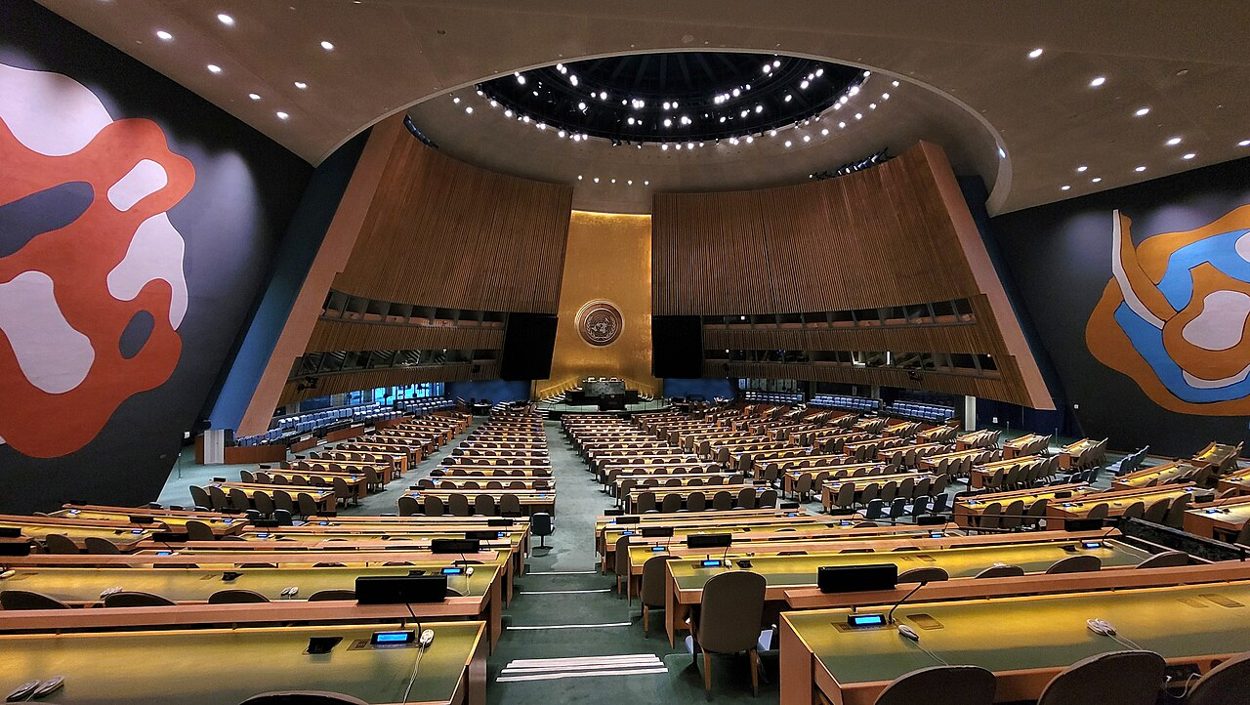
Paris: January 2025 notice versus January 2026 effect
The Paris Agreement is the most useful case study in accurate institutional reporting. On January 20, 2025, President Trump issued an order directing U.S. action toward withdrawal. The UNFCCC's record says the formal notice was received January 27, 2025 and the withdrawal took effect January 27, 2026. That twelve-month interval matters. Describing the United States as formally outside Paris on the day of the 2025 executive order would misstate the treaty process, even if the administration had already begun changing domestic policy and diplomatic engagement. As of the October 2026 research cutoff, the UN climate secretariat identifies the United States as not a party to the Paris Agreement. This status should be reported from the depositary-linked international record, not solely from White House rhetoric or an advocacy organization's reaction.
The Paris Agreement asks participating countries to prepare and communicate climate commitments through the nationally determined contribution system, alongside transparency and periodic review processes. Those commitments vary and are not equivalent to a universally enforceable domestic emissions cap imposed by a UN police authority. Accordingly, public debate about the agreement sometimes overstates both its legal coercion and its immediate environmental power. The United States leaving can affect diplomatic momentum and reporting relationships without instantaneously changing the output of every American power station. Domestic statutes, state law, private-sector investment and economic conditions continue to influence emissions. Rejoining in the future would involve diplomatic action and potentially different domestic implementation choices. This is why the UNFCCC depositary record is so valuable: it establishes the formal party status while leaving room for separate analysis of emissions and policy consequences. A photograph of UN headquarters illustrates the institution where member states negotiate; it does not prove that emissions increased or decreased as a result of a specific U.S. notification.
Paris and the UN climate convention are different instruments
The Paris Agreement operates under the wider United Nations Framework Convention on Climate Change. It is possible to discuss withdrawal from the agreement without assuming identical legal status under the framework convention itself. In January 2026 the Trump administration issued a separate memorandum directing steps concerning a broad list of organizations and instruments, including the UN climate convention. The instruction is an important factual development, but its effect under the particular treaty and domestic law must be checked independently of the White House's publication date. The article therefore treats that memorandum as an instruction to effectuate withdrawal and stop certain participation or funding to the extent allowed by law, rather than as conclusive proof that every multilateral status changed instantaneously. This cautious wording is not evasive; it reflects the difference between executive intention, diplomatic notification and a treaty's own procedures.
The wider climate convention illustrates how an organizational name can conceal treaty complexity. Participation in a framework treaty is not necessarily governed by the same withdrawal process as participation in an agreement concluded under it. Nor does an instruction concerning the UNFCCC automatically describe the status of each climate-finance pledge, scientific assessment process or bilateral climate memorandum. The January 2026 presidential memorandum directs federal agencies to act, but it also acknowledges legal constraints. An editor updating this article should therefore review the convention's treaty provisions, depositary notifications, State Department treaty records, and any relevant domestic legal opinions before declaring a specific effective departure date. If those items cannot be reconciled, 'directed withdrawal' is the safer present-tense statement. That is not a small grammatical choice: it affects the reader's understanding of whether U.S. delegates retain rights or obligations in a particular conference, and whether the United States is merely declining participation rather than formally losing treaty-party status. This article deliberately refrains from assigning a date not established by the records reviewed.
The February 2025 UN review
Executive Order 14199 called for review of U.S. participation in international organizations and gave particular attention to named UN entities. It also contained specific funding instructions and directed the State Department to evaluate membership and support more broadly. The scope of that review is wide, but an instruction to review is not itself a formal withdrawal from every organization reviewed. That procedural point is easy to overlook because the order's political framing is strong. Subsequent documents supply the necessary evidence about which entities were selected for withdrawal and what steps agencies were told to take. A reliable chronology records the February 2025 review as an initiating decision, and the January 2026 memorandum as a further administrative step. Each is then assessed against the conditions imposed by law, treaty and available appropriations.
The February review order also raises a distinction between a governmental assessment and a demonstrated institutional failing. The order advances criticisms of named organizations, including concerns about their alignment with American interests. Those criticisms are part of the executive branch's rationale. Evaluating them independently would require budget documents, voting records, program audits, investigative reports and statements by the institutions themselves. A claim that an organization is 'contrary to U.S. interests' is partly a political judgment about the nation's priorities, not an empirical variable that a press office can settle by decree. Some readers may value multinational influence and collective public goods; others may prioritize independence, direct bilateral leverage and avoidance of open-ended contributions. A balanced report explains those competing criteria while still testing concrete claims. For example, if an agency asserts waste, readers should expect specific audited findings rather than adjectives. If opponents assert that an exit will end a particular humanitarian service, readers should expect a grant or operating budget connecting the funding decision to that service. A disciplined audit leaves disputed motivations attributed and focuses definitive language on verifiable procedural steps.
The January 2026 international-organization memorandum
On January 7, 2026 the White House released a memorandum calling for withdrawal from a specified roster of non-UN and UN entities. Its listed UN bodies included the UN Framework Convention on Climate Change, UN Women, the UN Population Fund, UN Water and other institutions or programs. For UN entities, the text expressly explains that withdrawal means ending participation or funding to the extent permitted by law. This qualification is not a decorative footnote. It acknowledges that different bodies have different legal relationships with the United States, and that the executive branch does not have unlimited power to rewrite appropriations or statutes. Therefore the precise, verifiable claim is that the administration directed the steps, not that every listed institution had ceased receiving every possible form of U.S. support the same afternoon.
The January memorandum's breadth makes it particularly important to avoid treating a list as a uniform set of completed departures. A UN office, a treaty convention, a commission and a fund do not share one legal architecture. Some may involve formal membership, others participation, recognized status or voluntary support. For each listed item, a publication-ready dataset would record the exact official name, enabling legal instrument, relevant U.S. funding account, whether formal notice was required, the date of any receipt, the institution's current listing and any later reversal. It would also distinguish the administration's ability to stop discretionary engagement from congressional restrictions on mandatory payments. Without that item-level audit, a count of institutions on the memorandum is a count of entities targeted by instruction, not a count of successfully completed legal withdrawals. Journalists should be especially careful about converting that count into claims that dozens of international institutions have closed or that hundreds of thousands of beneficiaries lost services. Both claims would require additional evidence about operations and funding.
The 66-entity directive: a ledger rather than a headline
On January 7, 2026 Trump directed agencies to end participation or support for 66 international organizations and bodies identified in a White House memorandum—35 outside the UN system and 31 UN entities. The document expressly states that for United Nations entities, withdrawal means ceasing participation or funding to the extent permitted by law. This matters because the UN is not a single subscription that disappears when a president signs an order. UN membership, a treaty obligation, a voluntary program, a specialized agency and a trust fund all carry different legal or budgetary mechanisms. The document includes the UN Framework Convention on Climate Change and the UN Collaborative Programme on Reducing Emissions from Deforestation and Forest Degradation (UN-REDD), both directly relevant to this investigation. It also includes UN-Water and UN-Habitat, whose work can intersect with environmental infrastructure and human health.
The political intent was broad: the administration described disengagement as a way to prioritize sovereignty, efficiency and domestic spending. That is a statement of administration policy, not evidence that all 66 withdrawals have completed identical legal procedures. The correct journalistic test is an entity-by-entity record of notification, effective dates, funding cessation, remaining appropriations and any litigation. The United States remains a UN member state with a permanent Security Council seat; these facts are not nullified by the memorandum. This distinction is essential to prevent readers from believing the country formally left the United Nations in 2026. The impact is more subtle and, in some areas, more consequential: less participation in scientific assessments, smaller channels for negotiating standards, and fewer opportunities for American experts to influence technical rules.

What U.S. disengagement may mean for other countries
Funding changes can affect programs that rely on U.S. contributions, but the size and timing of an effect must be measured program by program. Some institutions have diversified donors, reserves or other member contributions; others may have sharply constrained operating resources. A withdrawal may also change voting power, negotiating leverage and access to technical working groups. Yet the practical consequences are not captured by an absolute slogan such as 'the UN has collapsed' or 'nothing has changed.' The relevant questions are how much of a program's budget was provided by the United States, whether the contribution was mandatory or voluntary, whether another government replaced it, and which services were actually reduced. The same analytical discipline applies to epidemiological networks: fewer formal relationships can raise coordination costs without proving that every data stream or scientific exchange disappears.
An international program's dependence on American funds must be evaluated over time. Some multilateral organizations receive large voluntary contributions earmarked for particular countries or emergencies, while other funds pay core staff and infrastructure. A reduction in one line item might directly halt a project, or it might be replaced through emergency appeals, reserve spending or other donors. Even when service delivery continues, losing a predictable contributor can impair planning and contract certainty. Conversely, a donor government may argue that direct procurement and bilateral grants achieve better value for the same funds. The evidence necessary to compare those models includes unit costs, independently evaluated results and the administrative burden of alternative arrangements. A program may appear cheaper because certain coordination expenses were transferred to local governments rather than eliminated. Conversely, a smaller, targeted bilateral agreement may outperform a large pooled program in some settings. The story should resist universal predictions in either direction and keep its conclusions tied to audited outcomes, especially where decisions made in Washington affect people with little ability to participate in U.S. domestic politics.
The World Health Organization is the key bridge
WHO connects the story of the UN system to the CDC more directly than most other international bodies. It helps coordinate global disease surveillance, emergency information and technical standards through member states and partners. CDC is an American institution; WHO is an international health organization. They can cooperate without occupying the same hierarchy. During outbreaks, exchanges among laboratories, health ministries and multilateral networks may reduce the time between a signal abroad and preparation at home. But any claim that WHO independently controls U.S. vaccination mandates would be inaccurate. Domestic recommendations and legal requirements are set through American institutions, subject to domestic laws and judicial review. The dispute over WHO membership is therefore principally about cooperation, governance, funding, sovereignty and information exchange—not a simple choice between WHO rule and no U.S. public-health policy.
The WHO question also concerns what type of authority international recommendations carry. WHO guidance is influential because it synthesizes expert evidence and enables comparisons across countries, not because WHO can ordinarily enforce American vaccination requirements. National governments decide how to incorporate advice into domestic policy. U.S. medical associations and state health authorities may consult many sources, including peer-reviewed studies and advice from other nations. Leaving WHO does not make those scientific materials disappear, but it can alter representation in the institution's processes, participation in standing networks and access arrangements. The significance will vary across pathogen surveillance, emergency declarations, technical classifications and capacity-building programs. Evaluating the withdrawal requires more granular evidence than a simple tally of member states. It requires knowing which activities were formerly conducted through WHO and which are now funded directly. A well-designed comparison would also measure whether information reaches American clinicians and laboratories in time to affect decisions, rather than merely documenting that an agreement was signed. Institutional affiliation matters when it changes what officials can learn, verify and do.
The convention, Paris and COP30: three distinct arenas
The Paris Agreement is a treaty operating under the wider United Nations Framework Convention on Climate Change. The United States delivered a new Paris withdrawal notice in January 2025, with the withdrawal effective January 27, 2026 under the agreement's procedure. Trump's January 2026 memorandum separately directed steps concerning U.S. participation in the UNFCCC itself. The UN Secretary-General's formal treaty-deposit record confirms that the U.S. notification of withdrawal from the underlying UNFCCC was received on February 27, 2026, and that the withdrawal will not become effective until February 27, 2027 under Article 25. Therefore, as of this article's October 21, 2026 cutoff, the United States is no longer a party to the Paris Agreement but the UNFCCC withdrawal is still pending its future effective date. It is incorrect to present the Paris exit and the Convention exit as events completed on the same day. UN climate chief Simon Stiell publicly criticized the January 2026 convention decision; the White House asserted the opposite judgment about American interests. These are opposing institutional evaluations, not substitute sources for treaty-deposit records.
COP30 took place in Belém, Brazil, in November 2025, during the period when U.S. policy was already shifting away from the Paris process. The global negotiations nevertheless continued among participating states and other stakeholders. A country can abstain from multilateral decision-making yet remain affected by technologies, commodity flows, insurance losses and policies adopted abroad. An American exporter operating in jurisdictions with carbon-related rules may have to comply with those markets regardless of Washington's diplomatic stance. The central consequence for the U.S. is thus not that planetary emissions immediately stop being measured. It is that Washington chooses to surrender or alter some negotiating leverage even as foreign regulators and consumers continue to make choices affecting U.S. firms.

The WHO departure was announced as completed
On January 22, 2026 the U.S. Department of Health and Human Services and State Department announced completion of the U.S. departure from WHO. Their statement attributes the decision to the Trump administration's criticisms of WHO's pandemic performance, proposed reforms and member-state political influence. It reports a yearlong process after the January 20, 2025 presidential announcement, including an end to funding and removal of U.S. personnel. Those are the administration's account of its actions and reasons. The document can support reporting that Washington publicly declared the process completed; an independently comprehensive evaluation of every international legal or financial dispute is a separate reporting project. What can be stated clearly is that formal U.S. health diplomacy changed substantially, and that the administration described a pivot toward direct bilateral arrangements instead of routine WHO participation.
Associated Press reported a material unresolved financial dispute accompanying the WHO departure: WHO said the United States owed approximately $280 million in 2024–2025 dues, while administration officials disputed the payment obligation. The amount is a reported organizational claim, not a universally agreed debt adjudication or a payment that has been verified as collected. The distinction makes the phrase 'clean break' particularly misleading. It is more accurate to describe the U.S. announcement of completed withdrawal alongside continuing disagreement about liabilities and access to international health data.
The January 22 American announcement contains several distinct claims: that withdrawal was complete, that WHO had mishandled aspects of the COVID-19 pandemic, that reforms were inadequate, and that U.S. activities were being redirected to bilateral engagements. The announcement is direct evidence of the administration's stated position, but it does not independently verify every contested criticism of WHO or establish that replacement cooperation is equivalent. The stronger evidentiary approach combines the U.S. statement with WHO governing records, financial accounts, relevant legal instruments and concrete memoranda of understanding with partner countries. Each category answers a different question. Legal status answers who belongs to the body; finance answers who pays; operations answer what surveillance or emergency tasks continue; scientific review addresses whether technical decisions are valid. Separating the categories allows an article to acknowledge actual American disengagement while resisting the unsupported implication that WHO has become irrelevant to global outbreaks. The organization continues to coordinate among other countries, and the United States remains affected by diseases that cross borders regardless of its formal membership.
What the January 2026 WHO exit did and did not establish
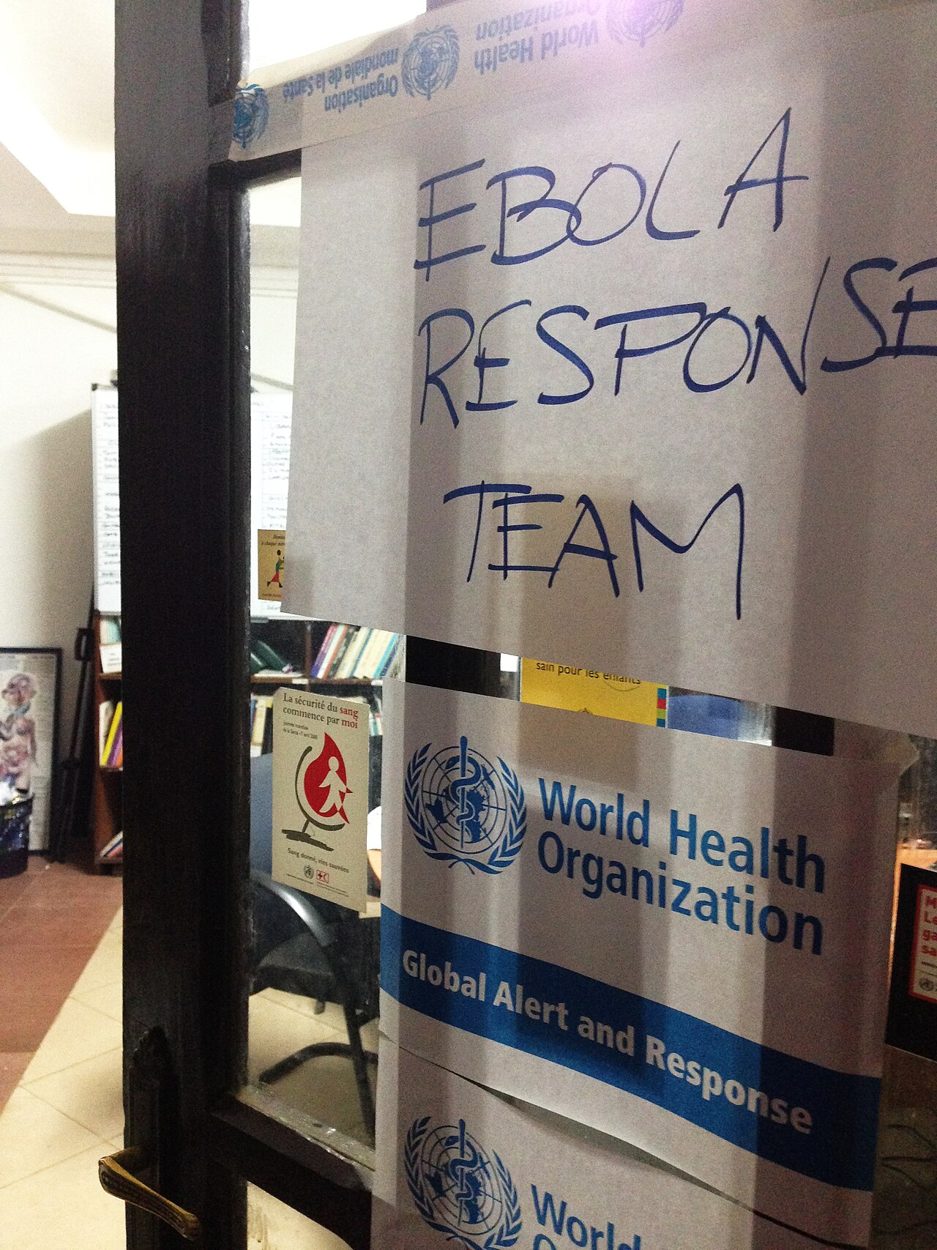
HHS and the State Department announced on January 22, 2026 that the United States had completed withdrawal from the World Health Organization, after a directive issued on Trump's first day in office a year earlier. The federal statement says U.S. funding ended and personnel were withdrawn, with limited WHO coordination remaining for the mechanics of withdrawal. WHO issued its own response on January 24, describing the move as detrimental and saying matters raised by the U.S. notice would be reviewed by its governing bodies. That does not mean WHO legally owns the CDC or can dictate American public-health mandates. The CDC remains a domestic agency performing surveillance and clinical guidance regardless of the country’s status in WHO.
WHO financing includes member-assessed contributions and voluntary funds; the distinction is significant when calculating budget effects. Announcing the termination of voluntary support is not the same accounting event as resolving an assessed contribution or contract already due. Public debate often refers to the U.S. as historically one of WHO's major contributors, but that alone does not reveal which projects could continue or who would replace any funding. The operational concern is whether disease data, influenza strain information, emergency notifications, surveillance networks, laboratory collaboration and technical training can be maintained through new bilateral agreements with comparable coverage and speed. The administration says direct relations will better serve U.S. interests; that is a policy proposition that can be tested against actual access and response performance rather than accepted on its own.
Why data channels matter more than organizational slogans
The practical stakes in disease surveillance are often technical rather than ceremonial. Detecting a new pathogen depends on laboratories producing reliable sequences, clinical systems reporting unusual disease patterns, officials recognizing clusters and institutions sharing usable information rapidly enough to influence action. A change in international relationships may require replacing standing communication channels with ad hoc agreements. Those replacements may work well in some bilateral relationships while leaving gaps in others. Neither outcome can be assumed without evaluating data timeliness, the countries covered, reciprocal access, and how disagreements are resolved. The same principle applies to environmental monitoring: a station's existence matters less if its instruments are uncalibrated or its readings are unavailable. Policy analysis must follow the pathway from observation to verification, guidance and on-the-ground response.
Disease reporting is a network problem with multiple potential points of failure. A hospital may identify an unusual case but lack the laboratory tools to determine its cause; a laboratory may identify a new variant but lack permission to share timely data; an international alert may circulate but arrive without enough context for American public-health officials to assess its reliability. No single organization controls all those links. Established networks can reduce transaction costs by supplying standard definitions and trusted relationships, yet they are not immune to errors, delay or political pressure. Bilateral alternatives can create strong ties with chosen partners but may struggle to cover places outside those relationships. The result should be evaluated using real-world metrics such as median reporting delay, genomic coverage, completeness of geographic participation and frequency of false alarms. These questions connect public-health sovereignty with the same information-quality concerns that arise in environmental regulation. A national institution cannot make reliable decisions solely from press releases; it needs measurements it can verify and partners capable of rapid technical exchange. That is the measurable standard against which promised post-WHO arrangements should eventually be judged.
Environmental data is health infrastructure: the wastewater example
CDC's National Wastewater Surveillance System demonstrates the overlap between environmental monitoring and infectious-disease epidemiology better than a generic claim that pollution and sickness are linked. A community's sewage contains detectable traces of viruses before every infected person seeks care or receives a clinical test. Wastewater signals do not reveal which individual is infected; they can suggest that infection activity is increasing in a sewer catchment. CDC's October 2026 program description lists influenza A, COVID-19, RSV, measles, avian influenza A(H5) and mpox as monitored organisms. Its public-health value derives from standardized collection, laboratory testing, appropriate normalization, comparability and careful communication of uncertainty. This is fundamentally a public-health surveillance program using an environmental sample, not an EPA drinking-water safety judgment.
A wastewater spike can support outbreak preparedness, but it should not be presented as a count of infected residents. Sewers differ in geography, industry, rainfall, flow patterns, sampling frequency and treatment processes. Some communities have no participating site. Likewise, an EPA drinking-water violation cannot automatically be translated into a specific disease incidence without epidemiological evidence. Where data systems share geography and exposure context, agencies can identify problems faster. Where funding or technical partnerships fragment, the loss may be invisible until a health department lacks trend information. An effective editorial test for 2027 is the number of reporting wastewater sites, timeliness of feeds, changes in analytical coverage and local officials' ability to act on findings—not simply whether the program name survives in an agency directory.

The CDC did not disappear
Claims that the CDC has ceased to exist are unsupported by the agency’s continuing publications and leadership records. CDC still identifies a director and publishes public-health guidance. Its official leadership page identifies Dr. Erica Schwartz as director as of August 2026, a detail that prevents a publication from relying on an outdated roster. But the continuation of an agency is not proof that every previous activity retained identical funding, staffing or access to overseas partners. A useful performance measure would compare laboratory capacity, disease reporting timeliness, state support and technical staffing across fiscal years, while accounting for changing outbreak loads. Those measures are harder to compile than a headline about who was appointed, but they better reveal whether the institution's ability to protect public health is improving or deteriorating.
Leadership changes can influence CDC's direction, but attribution must remain precise. In 2025 and 2026 several officials held or performed relevant roles at different times. A document issued by an acting director should not be attributed retroactively to a director appointed months later. Likewise, the presence of a department secretary does not mean that secretary personally signed every CDC decision. Official leadership rosters, dated memoranda and contemporaneous testimony help resolve those details. The institution's operating capacity also depends heavily on trained career personnel and state or local relationships that outlast any single appointee. Workforce changes can affect recruitment, expertise and institutional memory, but a serious estimate requires verified staffing numbers by program and function rather than treating a broad headcount as a measure of competence. Reporting should distinguish politically appointed leadership, commissioned public-health officers, civil-service scientists, contractors and public-health staff outside the federal government. Each group contributes different capabilities and is subject to different rules. That precision protects readers from simplistic accounts in which every operational success or failure is assigned to one named administrator.
Vaccines: announcement, decision and court stay
January 2026 provided a concrete example of how policy status can change. On January 5 CDC announced that Acting Director Jim O'Neill accepted recommendations to reorganize childhood vaccination guidance into categories. The press release described the policy rationale and asserted that insurance access would remain available. However, CDC's schedule webpage later reported that a March 16, 2026 federal-court preliminary order stayed votes from specified 2025 advisory meetings and the January 5 decision memorandum. The same webpage identifies the July 2, 2025 schedule as current. A reader who sees only the January press release might mistakenly treat the revised categories as fully operative today. Correct reporting must give the later stay precedence when describing present guidance, while explaining that an announced policy and a judicially stayed policy are both historically significant events.
Vaccination schedules combine epidemiology, evidence assessment, clinical judgment, implementation practice and public communication. They also serve different purposes from state school-entry requirements or individual medical advice. A federal schedule can guide clinicians and insurance coverage frameworks without itself constituting a nationwide criminal or civil mandate to vaccinate every child. The January 2026 announcement offered a policy restructuring, but the subsequent court stay affects what clinicians should treat as current federal guidance. Readers should consult the operative CDC schedule and their own qualified clinicians rather than relying on an archived news release alone. A factual analysis should also distinguish vaccine availability from uptake and uptake from disease prevention. A policy could preserve coverage while changing the clarity of recommendations, and the public-health effects would require study. The presence of a measles micrograph in this article illustrates a pathogen relevant to vaccination; it is not evidence that a particular 2026 policy caused an identified case. That caption discipline matters in health journalism where emotionally powerful pictures can otherwise imply causal findings that have not been established.
The CDC programs that remain operational in 2026
A simplistic account could suggest that withdrawing from WHO or disputing vaccine recommendations ended the CDC's role. The agency's own pages contradict that. Its Environmental Public Health Tracking program listed 33 funded state and local recipients in July 2026, with a five-year cooperative agreement that began in 2022 and approximately $20 million awarded per budget year. Its Climate and Health Program said in August 2026 that its Climate-Ready States and Cities Initiative was helping 13 grant recipients use the Building Resilience Against Climate Effects framework to identify risks and plan adaptations. These documented continuities matter: a change in the administration’s language about climate science does not prove that every related CDC service has ceased.
But a functioning webpage does not prove that local systems have unchanged staff, budgets, data quality or capacity. A meaningful investigation should compare awards, staffing, reporting frequency and public datasets year over year. It should ask whether climate-health planning and environmental tracking results remain integrated with the EPA's pollution measurements and with health departments' decisions about wildfire smoke, heat warnings, harmful algal blooms, drinking-water contamination and vector-borne disease. These data pipelines do not require the UN to exercise domestic authority. International bodies can contribute scientific assessment and coordination while domestic and local actors still decide whether shelters open, testing expands, or a city issues public warnings.
What courts can—and cannot—settle
Judicial review determines questions within a case: standing, procedure, constitutional or statutory authority, administrative records and entitlement to relief. A preliminary stay is not always a final judgment on every scientific or policy question. Similarly, the fact that an agency won a procedural argument in one case does not prove all the policy's factual premises. Reporters should identify the court, the date, the legal issue, the exact scope of relief and whether an appeal or later order modified it. This discipline is especially important when comparing climate rules and immunization decisions: both can be litigated, but their governing legal frameworks differ. In a public-facing article, terms such as 'blocked,' 'stayed,' 'vacated,' 'appealed' and 'finalized' should be used according to the actual judicial document rather than as interchangeable substitutes for political victory or defeat.
Legal disputes over agency procedures frequently change what practitioners are instructed to do even before a case reaches a final merits judgment. A stay can restore the practical relevance of an earlier document while the court considers the later agency action. An appeal can challenge that stay, and a later opinion can narrow, extend or reverse the outcome. A live health or environmental article therefore needs an update log that tracks controlling orders, not just the first decision that attracted national coverage. For example, the CDC webpage explicitly identifies the previous schedule after the March 2026 order, so an editor should treat that statement as more useful for present clinical status than the January press release. For EPA, a reporter must similarly distinguish a published rule's effective legal status from uncertainty about eventual appellate review. Responsible coverage neither assumes that agency power is unlimited nor implies that every lawsuit automatically suspends implementation. It should record the exact order's scope, affected parties and status at the research cutoff, then issue a visible update if those facts change.
Vaccines, advisory processes and an actual court stay
The CDC website as of October 2026 identifies its July 2, 2025 schedules as the operative immunization schedules because a federal district court's March 16, 2026 preliminary order stayed certain 2025 Advisory Committee on Immunization Practices votes and the acting CDC director's January 5, 2026 revision memorandum. The displayed schedules include a later April 27, 2026 RSV adjustment for certain adults in the portal's explanation. Describing the January 2026 schedule overhaul as fully in force would therefore contradict CDC's own current notice. The separate question of a policy's scientific merits should not be conflated with the immediate legal effect of an injunction.
Vaccine-policy controversies become especially consequential during measles outbreaks because herd protection depends on community coverage, not just individual choices. CDC's October 16 release reported 4,410 confirmed measles cases for 2026 as of October 15. The report distinguishes confirmed cases from deaths and notes the data cutoff. Reuters reported on October 20 that CDC had recognized a third measles-related death after changes in federal death reporting. Disagreement between state-reported deaths and the federal total is a measurement and attribution story that warrants scrutiny; an account should neither convert every reported death into a confirmed measles cause nor assume a low federal count proves low risk. These are contemporaneous findings, not predictions about next week's totals.
Disease prevention and environmental protection intersect
Environmental exposure and communicable disease are separate fields with important overlaps. Poor air quality can worsen vulnerability in people with certain respiratory conditions; disruptions to water infrastructure can elevate infectious-disease risks; extreme weather may complicate continuity of medical services; and environmental conditions can influence the ranges or seasons of some disease vectors. The existence of those mechanisms does not prove that every individual illness is attributable to a particular national policy. Establishing causation requires exposure measurements, comparable populations, time trends and uncertainty analysis. EPA's tools typically focus on environmental standards, permits, research and cleanup, while CDC's focus is surveillance, prevention and response. Their collaboration can inform decisions that neither institution could evaluate as thoroughly alone. The strength of that collaboration should be assessed by observable projects and published datasets, not only by an administration's stated enthusiasm for or skepticism of climate framing.
Environmental health is often best understood through pathways rather than political categories. A hazard must first be present, then transported through air, water, food or another medium, then reach a person at an exposure level relevant to a health outcome. Vulnerability can vary by age, occupational conditions, preexisting disease and access to protective measures. Public-health investigators need information about both the environment and the affected population. This is where EPA monitoring and CDC analytical capacity may complement one another. However, a scientifically credible study must account for confounding factors and distinguish correlation from an established causal relationship. When analyzing heat, infectious vectors, storm recovery or pollution-related illness, national climate-policy direction is one possible upstream factor among many. Claiming that a single presidential memorandum created a specific outbreak in a particular county would demand far more evidence than is presently available. An effective public article can nevertheless explain mechanisms, identify current gaps in surveillance, and direct attention to measurable risks without asserting false certainty. That approach makes public-health reporting more actionable and less vulnerable to politically driven overstatement.
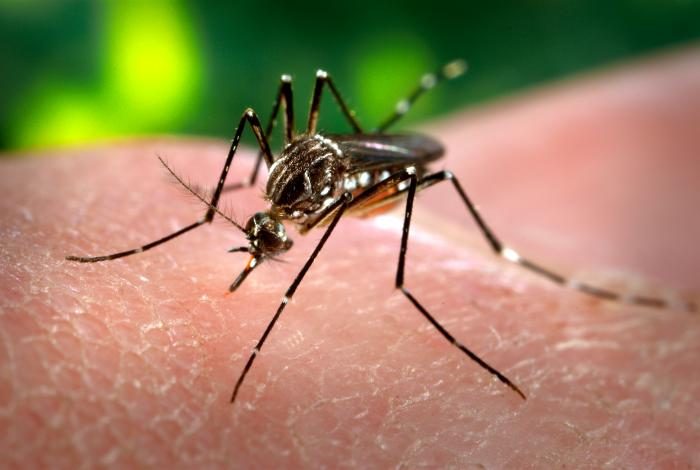
State and local government will determine much of the practical effect
Federal rules matter, but residents usually encounter environmental and health services through state agencies, local water utilities, hospitals, county health departments and school districts. Some states may preserve stricter standards or invest their own resources, subject to federal preemption and state law. Others may align quickly with revised federal enforcement priorities. This produces a patchwork rather than a single uniform nationwide experience. A useful local reporting approach would follow a state air permit, an operating water system, an outbreak investigation and a grant-funded community project from beginning to end. What was required in 2024? Which obligations were revised in 2025 or 2026? Who made the decision? What monitoring continued? Those answers show the consequences of a national transition without mistaking abstract rhetoric for the environmental conditions in a particular neighborhood.
The federal-state relationship also complicates numerical comparisons. EPA may delegate certain program implementation duties to state regulators while retaining oversight, and state legislation or court decisions may determine whether local governments can adopt stricter rules. CDC data may come from state surveillance systems operating under different reporting practices, which can affect comparisons across time. A decline in reported cases might reflect genuine prevention, reduced testing or a changed case definition. Similarly, a decrease in enforcement actions could mean improved compliance, altered priorities or reduced capacity. A useful assessment pairs output counts with context: inspections per facility, violations corrected, laboratory turnaround time, disease surveillance completeness and population-adjusted outcome measures. When the article discusses where policy appears headed, it is a mistake to extrapolate a uniform national outcome from a federal announcement. Some states may strengthen environmental or health programs while others reduce them. The resulting diversity can supply evidence about different approaches, but comparisons require adjustment for industrial mix, demographics, baseline conditions and fiscal resources. Without those controls, simple state rankings can tell more about measurement choices than policy effectiveness.
The environmental-health laboratory chain in a real emergency
Consider an outbreak following unusually heavy rainfall that overwhelms wastewater infrastructure. A sewer agency first records overflow or treatment malfunction; environmental officials test receiving water and determine permit compliance; health departments monitor illness clusters, conduct interviews and collect specimens; CDC laboratories or epidemiologists may assist if local investigation requires additional capacity. WHO might share international epidemiological alerts about a pathogen appearing in multiple countries, but WHO cannot by itself order an American wastewater plant to upgrade pumps. EPA cannot declare someone to be infected solely from detecting contamination in a waterway. CDC cannot independently rewrite an industrial plant's Clean Water Act permit. Each institution produces different kinds of evidence; the most reliable public decision-making connects them without merging their authority.
This model also explains why funding decisions outside a single agency have ripple effects. A federal environmental monitoring cut can remove exposure data a health department previously relied on. A reduction in international disease collaboration may limit comparator datasets even while local wastewater tests continue. Conversely, new bilateral partnerships may replace parts of the international network, but only with documented operating agreements, laboratories, countries, reporting protocols and access guarantees. The concrete measures are time from first signal to alert, proportion of affected areas sampled, speed of confirmation and clarity of public advice. Those metrics are more valuable than a press release counting agencies involved in a task force.

What this means in the St. Louis region
Missouri provides a practical lens for comparing federal and local authority. A Missouri community may face concerns about industrial emissions, drinking-water treatment, cleanup funding, vector-borne illness, asthma or infectious-disease readiness. But it would be inappropriate to insert an unverified accusation about a specific facility or neighborhood into this article. Local impact has to be determined from Missouri Department of Natural Resources permits, EPA monitoring and enforcement documents, municipal water quality reports, county health data and the actual terms of federal grants. The existence of an EPA rule affecting national motor-vehicle greenhouse gases, for example, does not tell us what a particular Missouri air monitor recorded this morning. Likewise, a WHO withdrawal does not automatically prove that a local clinic lost access to a vaccine. A valuable local follow-up would identify those measurable links, including instances where no direct change can yet be shown.
For the St. Louis area, a robust localized supplement would begin with a defensible list of monitored facilities and exposure questions rather than cherry-picked dramatic examples. Air-quality readings should specify monitor identifiers, pollutants, averaging periods and the environmental agency maintaining them. Water-quality analysis should identify the specific serving utility, contaminant and reported sampling dates. Environmental cleanup coverage should distinguish a property under investigation from a site with confirmed completed remediation. Public-health trends should use the relevant city, county or state reporting jurisdiction and carefully describe the limits of available demographic data. Because the present article is a national comparison, it does not purport to have completed those local investigations. It also does not imply that a photograph of solar panels in Columbia, Missouri represents a disputed St. Louis project. The regional photograph is included to show a genuine Missouri example of energy infrastructure discussed in the national policy debate. A subsequent reporting project should examine how existing state permits, federal grant changes and public-health partnerships intersect in named communities, after obtaining records sufficient to support those claims.
A Missouri case study: Superfund sampling, not a proxy for national policy
In September 2025, EPA Region 7 published an image of its crew performing pre-excavation confirmation sampling at the West Lake Landfill Superfund Site in Bridgeton, Missouri. The photograph documents a particular field activity, not proof that remediation at the site is complete or that an administration solved every community concern. It illustrates the practical meaning of continuing EPA responsibilities in the St. Louis region: site investigation, sampling, engineering decisions, administrative records, coordination with Missouri authorities and public updates. A national policy headline about climate regulation tells residents very little about their immediate exposure to a given substance near a remediated or active waste site. Site-level data and project milestones are the correct evidence.
Public-health outcomes have their own causal limits. A medical condition in a nearby neighborhood cannot automatically be attributed to the landfill without reliable exposure pathways, dose information, timing and epidemiological assessment. At the same time, the absence of a proven case-specific causal link is not proof of zero risk. Responsible reporting asks which contaminants are measured, where and how often measurements were taken, what levels trigger response, who maintains the records, and which agencies bear responsibility for action. The broader EPA–CDC–UN story becomes tangible here: the local regulatory work continues even as the federal government revises its participation in international science institutions.
Economic opportunity and compliance are both at stake
The changes create uncertainty for businesses alongside possible regulatory relief. A manufacturer may face different compliance expectations under a revised federal vehicle rule, while suppliers working across states or internationally may still have to meet other standards. A clean-energy developer may reassess federal incentives, loan terms and demand expectations, while a company selling pollution-control services may find continued demand from state requirements or industrial permits. Small businesses seeking government contracts should distinguish an appropriated program from an announced priority, and a solicitation from an actual award. That caution is particularly relevant when an agency advertises savings from canceled contracts: an announcement does not tell prospective vendors which remaining procurement channels are funded. Reliable business forecasts require current solicitations, contract actions, audited financials and supply-chain information rather than extrapolation from press language alone.
For government contractors and suppliers, policy shifts should trigger a methodical review of opportunity pipelines rather than a blanket prediction of growth or contraction. Federal environmental and health work spans laboratory equipment, field sampling, water treatment, IT modernization, data analytics, training, logistics, emergency response and engineering. Some categories may expand while politically disfavored grants or research lines contract. An agency's strategic announcement does not itself create an authorized purchase order. Firms should check the specific solicitation number, contracting office, source of funds, applicable set-aside, delivery obligations, technical standards and award status. They should also distinguish grants from acquisition contracts: grant cancellation statistics do not map directly onto procurement spending. Where international agencies reduce programs, other countries or private implementers may issue replacement procurements, but those opportunities require independent evidence. This practical distinction helps businesses avoid changing their plans solely in response to ideological headlines. A credible financial projection separates appropriated funds, obligations, competitive solicitations and realized revenue. That habit is especially valuable during periods of rapid executive reorganization when agency websites and press statements can change faster than contractual commitments.
The Solar for All ruling: a real constraint on executive cancellation
The dispute over Solar for All shows why announced cancellations must be evaluated against final judicial orders. EPA awarded grants under the Inflation Reduction Act's Greenhouse Gas Reduction Fund framework to support rooftop and community solar access, including for lower-income households. In September 2026 a federal district judge in Rhode Island ruled that EPA's termination of the $7 billion Solar for All program was unlawful under the Administrative Procedure Act and vacated the termination decision. Reuters independently reported the ruling. That is stronger evidence than a press statement that a program would be closed; it does not establish that every grant recipient immediately received money, completed projects or that further litigation and implementation questions had ended.
For a household, a promised installation is not the same as an operating system that lowers monthly electricity payments. For a local installer, an awarded grant is not identical to signed subcontracts or revenue. For an investor or developer, a court order restores an administrative legal position but may leave practical financing and timeline uncertainty. The outcome illustrates a repeated pattern across the transition: executive policy direction, statutory spending instructions, contract or grant terms and judicial review pull in different directions. An accurate article has to keep all four in view rather than assigning the full economic result to a single announcement.
The argument for the Trump approach
Supporters of the administration's strategy emphasize accountability, domestic discretion, lower compliance costs and skepticism toward international institutions they regard as inefficient or insufficiently responsive to U.S. interests. EPA's 2026 rulemaking expresses a statutory-interpretation argument about the reach of motor-vehicle greenhouse-gas regulation. The White House presents its international decisions as restoring American negotiating leverage and preventing commitments it regards as disadvantageous. Those positions deserve accurate articulation even when their empirical implications remain disputed. A serious evaluation would ask whether rule changes reduce prices as modeled, whether faster permitting leads to measured economic gains, and whether bilateral health partnerships replicate the response capacity supplied through multilateral channels. Without such evidence, promised efficiency and sovereignty benefits remain hypotheses or normative judgments rather than established outcomes.
The administration's favorable economic theory should be subjected to tests that allow it to succeed or fail empirically. If reduced compliance burdens lower consumer prices, analysts should be able to observe relevant costs, pricing and market responses against an appropriate baseline. If reorganized EPA operations speed cleanup, public records should show shorter decision times and completed remediation, not only an internal reclassification of work. If bilateral health diplomacy substitutes effectively for WHO participation, outbreak intelligence should remain sufficiently comprehensive and timely across partner and nonpartner countries. These measures would help separate policy performance from party affiliation. Supporters may reasonably assign greater weight to national control and regulatory simplicity than to international participation, but those values do not settle claims about monetary savings or disease preparedness. Some changes may produce mixed outcomes, benefiting certain manufacturers while raising risks or costs elsewhere. The article should be willing to report such combinations. A standard that permits an administration to demonstrate success through observable results is more useful than an analysis that declares the verdict before the policy has run its course.
The argument against the Trump approach
Critics emphasize the danger of weakened emission controls, lost international coordination, disruption to established grant recipients and damage to institutional expertise. In public health, critics worry that moving away from WHO networks can reduce the speed or scope of access to outbreak information. In climate policy, they argue that rescinding important regulatory predicates and leaving Paris can weaken efforts to reduce long-term environmental risk. These concerns are reasonable subjects for investigation, but a journalist should not transform them into unsupported assertions that a particular death, disease outbreak or disaster was caused by a presidential order. The appropriate evidence includes emissions inventories, longitudinal health indicators, scientific peer review, international surveillance agreements and court records. The degree of risk can be discussed without pretending that projected harms have already been measured.
Critical analysis likewise benefits from clear conditions under which feared harms would—or would not—appear. If an EPA repeal weakened conventional air-quality protections despite the rule's stated scope, that claim would need supporting regulatory text or measured indirect effects. If disease surveillance deteriorated after WHO withdrawal, investigators should seek evidence of delayed information, missed signals or disrupted agreements rather than using every subsequent outbreak as automatic proof. If grant cancellations reduced community services, award files and recipient records should identify the abandoned deliverables and the people affected. Conversely, preserved or improved performance should be acknowledged even when the underlying political strategy is opposed. This framework does not require neutrality about the value of clean air or timely disease detection; it requires evidence about whether particular policies advance those goals. It also recognizes that absence of an immediately detected problem is not proof of long-term safety. Environmental and health outcomes often appear with delay, so monitoring should continue over appropriate intervals with transparent methodological limits.
Institutions may become less aligned without becoming disconnected
A broad direction is visible across the federal government's 2025–2026 decisions: less reliance on selected international bodies, narrower executive interpretations of some environmental regulatory powers and changes to public-health decision processes. But it would overstate the evidence to say EPA, CDC and the UN now have no relationship. Environmental and epidemiological science move through universities, laboratories, states, bilateral partners, industry and international networks beyond a single membership arrangement. Some collaborative functions may continue informally; others may prove difficult to replace. The better framing is selective disengagement and institutional reconfiguration, with the real-world results still developing. The trajectory is not irreversible: Congress, future administrations, judicial decisions, state governments and international counterparts all influence what comes next.
Selective disengagement may create a system in which relationships differ sharply across subject areas. American researchers may continue participating in international scientific collaborations while federal departments reduce formal organization membership. States, universities and companies may maintain climate partnerships even as the executive branch withdraws from a treaty. CDC could receive some international disease alerts through bilateral channels while its role within WHO-governed processes changes. EPA may remain involved in domestic enforcement and cleanup while placing less emphasis on certain climate or environmental-justice initiatives. This mixture complicates sweeping phrases such as 'America has gone it alone' or 'international cooperation is unchanged.' Both overgeneralize. The consequential question is where particular capabilities are located: who collects measurements, who validates them, who funds shared infrastructure, who receives alerts and who can act on the information. Those functions often cross institutional boundaries. The durability of the new arrangement may depend on whether it preserves operational redundancy and transparent coordination even when high-level diplomacy becomes more confrontational. Its weaknesses, if they appear, are likely to be program-specific before they become visible in broad national statistics.
The strongest critique and the strongest defense should answer the same questions
Supporters of Trump's approach argue that national government should prioritize affordability, reliability, congressional control and domestic political accountability. They contend that compliance spending can divert capital from productive activity, that international organizations can be unresponsive to taxpayers, and that the United States can coordinate directly with partner nations when needed. These are intelligible governance concerns. A fair assessment should ask whether EPA's cost estimates are transparent and whether bilateral disease-cooperation agreements demonstrably maintain access to information. National sovereignty does not automatically produce better public health, but international membership is not, by itself, proof of effective coordination. Both claims require performance evidence.
Critics argue that greenhouse gases and infectious pathogens do not respect national borders; weakening federal rules and relinquishing technical seats can reduce opportunities to prevent harm that materializes over years. They cite the 2026 UN emissions assessment, CDC's public-health surveillance needs and legal challenges to canceled grants. An equally demanding test applies: a climate rule's forecast benefits must be distinguished from observations, and international bodies must demonstrate useful data and preparedness capabilities. The most consequential disagreement is not whether one side wants health and the other does not. It is how much precaution, federal regulation, international exchange and economic burden should be assigned to each level of government—and how to measure the costs of underprotection as rigorously as the costs of compliance.
What 2027 could test
The next phase will be less about inaugural declarations and more about implementation. For EPA, the key questions are how the 2026 final rule operates in practice, which legal challenges alter it and what regulated entities actually do. For global climate relations, watch the diplomatic and budgetary details of the January 2026 withdrawal instructions as well as continuing work among U.S. states and private entities. For CDC, examine whether institutional leadership and court proceedings stabilize vaccine guidance, and whether disease-detection capacity remains timely and technically credible. For WHO relations, review the bilateral agreements that replace formerly routine coordination. This is a scenario-based forecast, not a claim that any particular lawsuit will end a certain way or that future outbreaks can be predicted. It deliberately identifies testable indicators rather than assigning certainty to politically favored outcomes.
The most useful leading indicators for 2027 are not speculative forecasts about electoral outcomes. They include final judicial decisions, rulemaking compliance instructions, changes in permit processing, publication of EPA monitoring data, executed health-data agreements and CDC surveillance response performance. A second class of indicators concerns fiscal accountability: agency financial statements, unobligated balances, completed grant closeouts and independent audit findings. A third concerns scientific capacity: laboratory staffing, data availability, peer review and collaborations capable of detecting unexpected threats. Political announcements are useful because they identify intent, but these records determine whether implementation follows through. Future coverage should document both changes that survive challenge and those reversed in court or by subsequent agency action. It should also revisit predictions made in 2025 or 2026 with actual measurements rather than quoting them indefinitely. Readers can then see whether claims about lower costs, greater sovereignty, weaker preparedness or deteriorating environmental conditions were supported, contradicted or still untestable. Such a scorecard would turn a politically charged transition story into a sustained public-accountability project.
The UNEP report released on this article's cutoff date
The timing of this investigation matters. On October 21, 2026, the UN Environment Programme released its Emissions Gap Report 2026, reporting that warming under current policies could reach about 2.8°C this century. It found that full delivery of countries' national pledges would produce a lower trajectory of about 2.6°C, still above the Paris framework's ambitions. UNEP compared required global greenhouse-gas cuts against 2025 levels: approximately 18% by 2030 and 45% by 2035 in its lowest-possible 1.5°C overshoot pathway, with additional carbon removal required later. These are global modeled pathways, not measured U.S. reductions; the report presents them as scenarios with significant assumptions and uncertainty, not a guaranteed forecast for a particular city.
UNEP explicitly said that its warming projections had deteriorated partly because of the U.S. Paris withdrawal, alongside revised historical emissions estimates. That is a specific analysis from an international scientific institution, not independent proof that one administration is responsible for all global warming. Even if another government were to change policy tomorrow, climate trajectories reflect accumulated emissions over decades and the decisions of many countries. The immediate significance of the report is narrower and stronger: as the U.S. reduces participation in parts of the international climate architecture, the UN is still publishing assessments used by governments and markets to evaluate risks. The two processes are moving in opposite institutional directions, while their economic and health consequences remain connected.
A reader’s checklist for future announcements
When a future announcement claims that an institution has been dismantled, restored or transformed, ask six questions. Who issued the instrument and under what legal authority? Was the action merely announced, proposed, finalized, effective or stayed? Which people, places, programs and dollars are precisely identified? Is a number an estimate, an appropriation, an obligation, an expenditure or an observed outcome? Does an independent source corroborate the event, and does the original institution's record agree? Finally, what measurable local consequence is asserted and what data would falsify the claim? Using those questions consistently improves coverage of all administrations. It also protects readers from images that show a real laboratory, building or smokestack but are misleadingly captioned as evidence of an unrelated policy event.
An audit-conscious newsroom should maintain a working record for every important claim in this subject area. Each record needs the exact wording, an original-source URL, a second independent corroborating source when possible, date of last verification, legal or administrative status and a note describing what the evidence does not support. Visual assets require parallel records of origin, creator, date, depicted subject, permission and whether the image is merely illustrative. The original article should be preserved so that substantive revisions can be distinguished from silent alterations. If a published story misstates the status of the vaccination schedule or the Paris withdrawal effective date, the correction should identify the earlier error, the accurate information and the date corrected. Editorial changes that improve wording without correcting a material factual error do not require the same kind of public correction. The underlying discipline is consistent: neither political preference nor compelling narrative justifies inventing events or misrepresenting the legal force of a document. Applied continuously, these practices protect both QBH's credibility and readers who need actionable information.
A 2027 scorecard that can actually falsify predictions
The administration's direction is clearer than its eventual result. The strongest prospective evaluation would track whether EPA's 2026 final rules survive litigation and whether the supplemental power-sector proposal becomes a final rule. It would track utility compliance with drinking-water rules, the number and results of environmental samples, the completeness of EPA datasets and the pace of Superfund cleanup milestones. These are observable indicators. Measuring emissions and health outcomes also requires time horizons: a rule change may affect a factory's investment plan quickly while environmental concentrations and disease rates evolve over years. Attributing a change in respiratory disease to a single rule without controlling for weather, smoking, population and local pollution sources would be bad epidemiology.
For CDC, compare environmental-tracking grant recipients, wastewater sampling participation, outbreak reporting delays, vaccination coverage and final versus preliminary mortality figures. For international institutions, verify the number of active bilateral agreements, the terms of data exchange, the progress of the UNFCCC exit process and whether U.S. scientists continue using global surveillance and climate assessments. For households, examine insurance rates, energy bills, drinking-water notifications and heat-related emergency plans rather than assuming a national savings estimate predicts everyone's cost. These indicators distinguish a plausible policy trajectory from an inevitable outcome. They also provide an editorial mechanism for revisiting this special report instead of indefinitely repeating the original administration's slogans.
Conclusion: distinguishing direction from result
By October 2026, the evidence supports a substantial shift in federal policy after the Biden–Harris administration: EPA has adopted a major greenhouse-gas regulatory rescission; the United States is formally outside the Paris Agreement; the administration announced completion of withdrawal from WHO; and White House memoranda have directed reductions in participation and funding across numerous international bodies. It is equally important to recognize what the evidence does not show. These events do not establish that all environmental laws vanished, that the United States left the UN altogether, that CDC ceased operations, or that a court-stayed vaccination policy is presently controlling. The future appears headed toward a more domestically centered, selective model of environmental and health governance. Its success or failure will be judged not by rhetoric alone but by legal durability, scientific quality, measurable health and environmental outcomes, and the resilience of international information exchange.
The long-term significance of the transition may be institutional rather than confined to a particular list of executive orders. Legal interpretations adopted now can shape later rulemaking; international exits can change technical networks that take years to rebuild; staffing and grant decisions can affect expertise and physical projects on different timelines. At the same time, federal institutions are not static extensions of one president. Congress can legislate, courts can review, states can act within their authority, researchers can continue scientific collaboration, and future elected officials can revise policy. The central question is whether the new balance produces demonstrably sound decisions about pollution, public health and international risk. That requires more than counting canceled grants or signed memoranda. It requires maintaining credible measurements, documenting trade-offs, protecting scientific integrity and making policy processes accessible to people affected by them. As of October 21, 2026, the direction of federal policy is clear enough to analyze, but many longer-term outcomes remain unmeasured. A responsible conclusion states both truths: the shift is real, and its eventual health, environmental and economic consequences are not yet settled.
The first unresolved test concerns administrative legitimacy. Executive agencies can change interpretation and priorities, but a lasting policy requires a defensible explanation of statutory authority, procedural compliance and the evidence considered. For vehicle greenhouse-gas regulation, future court decisions will determine whether EPA's rescission survives challenge and on what grounds. A judicial outcome favoring the administration on statutory authority would not in itself establish that global warming has no public-health implications. A ruling against the agency would not mean every previous emissions policy was economically optimal. Those are different propositions. The same caution applies to vaccine governance: decisions about committee procedures and agency authority should be described separately from claims about the effectiveness or safety of particular medical products. The legal process can influence the permitted policy pathway without independently settling every scientific controversy. Keeping those questions apart is the best safeguard against partisan overstatement.
The second test concerns observable capacity. Environmental quality and disease preparedness depend on activities that often receive little attention until something goes wrong: laboratory quality assurance, reliable data systems, trained inspectors, standardized definitions and sustained relationships with local jurisdictions. Presidents can redirect funding, but an announcement cannot instantly rebuild a lost network or establish that a retained one is functioning well. An assessment that only counts organizational charts or budget headlines may miss such practical details. For the coming year, watchdogs should ask whether data continue to be published consistently, whether communities can identify responsible officials, and whether programs can demonstrate outcomes on agreed metrics. This is not a demand for bureaucratic expansion as an end in itself. Smaller systems can sometimes be more effective; larger systems can sometimes be better equipped for unpredictable crises. The evidence should decide which description fits each program.
The third test is international reciprocity. Countries exchange environmental and health data partly because they anticipate future benefit, because technical networks have established trust, and because they have negotiated rules about confidentiality and sharing. Replacing multilateral participation with bilateral arrangements can change incentives and coverage. Some partners may negotiate highly productive direct relationships with the United States. Others may have less capacity or reason to share information outside broad forums. Analysts should compare the quality and breadth of those arrangements against the functions they replace rather than merely counting signatures. They should also distinguish formal agreements from informal academic and scientific cooperation, which may persist across diplomatic disputes. The health and climate risks involved do not stop at national borders, even though governments retain the authority to decide how they address them.
Finally, the transition raises a question of public trust. Agencies need to explain why they changed course, disclose supporting evidence and acknowledge uncertainty. An administration may reasonably challenge inherited policy, but that challenge becomes more credible when it presents transparent methods and accepts independent scrutiny. Opponents likewise strengthen their case by distinguishing demonstrated consequences from worst-case scenarios. QBH's standard should be consistent across both: identify the decision-maker, locate the controlling document, verify its status, label forecasts, credit photographs accurately and correct material errors visibly. The resulting story may not satisfy readers looking for a simple partisan verdict. It can, however, give them a more valuable account of what Washington has actually done, what remains contested and how to tell whether the nation's environment and public health are improving or worsening.
Where the three agencies actually connect
Wildfire smoke & heat
EPA monitors and regulates pollution; CDC supplies health-risk advice and climate-health support; UN agencies compare national climate trajectories and adaptation strategies. A local air-quality warning does not require UN authorization.
Drinking water & chemical exposure
EPA establishes and enforces drinking-water requirements through delegated authorities; local systems treat water; CDC tracks exposures and disease patterns; international cooperation supplies scientific studies but not U.S. permits.
Wastewater & infectious disease
CDC uses wastewater samples to infer community pathogen trends; utilities and health departments operate collection networks; EPA governs separate pollution-control obligations. WHO coordination can carry international disease intelligence.
Mosquitoes, floods & zoonoses
CDC and local agencies study changing exposure to vectors and emerging disease; EPA deals with environmental conditions and chemical controls under applicable law; WHO coordinates cross-border surveillance and guidance.
These examples describe intersecting functions, not a newly invented joint authority. The practical question is whether information passes across agency boundaries quickly, with documented quality and identifiable accountability.
Direction is not destiny
By the October 21 reporting cutoff, Trump’s second-term direction was unmistakable: less federal climate regulation in important vehicle and power-sector categories, reduced support for selected multilateral institutions and a contested restructuring of aspects of federal public-health policy. That should not be converted into the false claim that EPA or CDC vanished, that the entire United Nations was abandoned, or that every environmental-health rule was repealed. EPA still governs many categories of pollution, CDC still operates surveillance and environmental-health initiatives, and American states and municipalities continue their own work.
The projected direction is more fragmented governance. International scientific institutions will continue producing assessments even when Washington is less engaged; state governments and courts will determine how much of the federal change reaches homes, businesses and laboratories; and CDC's capacity will be tested by outbreaks that do not wait for legal arguments to finish. The relevant measure is whether disease reporting stays timely, water remains safe, energy stays reliable and affordable, air pollutants fall or rise, and communities can still obtain verified information. Those are answerable questions. They should define the next investigation.
Methodology, accountability and corrections
Sources were evaluated for the legal and administrative status of named actions as of October 21, 2026. Agency statements are treated as evidence of the agency’s actions or views, not as independent validation of contested scientific or economic claims. Legal acts were checked against the Federal Register or courts where retrieved. Public-health numbers are reported with their update date and measurement definitions. Future developments are identified as possibilities rather than facts.
Claim-by-claim editorial verification
These audit entries record checkable factual claims, attributed positions, disputed simplifications and statements requiring further evidence.
| Claim | Status | What the source says | Qualification |
|---|---|---|---|
| EPA is a U.S. environmental regulator, CDC is under HHS; UN is a multilateral institution | verified | Agency legal mandates are different; no shared chain of command Original source ↗ | Separate institutions; basic authority |
| Biden–Harris served 2021–Jan. 2025 | verified | Dates and attribution to preceding administration Original source ↗ | Do not attribute 2009 finding to Biden |
| 2024 car standards phased in over 2027–2032 model years | verified | EPA 2024 final rule specifies years Original source ↗ | Standards, not a statutory requirement for all to buy EVs |
| 2024 power-plant measures included multiple distinct rules | verified | April 25 2024 EPA release Original source ↗ | Separate legal authorities |
| 2024 lead rule required replacement planning within ten years | verified | EPA LCRI summary Original source ↗ | Compliance timelines nuanced |
| 2024 national drinking water PFAS rule covered six substances | verified | EPA regulatory record Original source ↗ | 2026 changes proposed |
| 2009 finding involved six well-mixed gases | verified | Original EPA endangerment findings Original source ↗ | Not first enacted under Biden |
| EPA finalized endangerment finding rescission Feb. 12 2026 | verified | EPA final action and Federal Register Original source ↗ | Published Feb 18 |
| Effective date of EPA rescission April 20 2026 | verified | Federal Register 91 FR 7686 Original source ↗ | Effective, absent any later specific stay |
| EPA rescission eliminated all traditional criteria-pollutant standards | disputed | EPA expressly says traditional pollutants unaffected Original source ↗ | This assertion must NOT appear as fact |
| EPA said it lacks Section 202(a) authority for vehicle climate GHG rules | verified | Agency final rule states the interpretation Original source ↗ | EPA claim, not definitive court holding |
| EPA over $1.3 trillion vehicle savings already realized | unsupported | EPA press release reports forward-looking estimate Original source ↗ | Only describe as projected EPA model |
| 2026 Feb MATS action eliminated every mercury rule | disputed | EPA repealed 2024 amendments; base rules retained Original source ↗ | Do not call total MATS repeal |
| EPA September 14 power-sector partial repeal finalized | verified | EPA rule-history page lists final action Original source ↗ | Different from supplemental proposal |
| EPA September proposal rescinded all remaining power standards already | disputed | EPA calls this a proposal Original source ↗ | Public hearings Oct 1 and 2 |
| EPA announced $310B power savings | verified | Agency projection in September 2026 release Original source ↗ | Not independently realized savings |
| EPA April 2026 oil/gas revision concerned technical flaring changes | verified | EPA final technical reconsideration Original source ↗ | Do not describe total methane repeal |
| EPA 2026 PFAS proposal keeps PFOA/PFOS and proposes other rescissions | verified | EPA May 18 2026 proposed changes Original source ↗ | Proposed, not final |
| EPA issued 2026 lead compliance guidance | verified | EPA press release Aug 2026 Original source ↗ | Continued program, no claim of full reversal |
| Solar for All termination vacated Sept. 18 2026 | verified | Court memorandum and order Original source ↗ | Appeal/implementation possible |
| Solar for All $7B recipients already fully paid after judgment | unsupported | Order does not establish full disbursement Original source ↗ | Do not assert |
| US withdrew from Paris Agreement effective January 27, 2026 | verified | UN Secretary-General depositary notification C.N.71.2025 Original source ↗ | Formal effective date; distinct from UNFCCC |
| US formally notified UNFCCC withdrawal February 27, 2026 | verified | UN Secretary-General depositary notification C.N.102.2026 Original source ↗ | Only the notification occurred in 2026 |
| US UNFCCC withdrawal was already complete October 21, 2026 | disputed | UN depositary states effective February 27, 2027 Original source ↗ | Future scheduled treaty effect, not yet completed |
| Jan 7 2026 Trump directive named 66 bodies | verified | White House memorandum and fact sheet Original source ↗ | 35 non-UN + 31 UN |
| United States withdrew from UN itself January 2026 | disputed | Memo addresses entities, not UN membership Original source ↗ | U.S. retains UN membership and Security Council seat |
| All 66 entity withdrawals legally completed the same day | unsupported | Directive says steps to effectuate and to extent permitted by law Original source ↗ | Track individually |
| UNFCCC convention and Paris agreement are same treaty | disputed | Separate treaties with separate notices and effective dates Original source ↗ | Do not confuse treaty exit status |
| UNEP issued Emissions Gap Report October 21 2026 | verified | UNEP dated release Original source ↗ | Cutoff-date development |
| UNEP says 2.8C current policies and 2.6C full NDC | verified | UNEP 2026 assessment Original source ↗ | Model-based, not guaranteed forecast |
| UNEP lowest overshoot pathway requires 18% cuts 2030 vs 2025 | verified | UNEP 2026 report Original source ↗ | Global emissions, not US alone |
| UNEP attributes deteriorating forecast partly to US Paris departure | verified | Report mentions withdrawal plus historical emissions estimates Original source ↗ | Multiple factors |
| US formally exited WHO per HHS Jan 22 2026 | verified | HHS/State announced completion Original source ↗ | WHO raised governance issues |
| WHO expressed opposition Jan 24 2026 | verified | WHO response Original source ↗ | Opposing institutional position |
| WHO oversees CDC operations | disputed | WHO and CDC are distinct Original source ↗ | No domestic command authority |
| CDC lost all international exchange permanently | unsupported | HHS mentions bilateral cooperation; actual access needs documentation Original source ↗ | Cannot quantify total loss |
| WHO funds through assessed and voluntary contributions | verified | WHO funding explanation Original source ↗ | Different budget categories |
| CDC climate program listed 13 BRACE grantees in Aug 2026 | verified | CDC program description Original source ↗ | Program operating as described |
| CDC environmental tracking listed 33 funded recipients July 2026 | verified | CDC recipient document Original source ↗ | Recipients not necessarily unchanged funding across years |
| CDC wastewater program monitoring listed viruses in Oct 2026 | verified | CDC Oct 2 program description Original source ↗ | Environmental sewage sample ≠ drinking water safety |
| Wastewater signals equal an exact infection count | disputed | CDC calls data complementary, community trend information Original source ↗ | Cannot count individuals directly |
| Jan 2026 CDC vaccine schedule was current with no restriction | disputed | CDC page states March 16 court stay Original source ↗ | Older July 2025 schedule operative |
| CDC 4,410 measles cases as of Oct 15 2026 | verified | CDC Oct 16 update Original source ↗ | Time-bounded provisional count |
| CDC recognized third measles death by Oct 20 | verified | Reuters Oct 20 confirmation Original source ↗ | Definitions differ by jurisdiction |
| State and federal measles mortality tallies measure same category | disputed | Reuters reported differing attribution definitions Original source ↗ | Distinguish cases/associated/underlying deaths |
| EPA West Lake crew sampling photograph Sept 9 2025 | verified | Commons EPA provenance Original source ↗ | Photo only establishes field sampling |
| West Lake photographed work proves full site remediation complete | unsupported | Photo cannot support project completion Original source ↗ | Requires record of decision and completion reports |
| Climate change health risks solely assessed by UN, not CDC | disputed | CDC has domestic climate and health program Original source ↗ | Overlap, not shared control |
| 2026 power-sector hearing video available | verified | EPA page links Oct 1 and 2 hearings Original source ↗ | Video embedded by official ID |
| 2027 impacts predetermined by 2026 directives | unsupported | Subject to courts, economics, implementation and future decisions Original source ↗ | Future direction framed as scenario |
Sources & original records
The named links below are used by the article, audit or chronology.
- EPA — 2024 vehicle rule https://www.epa.gov/regulations-emissions-vehicles-and-engines/final-rule-multi-pollutant-emissions-standards-model
- EPA — April 2024 power-plant package https://www.epa.gov/newsreleases/biden-harris-administration-finalizes-suite-standards-reduce-pollution-fossil-fuel
- EPA — 2024 lead and copper rule https://www.epa.gov/ground-water-and-drinking-water/lead-and-copper-rule-improvements
- EPA — 2024 PFAS rule and 2026 proposals https://www.epa.gov/sdwa/and-polyfluoroalkyl-substances-pfas
- EPA — original 2009 finding https://www.epa.gov/climate-change/endangerment-and-cause-or-contribute-findings-greenhouse-gases-under-section-202a
- Federal Register — 91 FR 7686 https://www.govinfo.gov/app/details/FR-2026-02-18/2026-03157
- EPA — cost and deregulatory announcement https://www.epa.gov/newsreleases/president-trump-and-administrator-zeldin-deliver-single-largest-deregulatory-action-us
- EPA — September 2026 power rule history https://www.epa.gov/stationary-sources-air-pollution/greenhouse-gas-standards-and-guidelines-fossil-fuel-fired-power
- EPA — 2026 MATS partial rollback https://www.epa.gov/stationary-sources-air-pollution/mercury-and-air-toxics-standards
- EPA — April 2026 technical amendments https://www.epa.gov/controlling-air-pollution-oil-and-natural-gas-operations/2026-final-rule-reduce-burden-oil-and
- U.S. district court — Solar for All order https://docs.justia.com/cases/federal/district-courts/rhode-island/ridce/1%3A2025cv00510/60578/48
- EPA — water/land remediation context https://www.epa.gov/superfund
- UN treaty depositary — Paris withdrawal, effective January 27, 2026 https://treaties.un.org/doc/Publication/CN/2025/CN.71.2025-Eng.pdf
- UN treaty depositary — UNFCCC withdrawal notice, effective February 27, 2027 https://treaties.un.org/doc/Publication/CN/2026/CN.102.2026-Eng.pdf
- White House — January 7, 2026 memorandum https://www.whitehouse.gov/presidential-actions/2026/01/withdrawing-the-united-states-from-international-organizations-conventions-and-treaties-that-are-contrary-to-the-interests-of-the-united-states/
- White House — 66-entity fact sheet https://www.whitehouse.gov/fact-sheets/2026/01/fact-sheet-president-donald-j-trump-withdraws-the-united-states-from-international-organizations-that-are-contrary-to-the-interests-of-the-united-states/
- UN climate secretariat — January 2026 statement https://www.unfccc.int/news/step-back-from-climate-cooperation-will-hurt-us-economy-statement-from-un-climate-chief-on-us
- UNEP — Emissions Gap Report 2026 https://www.unep.org/en/news-and-stories/press-release/new-unep-report-lays-out-emission-cuts-needed-return-15degc
- UNEP — 2026 report https://www.unep.org/en/publications/report/emissions-gap-report-2026
- CDC/HHS — U.S. WHO exit statement https://www.cdc.gov/media/releases/2026/united-states-completes-who-withdrawal.html
- WHO — January 24, 2026 response https://www.who.int/news/item/24-01-2026-who-statement-on-notification-of-withdrawal-of-the-united-states
- WHO — budget and financing https://www.who.int/about/funding/
- CDC — currently posted immunization schedule https://www.cdc.gov/vaccines/imz-schedules/
- CDC — measles surveillance October 16, 2026 https://www.cdc.gov/measles/data-research/
- CDC — environmental health tracking recipients https://www.cdc.gov/environmental-health-tracking/php/funding/index.html
- CDC — climate and health program https://www.cdc.gov/climate-health/php/about/index.html
- CDC — October 2026 wastewater program https://www.cdc.gov/wastewater/about/
- CDC — wastewater data interpretation https://www.cdc.gov/nwss/about-data.html
- Reuters — measles death definition reporting https://www.reuters.com/legal/litigation/how-does-us-count-measles-deaths-2026-10-14/
- Reuters — October 20 CDC mortality update https://www.reuters.com/business/healthcare-pharmaceuticals/us-cdc-confirms-third-measles-related-deaths-2026-2026-10-20/
- Reuters — Solar for All judicial ruling https://www.reuters.com/legal/litigation/trumps-epa-unlawfully-terminated-7-billion-solar-grant-program-judge-rules-2026-09-18/
- Reuters — 66 entity withdrawal review https://www.reuters.com/world/trump-signs-proclamation-withdrawing-international-organizations-white-house-2026-01-07/
- Associated Press — EPA climate claims review https://apnews.com/article/208382e5fb17f9ec6831831f50f7232e
- Associated Press — October 2026 UNEP response https://apnews.com/article/0eff0561e0af1f3d7421a96d9db02ba9