
AI
Technology leaders
Automation and artificial intelligence are pushing UBI into the mainstream because many people expect job disruption to accelerate.
Universal Basic Income is one of the biggest economic ideas of the automation age: a regular cash payment to everyone, no matter their job status. Supporters see stability and dignity. Critics warn about cost, dependency, inflation, and control.
A plain-English explanation before the arguments begin.
Universal Basic Income is a proposed system where people receive a regular cash payment from the government or another public institution. It is normally described as unconditional, meaning recipients do not have to prove unemployment, disability, poverty, or participation in a specific program.
The attraction is simple: if technology, globalization, high prices, or economic shocks make income unstable, a guaranteed floor could help people survive, retrain, start businesses, care for family, and avoid falling into crisis.
The concern is just as serious: a large permanent cash program must be paid for. Depending on how it is designed, UBI could increase taxes, reduce work incentives, add inflation pressure, expand government control, or replace targeted help that vulnerable people already need.
UBI should not be treated like a slogan. It should be treated like a redesign of the social contract. The right question is not “free money or no free money?” The right question is: what kind of economy are we building, who controls it, and how do ordinary people keep freedom, purpose, and ownership?
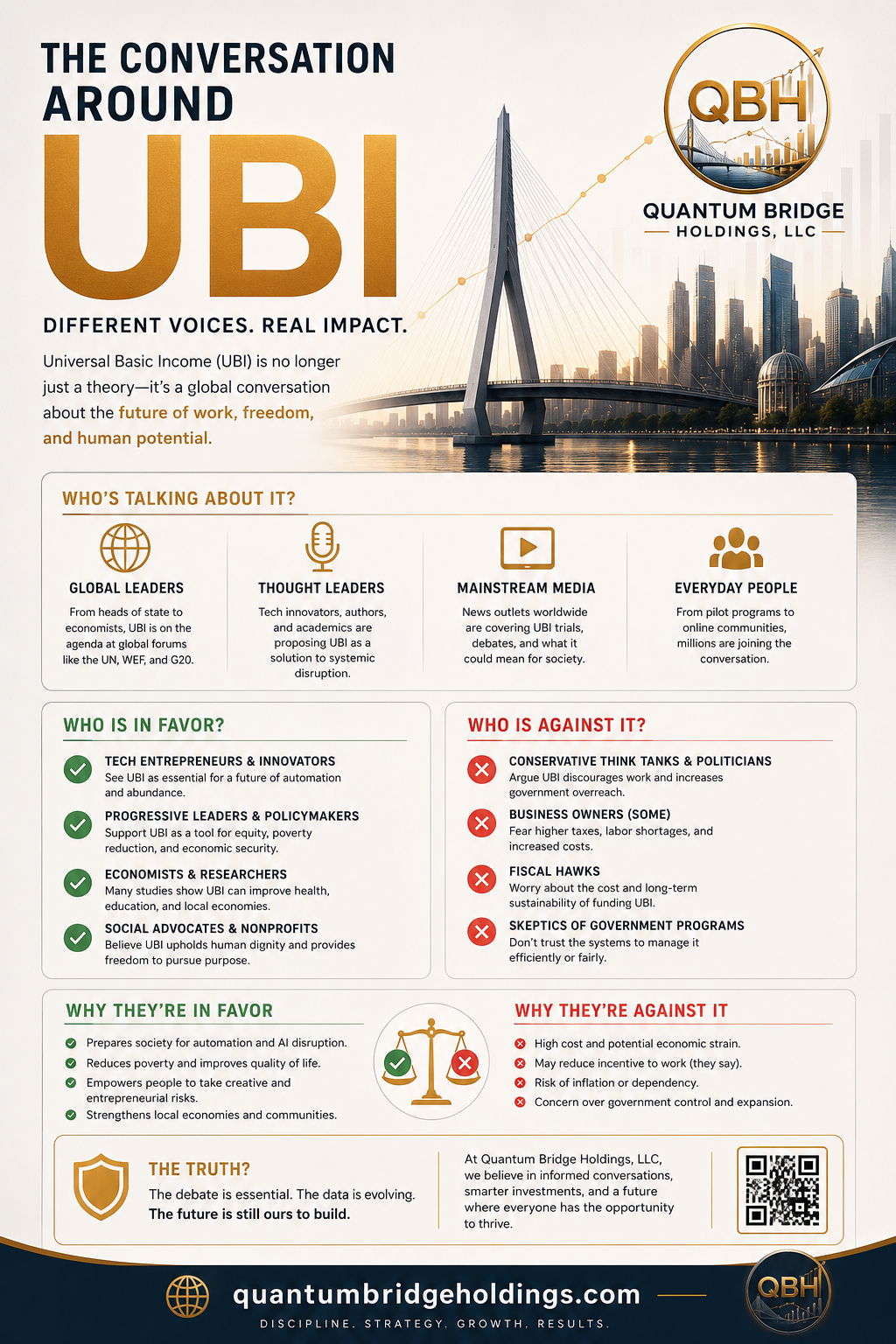
The UBI conversation includes technologists, economists, politicians, labor advocates, futurists, and everyday workers.
Automation and artificial intelligence are pushing UBI into the mainstream because many people expect job disruption to accelerate.
Economists debate whether cash support reduces poverty efficiently or creates unsustainable fiscal and inflation pressure.
Local pilot programs and anti-poverty organizations often focus on dignity, stability, mental health, and family outcomes.
Policymakers are interested in whether UBI could simplify benefits, reduce poverty, or calm social pressure during disruption.
Some worry about higher taxes and labor shortages. Others see stronger consumer spending and more startup risk-taking.
For investors and builders, UBI is also a signal about labor markets, public debt, inflation, consumer behavior, and social trust.
Two sides can be true at once: the current system is failing many people, and a poorly designed replacement can create new problems.
If technology changes the meaning of work, society needs a better answer than dependency or panic.
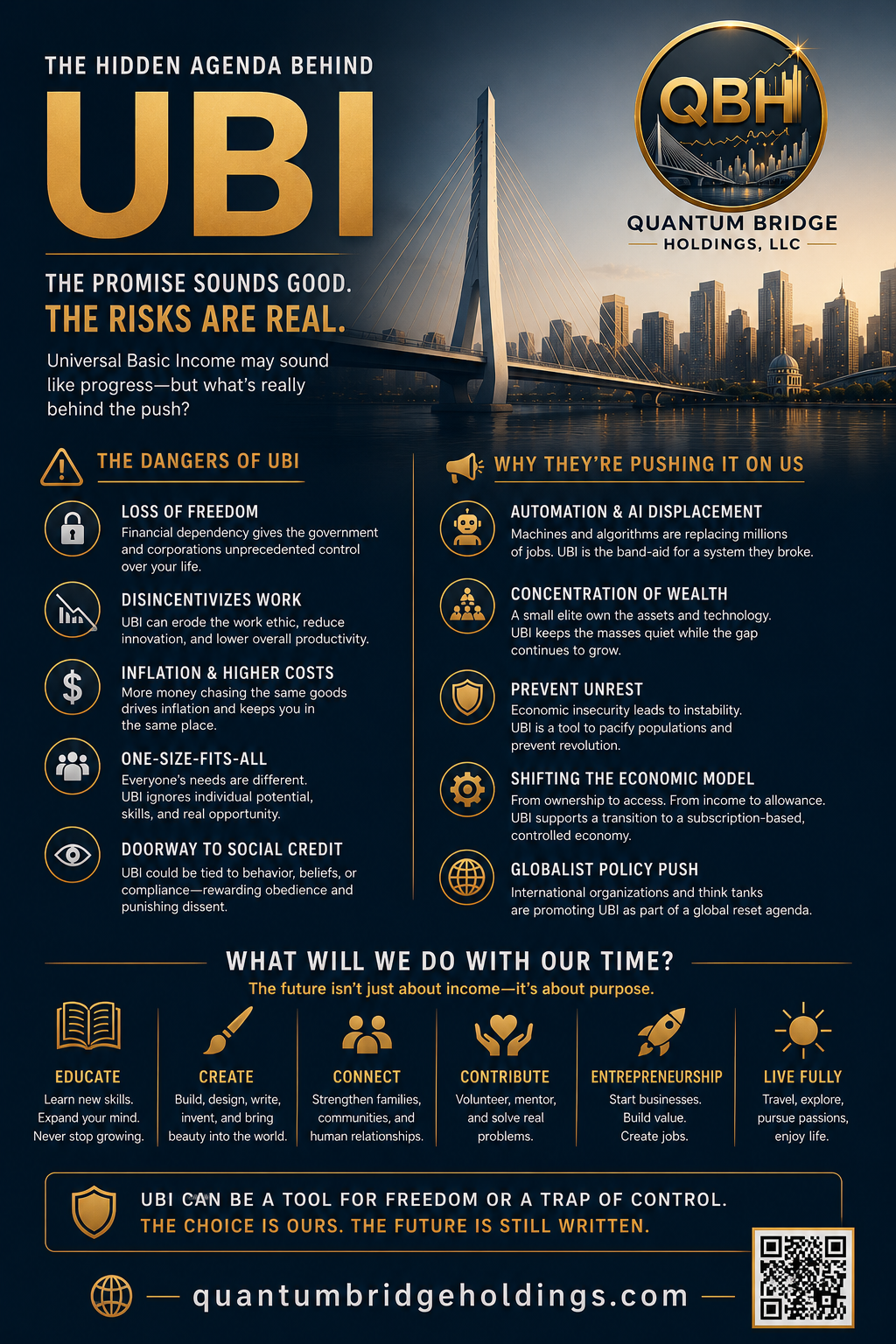
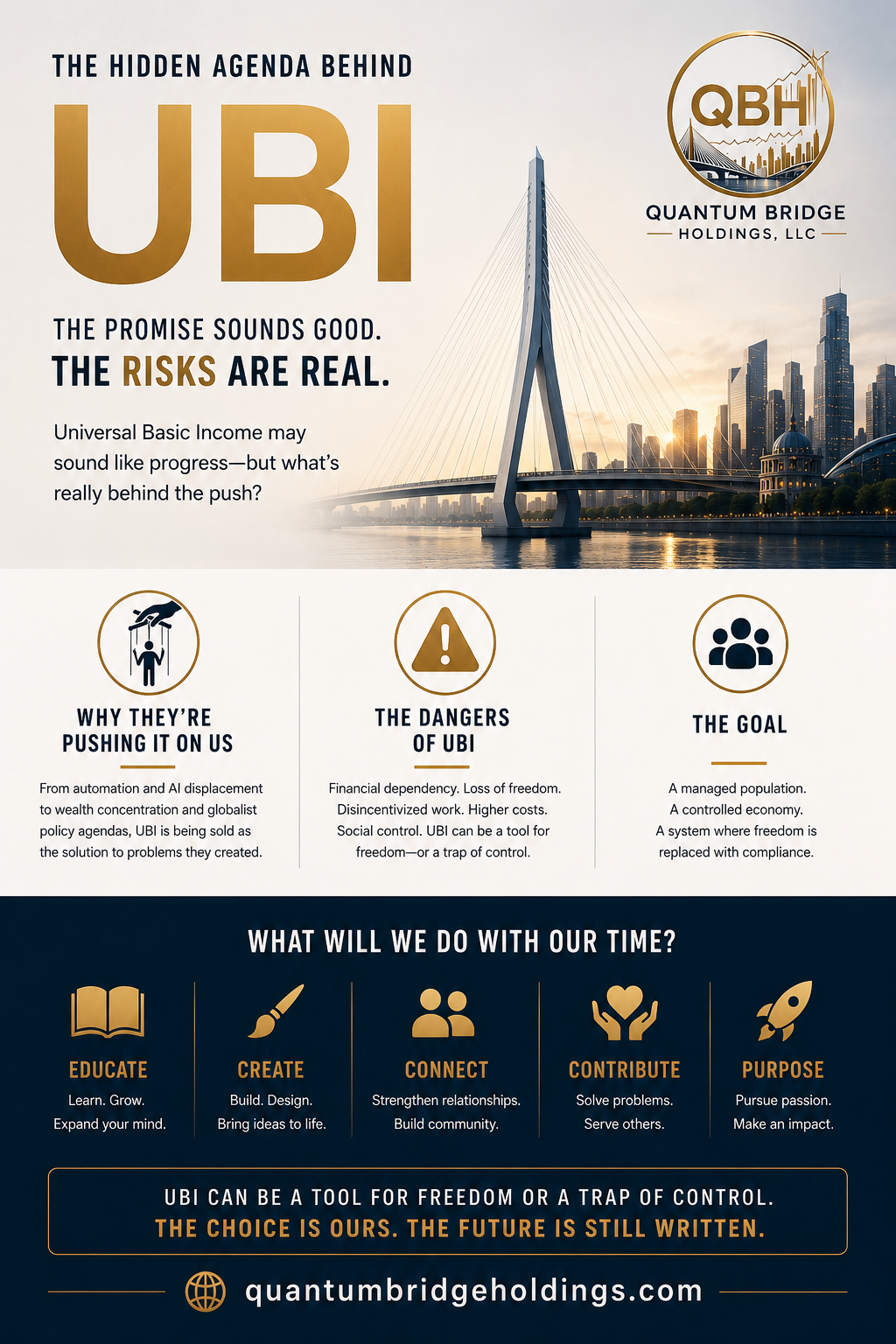
A curated visual brief from Quantum Bridge designed to support public education, policy discussion, investor awareness, and responsible conversation around Universal Basic Income.


This article contains QBH Publications editorial analysis. No external source links were included in the original article.