
Mar 23, 2026 – Mar 27, 2026
This is a full 5-day U.S. trading week. There is no NYSE holiday during March 23–27, with the next full-market closure coming on Good Friday, April 3, 2026. This week’s setup is more about earnings dispersion and cross-asset sensitivity to oil than about a packed domestic data slate.
- Mon–Fri: 9:30 a.m.–4:00 p.m. ET (8:30 a.m.–3:00 p.m. CT).
| Mon Mar 23 | Tue Mar 24 | Wed Mar 25 | Thu Mar 26 | Fri Mar 27 |
|---|---|---|---|---|
|
WRD
WeRide Before OpenAutonomous-driving demand, commercialization pace, and liquidity runway.
|
SFD
Smithfield Foods 9:00aProtein pricing, packaged-meats margins, and consumer staples tone.
CNM
Core & Main ScheduledWater infrastructure demand and municipal/non-residential read-through.
GME
GameStop After CloseMeme-stock volatility, cash balance, and any strategic capital allocation commentary.
KBH
KB Home After CloseOrders, cancellation rates, affordability pressures, and housing demand signal.
|
CHWY
Chewy Before OpenAutoship growth, margin durability, and consumer discretionary resilience.
PAYX
Paychex 9:30a CallSmall-business hiring, payroll trends, and wage/benefits backdrop.
JEF
Jefferies ScheduledCapital-markets tone, advisory pipeline, and trading environment.
|
PONY
Pony.ai Before OpenRobotaxi commercialization, partnerships, and mass-production milestones.
BRP
BRP 9:00aPowersports demand, dealer inventories, and discretionary spend signal.
CMC
Commercial Metals 11:00a CallSteel margins, construction exposure, and infrastructure sensitivity.
AGX
Argan 5:00pPower-project pipeline and engineering/procurement execution.
|
CCL
Carnival Before OpenFuel-cost sensitivity, booking trends, pricing power, and cruise demand into summer.
CCL
Carnival Earnings Call 10:00aManagement commentary on fuel, itineraries, and margin outlook could move the travel complex.
|
Highlighted names reflect company-confirmed reporting dates when available, plus a few widely tracked scheduled reports for market context.
Macro Catalysts — Lighter Calendar, But Plenty of Event Windows
The U.S. macro slate is lighter than a payrolls/CPI week, but it still has tradeable checkpoints. Monday brings the delayed January construction spending report. Tuesday adds Q4 productivity and labor costs plus S&P Global flash PMIs. Wednesday delivers February import prices, Thursday brings the weekly initial jobless claims print, and Friday closes with the final March University of Michigan consumer sentiment reading.
| Mon Mar 23 | Tue Mar 24 | Wed Mar 25 | Thu Mar 26 | Fri Mar 27 |
|---|---|---|---|---|
|
US
Construction Spending (Jan) 10:00aDelayed Census release; useful for nonresidential and infrastructure read-through.
|
US
Productivity & Labor Costs (Q4, revised) 8:30aWatch unit labor cost revisions for wage/inflation framing.
US
S&P Global Flash Manufacturing PMI 9:45aFirst look at late-March factory momentum.
US
S&P Global Flash Services PMI 9:45aServices breadth remains critical for the broader growth narrative.
FED
Chair Jerome Powell speaks 1:30pAny oil/inflation comments could reshape rate expectations into quarter-end.
FED
Governor Michael Barr speaks 6:30pCommunity-development remarks, but policy color still matters in this backdrop.
|
US
Import Prices (Feb) 8:30aImportant tariff and pass-through checkpoint while energy markets stay stressed.
FED
Governor Stephen Miran speaks 4:10pBalance-sheet and policy-path remarks could matter for bonds and financials.
|
US
Initial Jobless Claims 8:30aStill the cleanest high-frequency labor-market check each week.
FED
Governor Lisa Cook speaks 4:00pFinancial-stability remarks can still move banks and rates late in the session.
FED
Governor Stephen Miran speaks 6:30pDigital-asset audience, but macro signal is still market relevant.
FED
Vice Chair Philip Jefferson speaks 7:00pEnergy-effects remarks are especially relevant this week.
FED
Governor Michael Barr speaks 7:10pLate headline risk for futures and the Treasury curve.
|
US
U. Michigan Consumer Sentiment (Final March) 10:00aHigh gas prices and conflict headlines make this the most important macro print of the day.
|
Note: several federal indicators remain on staggered release calendars following the funding lapse, so do not assume the usual week/month sequence.
QBH Lens — How We’re Framing the Week
- Base case: The market trades as if this is an earnings-and-oil week, with macro as a secondary accelerator rather than the main engine.
- What matters most: Tuesday’s PMIs, Thursday claims, and Friday sentiment each matter more because investors are trying to estimate how much higher fuel costs will bleed into demand and inflation expectations.
- Execution note: Friday can be deceptively busy with both Carnival and sentiment at the same time, which can create noise in cyclicals, travel, energy, and rate-sensitive growth.
🌍 Global Markets — Oil, Rates, and the Dollar Are Still the Traffic Lights
Global markets started the week with a sharp relief move after President Trump said talks with Iran had been “productive” and extended by five days his deadline tied to reopening the Strait of Hormuz, even as Iran publicly denied that direct talks had occurred and warned that any attack on its southern coast or islands could trigger mine-laying and a broader Gulf shutdown. That clash keeps the market in a headline-heavy, credibility-sensitive regime where oil, shipping, airlines, and broad risk assets can reverse quickly.
- Treasuries: If crude eases, the front end usually gets relief; if energy re-accelerates, bond yields can reprice even on modest data.
- Dollar: A firmer USD can tighten financial conditions and pressure commodity-linked cyclicals outside energy; a softer USD can cushion the move.
- Oil: Reuters reported Goldman Sachs raised its 2026 Brent forecast and still sees near-term prices carrying a large geopolitical premium if Hormuz disruptions persist.
- Supply buffers: Reuters also reported the IEA is discussing further emergency stock releases with governments, which means policy intervention is now part of the price path.
Politics, Policy & Geopolitics — March 23–27, 2026
Strait of Hormuz narrative clash
This week’s core geopolitical dispute is no longer just “talks happened” vs. “no talks happened.” It is also whether the Strait of Hormuz is actually moving toward a practical reopening. Trump’s message pointed investors toward reopening and de-escalation; Iran’s official line pointed toward continued control, conditional passage, and even wider closure risk if its southern assets are attacked.
- Framed the waterway as needing to reopen.
- Extended the deadline tied to reopening by five days.
- Suggested contacts with Iran were underway and that conditions could improve.
- Denied the talk-through being described by Washington.
- Did not signal any unconditional reopening on U.S. terms.
- Warned that a southern coastal or island attack could bring mine-laying and effective Gulf closure.
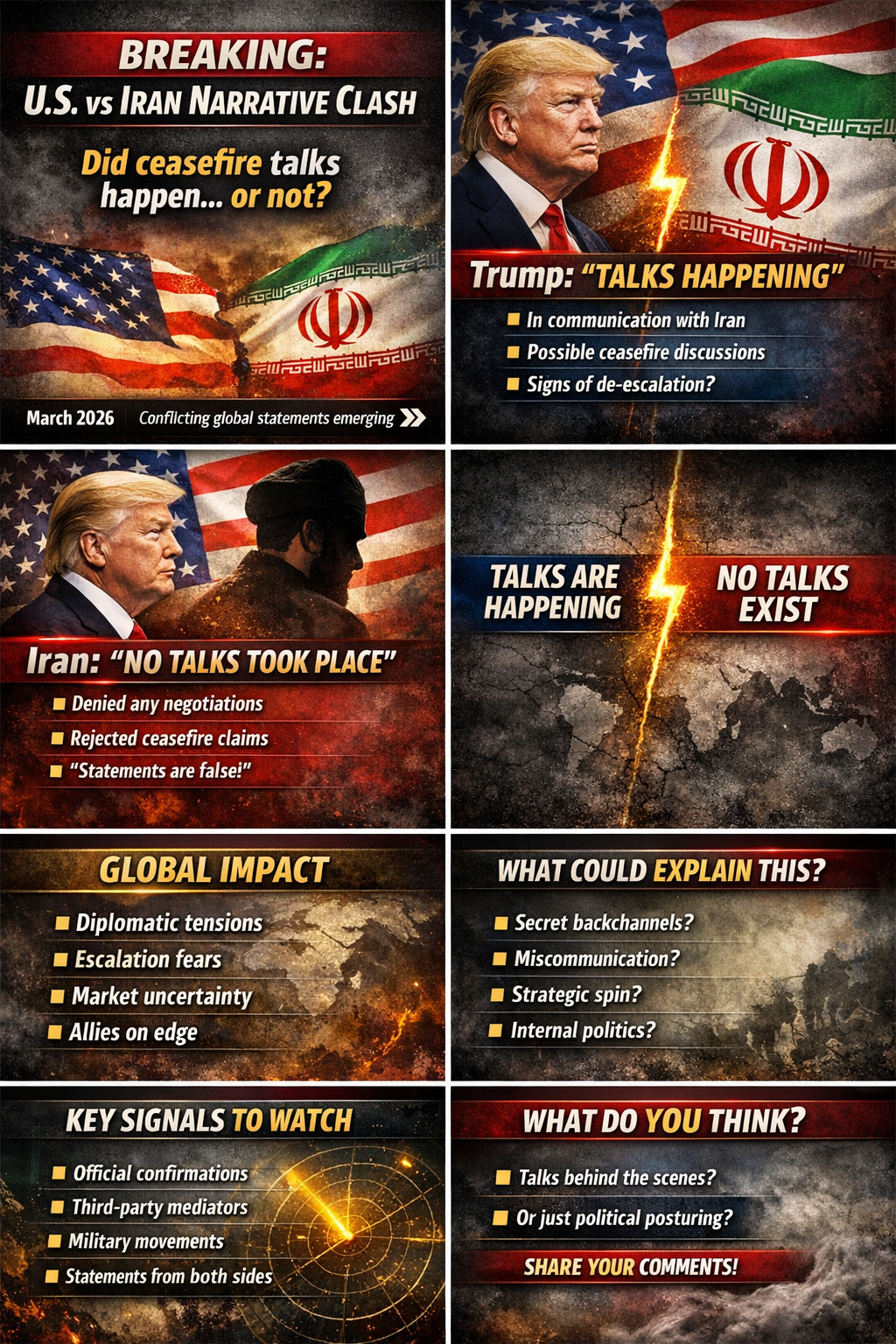
- Iran headline risk: Markets rallied after Trump said talks were productive and linked that optimism to reopening the Strait, but Iran denied the diplomacy and kept signaling that passage remains contingent on Tehran’s terms and regional security conditions.
- Energy security: The market is still trading around the Strait of Hormuz risk premium, not just around normal supply-demand balances.
- Consumer pressure: Higher gasoline costs feed directly into Friday’s sentiment read and indirectly into spending expectations.
- Sector rotation: Airlines, cruises, transports, retailers, and rate-sensitive growth names all react differently depending on whether oil settles down or re-accelerates.
- Policy overlap: Fed speakers this week will be read through the lens of energy-driven inflation risk, even when the speech topic is something else.
- Execution risk: In this setup, one verified maritime headline can matter more than a scheduled macro number.
Corporate Actions & Flows — Positioning Notes for This Week
- Tuesday after close: GameStop + KB Home make for a high-beta pairing that can create very different reactions in retail speculators vs. housing-sensitive investors.
- Wednesday morning: Chewy and Paychex offer a useful consumer + small-business labor combo.
- Thursday morning: Pony.ai, BRP, Commercial Metals, and claims all hit the tape in a tight sequence, which can produce fast factor rotation.
- Friday morning: Carnival and consumer sentiment create a direct travel-demand vs. fuel-cost stress test.
Week in Focus — Earnings Dispersion Meets Oil-Driven Macro Sensitivity
- Macro is modest, but not irrelevant: Tuesday PMIs and Friday sentiment become more important because the market is testing the economic fallout from higher energy prices.
- Earnings are broad enough to matter: This week touches consumer, housing, payrolls, infrastructure, autonomy, metals, and travel — a useful cross-section of the economy.
- The real regime variable is oil: If the market keeps believing in de-escalation, cyclicals can stabilize. If the diplomatic story breaks down, inflation fears can re-tighten financial conditions quickly.
- Operational note: Some government releases remain on adjusted calendars, so keep official schedules bookmarked rather than relying on the usual cadence.
Sources
- NYSE hours & calendars(nyse.com)