 Quantum Bridge

Inflation ran hot; now the Fed stops talking
Coverage Monday–Friday, Oct. 19–23, 2026. Times are Eastern; Central is one hour earlier.

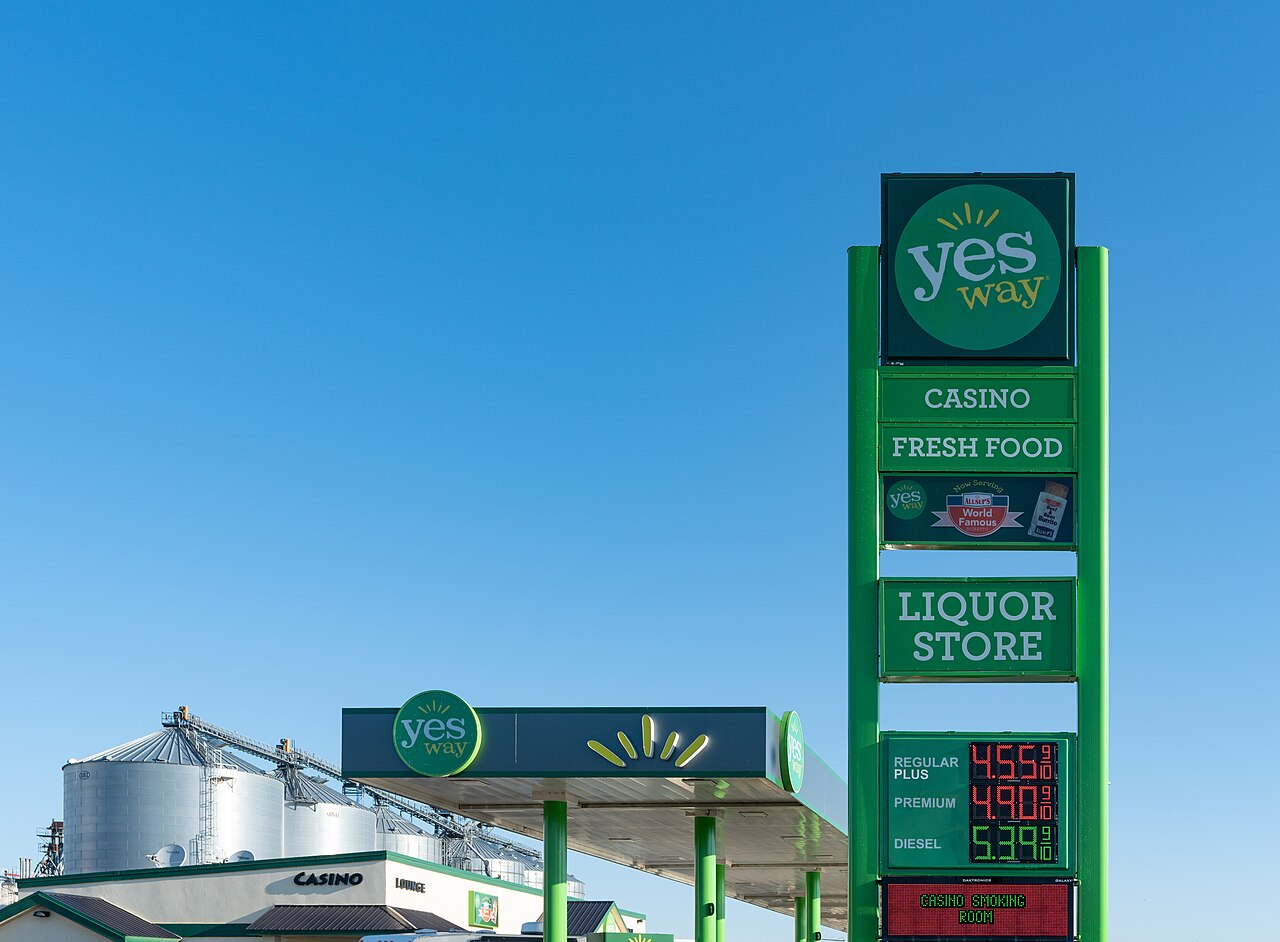
Last week delivered the inflation test the Fed had set up — and the readings ran hot. The consumer price index rose 0.6% in September, lifting the annual rate to 3.7% from 3.4%. Energy prices jumped 5.2% in the month and gasoline 9.1%. Core CPI, which excludes food and energy, rose 0.3% and is up 2.6% from a year earlier. The next morning, producer prices for final demand rose 1.3%, which the Bureau of Labor Statistics called “the largest advance since rising 1.7 percent in March 2022.” Import prices added 1.1%.
Markets split. The Nasdaq Composite fell 4.48% for the week and the S&P 500 1.95%, while the Dow rose 0.67%. Treasury yields fell rather than rose: the 10-year closed Friday at 5.09%, down 15 basis points, and the 30-year dropped 17. On Monday the 10-year was back at 5.15%.
The Fed’s Beige Book described the strain behind the numbers. “Higher oil prices permeated all District reports,” it said, and three Districts called overall price growth “robust.” Activity was uneven, and “over half of the Districts noted that consumer spending was driven by high-income households.” Real hourly earnings fell 0.5% in September, so paychecks lost ground to prices again.
This week the Fed is silent. Its blackout began Saturday and runs through Oct. 29, the day after the decision. The data calendar is light — housing starts Tuesday, the leading index Thursday, flash PMIs and final Michigan sentiment Friday — so earnings carry the week. Netflix reports Tuesday; Meta, Tesla, IBM and Texas Instruments report after Wednesday’s close; GM, GE Aerospace, RTX and Northrop report Tuesday morning; and American Express closes the week on Friday.
The energy shock is spreading through the pipeline
Headline CPI now runs 1.1 points above core, and producer prices are rising more than twice as fast as consumer prices. The Fed’s question for Oct. 28 is how much of that reaches core prices.
Meta and Tesla report after a 4.5% Nasdaq drop
Meta guided to $61–$64 billion of third-quarter revenue and up to $145 billion of 2026 capital spending. Wednesday’s results test whether AI spending is still paying off.
Spending held up, mostly through prices
Retail sales rose 0.8% in September, barely ahead of the 0.6% rise in consumer prices. Excluding autos and gasoline, sales rose about 0.25% (QBH arithmetic). Friday’s final Michigan survey updates inflation expectations.
A blackout before a live meeting
The September minutes said most officials expected another hike by year end. Fed officials cannot comment on last week’s data until after the Oct. 28 decision.
Tech sold off, the Dow rose and yields fell
Official closing levels and Treasury par yields. These are last week’s levels, not forecasts.
Bars show the 10-year par yield on a scale from 5.00% to 5.30%, so small moves are visible. The bond market was closed Monday, Oct. 12, for Columbus Day.
The S&P 500 closed at 7,807.24 Monday and 7,805.45 Tuesday, then fell to 7,718.94 on CPI day. It recovered to 7,744.06 Thursday before Friday’s drop to 7,659.44. The Nasdaq did worse at every step: from 27,366.17 a week earlier to 26,140.03 on Friday. The Dow, which holds fewer technology names, gained 347 points to 52,002.41.
The bond market’s move ran against the inflation data. The biggest drop came Thursday, the day of PPI and retail sales, when the 10-year fell nine basis points to 5.10%. The curve flattened: the 2-year fell six basis points and the 10-year 15, leaving the 2-to-10-year spread at about 35 basis points, down from 44 (QBH arithmetic). In QBH’s reading, falling long-term yields alongside a tech selloff look more like a shift toward safety than a bet on lower inflation.
Oil: the latest official prices are from Oct. 14
The Energy Information Administration’s daily spot series ran through Wednesday, Oct. 14, when WTI was $101.91 a barrel and Brent $126.55. WTI crossed $100 on Oct. 13 ($100.86), up from $98.73 on Oct. 9; Brent eased from $130.03. EIA has not yet published prices for Oct. 15–16, so Friday’s settlement is not quoted here.
What last week’s data showed
All released Oct. 13–16 by the agency or survey named.
$745.0B, +6.3% y/y. August revised up to +1.3%. Census.
September m/m; −0.7% y/y. Nominal hourly earnings +0.1%. BLS.
+8.1% y/y; fuel imports +34.5% y/y. Exports +2.2%. BLS.
September; manufacturing +0.3%, utilities +3.5%. Utilization 76.9%. Fed G.17.
Empire up 18, highest in nearly five years. Philly down from 37.8; new orders 4.3.
Week ending Oct. 10; 4-week average 198,500; continuing 1.710M. DOL.
+1.5% m/m, −2.2% y/y; median $417,500; 4.8 months’ supply. NAR.
Sales +1.1%; inventory/sales ratio 1.33 vs. 1.40 a year earlier. Census.
2026 growth, world / U.S. U.S. unchanged from April; 2027 U.S. raised to 2.3%.
Inflation: September’s CPI was driven by energy, which rose 20.4% from a year earlier, but it was not only energy. Shelter rose 0.4% in the month, and core climbed to 2.6% a year from 2.4%. Producer and import prices point to more pressure in the pipeline: final-demand PPI excluding food, energy and trade rose 0.5%, and goods prices at the producer level jumped 2.6%.
Factories: The regional surveys disagreed. New York’s index rose to its highest in nearly five years while Philadelphia’s fell 17 points, with new orders down 25. In both, prices remain the common thread — Philadelphia’s prices-received index rose to its highest since May 2025. Industrial production rose 0.7%, helped by a 3.5% jump at utilities; manufacturing rose 0.3%.
Abroad: China’s producer prices rose 5.0% from a year earlier in September and consumer prices 0.9%, and its third-quarter GDP, released Sunday night, grew 4.5% from a year earlier. The IMF’s October outlook put 2026 global inflation at 4.7%.
Confirmed weekly calendar
Only events confirmed by the issuing agency, central bank or company are listed. No Fed officials speak this week.
Fed blackout
Runs Oct. 17–29. No Board speeches are scheduled.
China Q3 GDP — released
+4.5% y/y, +1.2% q/q. September retail sales +1.1% y/y.
FITB — reported
Fifth Third released results; call 9:00 a.m.
13- and 26-week bills
$95B at 4.095% and $82B at 4.220%.
ZION
Zions; call 5:30 p.m.
China loan prime rates
Due before 9:00 a.m. Beijing Tue. Prior: 1-yr 3.0%, 5-yr 3.5%.
GM • GE • RTX • NOC • MMM
Also EFX, HAS, KEY and HAL. Details below.
Housing starts — Sept.
Census. August: 1.275M annual rate, −2.6%; permits 1.394M.
State unemployment — Sept.
BLS. National rate 4.1% in August.
6-week bill
$95B. 4-, 8- and 17-week sizes announced.
NFLX • COF • ISRG • UAL
Netflix ~4:01 p.m.; interview 4:45 p.m.
ABT • ELV • T • PM • TMO • DHR
Also Moody’s.
Usual weekly earnings — Q3
BLS. Q2 median $1,251 a week, +4.6% y/y.
EIA petroleum report
Prior week: crude −8.6M barrels.
20-year bond reopening
$13B. September’s reopening cleared at 5.420%.
META • TSLA • IBM • TXN
Also LRCX, SAP, CSX, LVS and LUV.
LMT • PG • UNP • HON • CMCSA
Also BX, AAL, HBAN and DOW. Nestlé and Hermès overnight.
Jobless claims
Prior 199,000; 4-week average 198,500.
Leading Economic Index — Sept.
Conference Board. August −0.1% to 99.5.
Kansas City Fed manufacturing
September composite 14.
EIA gas storage
Prior: +67 Bcf to 3,567 Bcf.
5-year TIPS (new)
$26B. April’s auction cleared at 1.367%.
NEM
Newmont; call 5:30 p.m.
Europe flash PMIs
France, Germany, euro area and U.K.
AXP
American Express; call 8:30 a.m.
U.S. flash PMI — Oct.
S&P Global. September composite 58.4.
Michigan sentiment — Oct. final
Preliminary 46.3; 1-yr inflation expectations 4.7%.
Just outside this window
Durable goods and new-home sales are due Oct. 27. The Fed decides at 2:00 p.m. Oct. 28, the same morning as the Bank of Canada. Advance Q3 GDP and September personal income and spending follow Oct. 29, when the European Central Bank also decides; the Bank of Japan announces Oct. 30. Microsoft and Alphabet report Oct. 28, Amazon and Intel Oct. 29. The October jobs report is Nov. 6 and October CPI Nov. 10. Federal funding runs through Dec. 11.
The data spoke; the Fed can’t answer yet
The blackout means last week’s inflation reports go into the Oct. 27–28 meeting without public comment from officials.
Raised 25 bp on Sept. 16 by a 12–0 vote.
From the second Saturday before the meeting to the day after it.
Statement 2:00 p.m.; press conference 2:30 p.m.
A week ago, the Fed’s September minutes said “most participants” expected another rate increase “would likely be appropriate by year end,” and Governor Waller said policy would be “focused on the inflation side of our mandate.” September’s data then added to the inflation case. Headline CPI rose to 3.7%, core to 2.6%, and producer prices posted their biggest monthly rise in four and a half years.
The Beige Book, compiled for the meeting, gave the anecdotes behind those figures. Eight Districts described price growth as moderate and three as robust, and “higher oil prices permeated all District reports.” Hiring was flat — “most Districts described little or no net change in overall employment levels” — and five Districts said AI was leading firms to reduce or delay hiring.
What that means for this week: With officials silent, markets will read Fed thinking from the data that remains. In QBH’s view, the most relevant item is Friday’s final Michigan survey, the last read on household inflation expectations before the decision. The preliminary October figure put year-ahead expectations at 4.7% and long-run expectations at 3.5%, both up from September.
Core moved up
Core CPI rose 0.3% in September and to 2.6% a year from 2.4%. The minutes’ worry — energy costs spreading into other prices — now has some evidence behind it.
Michigan final
Long-run inflation expectations rose to 3.5% in the preliminary reading. A further rise would add to the case the minutes made.
A live decision
The Fed raised rates in September by a 12–0 vote. It has not signaled when the next move would come, only that most officials expect one by year end.
Interpretation discipline
Chair Warsh spoke Thursday night in Bangkok with IMF Managing Director Georgieva, but no transcript has been posted on the Fed’s website, so this briefing does not quote him. Vice Chair for Supervision Bowman’s Oct. 14 speech covered bank supervision, not monetary policy. Regional Fed presidents are also in the blackout.
Long-dated supply returns: a 20-year bond and new 5-year TIPS
Sizes and prior results from TreasuryDirect.
| Auction | Day & time | Size | Previous comparable result |
|---|---|---|---|
| 13- and 26-week bills | Mon. 11:30 a.m. (done) | $95B / $82B | Cleared at 4.095% and 4.220%; bid-to-cover 2.77 and 2.84. |
| 6-week bill | Tue. 11:30 a.m. | $95B | Oct. 13: 3.980%, bid-to-cover 2.58. |
| 17-week bill | Wed. 11:30 a.m. | Announced Tue. | Oct. 14: $75B at 4.195%, bid-to-cover 2.79. |
| 20-year bond (reopening) | Wed. 1:00 p.m. | $13B | Sept. 15 reopening: 5.420%, bid-to-cover 2.57. 5.125% coupon, matures Aug. 2046. |
| 4- and 8-week bills | Thu. 11:30 a.m. | Announced Tue. | Oct. 15: $110B at 4.000% and $105B at 4.050%. |
| 5-year TIPS (new issue) | Thu. 1:00 p.m. | $26B | Apr. 23 auction: 1.367%, bid-to-cover 2.57. Matures Oct. 15, 2031. |
The TIPS auction is the one to watch. Treasury Inflation-Protected Securities pay more when CPI rises, so Thursday’s $26 billion sale of new five-year TIPS gives a direct read on how much inflation protection investors want after a 0.6% CPI month. Wednesday’s 20-year reopening tests demand for long bonds after a week in which the 30-year yield fell 17 basis points, the most on the curve.
Energy: In the week ending Oct. 9, commercial crude stocks fell 8.6 million barrels to 415.6 million, gasoline rose 3.5 million and distillates fell 2.5 million, according to EIA. Natural gas storage rose 67 billion cubic feet to 3,567 Bcf, 45 Bcf above the five-year average. With WTI above $100 and Brent near $127 as of Oct. 14, energy remains the main driver of headline inflation.
Six reports to watch, with last quarter’s baseline
Prior-quarter figures come from each company’s own Q2 release filed with the SEC. They set context; they are not estimates of this week’s results.

Netflix
- Prior quarter
- Revenue $12.56B, +13% (+12% excluding currency); operating margin 33.4%; EPS $0.80 vs. $0.72.
- Q3 forecast
- Revenue $12.86B, +11.7%; operating margin 33.2%; EPS $0.82.
- FY2026
- Revenue $51.0–$51.4B; operating margin 31.5%; ad revenue roughly doubling to about $3B.
- Watch
- Revenue against the company’s own $12.86B forecast, and progress toward the $3B advertising goal.
“The results of our recent price changes are consistent with prior changes and our expectations.” — Netflix Q2 shareholder letter

Meta Platforms
- Prior quarter
- Revenue $60.80B, +28%; net income $15.85B, −14%; EPS $6.18 vs. $7.14, after $2.40B of legal charges and $1.18B of severance.
- Spending
- Capex $31.08B in the quarter; free cash flow $784M. Reality Labs operating loss $4.62B.
- Guidance
- Q3 revenue $61–$64B. FY2026 expenses $165–$169B; capex $130–$145B.
- Watch
- Revenue against the $61–$64B range, and whether the capex range moves again.
“AI is accelerating our core business today, powering our next generation of products, and opening the door to entirely new enterprise opportunities.” — CEO Mark Zuckerberg, Q2

Tesla
- Prior quarter
- Revenue $28.24B, +26%; GAAP net income $1.11B; EPS $0.32 GAAP, $0.33 non-GAAP.
- Margins & cash
- Gross margin 16.8%; operating margin 1.4%; free cash flow −$1.09B; cash and investments $43.5B.
- Q3 deliveries
- 486,532 vehicles, up from 480,126 in Q2; 13.7 GWh of energy storage. Already reported Oct. 2.
- Watch
- Whether margins and cash flow recover; Tesla gives no numeric guidance.

IBM
- Prior quarter
- Revenue $17.2B, +1%; EPS $2.27 GAAP, $2.93 operating (+5%).
- Segments
- Software $7.8B, +5% (Red Hat +11%); consulting $5.3B, flat; infrastructure $3.8B, −7%.
- FY2026
- Constant-currency revenue growth 4–5%; free cash flow up about $1B.
- Watch
- Software growth, after the CFO cited “revenue headwinds late in the second quarter.”

General Motors
- Prior quarter
- Revenue $48.03B, +1.9%; net income $1.31B, −31%; EPS $1.41 GAAP, $3.57 adjusted.
- Operations
- EBIT-adjusted $3.94B (8.2% margin); North America $3.45B; adjusted automotive free cash flow $5.03B.
- FY2026
- Raised twice: EBIT-adjusted $14–$16B; adjusted EPS $12–$14; adjusted auto free cash flow $9.5–$11.5B.
- Watch
- Whether the twice-raised outlook holds with gasoline up 34% from a year ago.

American Express
- Prior quarter
- Revenue net of interest expense $19.64B, +10%; net income $3.11B; EPS $4.53, +11%.
- Credit
- Billed business $455.8B, +9%; provisions $1.1B vs. $1.4B; net write-off rate 2.0%.
- FY2026
- Revenue growth raised to 10%; EPS $17.30–$17.90.
- Watch
- Card spending growth against the Beige Book’s report that high-income households are carrying consumer spending.
“We had another excellent quarter, with 10 percent revenue growth, EPS of $4.53, and Card Member spending growth of 9 percent.” — CEO Stephen J. Squeri, Q2
Also reporting this week
| Company | Day | Release | Call (ET) |
|---|---|---|---|
| Fifth Third (FITB) | Mon. Oct. 19 | Before the open (reported) | 9:00 a.m. |
| Zions (ZION) | Mon. Oct. 19 | After the close | 5:30 p.m. |
| GE Aerospace (GE) | Tue. Oct. 20 | Before the open | 7:30 a.m. |
| RTX (RTX) | Tue. Oct. 20 | Before the open | 8:30 a.m. |
| Northrop Grumman (NOC) | Tue. Oct. 20 | Before the open | 9:30 a.m. |
| 3M (MMM) | Tue. Oct. 20 | Time not stated | 9:00 a.m. |
| Equifax (EFX) | Tue. Oct. 20 | 6:30 a.m. | 8:30 a.m. |
| Hasbro (HAS) | Tue. Oct. 20 | Before the open | 8:30 a.m. |
| KeyCorp (KEY) | Tue. Oct. 20 | Before the open | 8:00 a.m. |
| Halliburton (HAL) | Tue. Oct. 20 | Before the open | 9:00 a.m. |
| Capital One (COF) | Tue. Oct. 20 | ~4:05 p.m. | 5:00 p.m. |
| Intuitive Surgical (ISRG) | Tue. Oct. 20 | Time not stated | 4:30 p.m. |
| United Airlines (UAL) | Tue. Oct. 20 | After the close | Wed. 10:30 a.m. |
| Elevance Health (ELV) | Wed. Oct. 21 | 6:00 a.m. | 8:30 a.m. |
| Abbott (ABT) | Wed. Oct. 21 | Before the open | 9:00 a.m. |
| Philip Morris (PM) | Wed. Oct. 21 | ~7:00 a.m. | 9:00 a.m. |
| AT&T (T) | Wed. Oct. 21 | Before the open | 8:30 a.m. |
| Danaher (DHR) | Wed. Oct. 21 | 6:00 a.m. | 8:00 a.m. |
| Thermo Fisher (TMO) | Wed. Oct. 21 | Before the open | 7:00 a.m. |
| Moody’s (MCO) | Wed. Oct. 21 | Before the open | 9:00 a.m. |
| Texas Instruments (TXN) | Wed. Oct. 21 | Time not stated | 4:30 p.m. |
| Lam Research (LRCX) | Wed. Oct. 21 | Time not stated | 5:00 p.m. |
| SAP (SAP) | Wed. Oct. 21 | 4:05 p.m. | 5:00 p.m. |
| CSX (CSX) | Wed. Oct. 21 | After the close | 4:30 p.m. |
| Las Vegas Sands (LVS) | Wed. Oct. 21 | After the close | ~4:30 p.m. |
| Texas Capital (TCBI) | Wed. Oct. 21 | After the close | 5:00 p.m. |
| Southwest Airlines (LUV) | Wed. Oct. 21 | After the close | Thu. 10:00 a.m. |
| Nestlé (nine-month sales) | Thu. Oct. 22 | 1:00 a.m. | 3:30 a.m. |
| Hermès | Thu. Oct. 22 | 2:00 a.m. | 3:00 a.m. |
| Roche | Thu. Oct. 22 | Before Swiss open | 8:00 a.m. |
| Lockheed Martin (LMT) | Thu. Oct. 22 | Before the open | 8:30 a.m. |
| Procter & Gamble (PG) | Thu. Oct. 22 | Time not stated | 8:30 a.m. |
| Comcast (CMCSA) | Thu. Oct. 22 | Before the call | 8:30 a.m. |
| Union Pacific (UNP) | Thu. Oct. 22 | 7:45 a.m. | 8:45 a.m. |
| Honeywell (HON) | Thu. Oct. 22 | Before the open | 8:30 a.m. |
| Blackstone (BX) | Thu. Oct. 22 | Time not stated | 9:00 a.m. |
| American Airlines (AAL) | Thu. Oct. 22 | Time not stated | 8:30 a.m. |
| Huntington (HBAN) | Thu. Oct. 22 | Before the open | 9:00 a.m. |
| Dow (DOW) | Thu. Oct. 22 | Before the open | 8:00 a.m. |
| L’Oréal | Thu. Oct. 22 | 12:00 p.m. | 12:30 p.m. |
| Newmont (NEM) | Thu. Oct. 22 | After the close | 5:30 p.m. |
Dates and times are from each company’s own announcement; “time not stated” means the notice gives a call time only. European times are converted at six hours ahead of Eastern; Europe changes clocks Oct. 25. Next week: Verizon (Oct. 26); Coca-Cola, Boeing and Visa (Oct. 27); Microsoft, Alphabet, Ford and GE Vernova (Oct. 28); Amazon, Intel and Mastercard (Oct. 29).
What the banks and chipmakers reported
From each company’s own release filed with the SEC. A follow-up to last week’s briefing.
| Company | Q3 results | Against last week’s baseline |
|---|---|---|
| JPMorgan Chase (JPM) | Revenue $50.9B managed, +8%; EPS $5.57, or $5.75 excluding $658M of securities losses. NII $27.1B, +13%. | Raised FY NII outlook to about $106.2B from $105.5B. Card charge-off rate 2.91%, under the 3.2% guide. |
| Goldman Sachs (GS) | Net revenues $18.68B, +23%; EPS $17.01. Equities $6.44B, +72% again; advisory a record $1.65B. | Below Q2’s $20.34B and $20.98. The investment-banking backlog decreased from Q2. |
| Bank of America (BAC) | Revenue $30.0B, +3%; EPS $0.91, or $1.08 excluding a $1.2B settlement charge. NII $16.4B, +8%. | Investment-banking fees −11% and sales and trading −5% from a year ago. |
| Morgan Stanley (MS) | Net revenues $20.3B vs. $18.2B; EPS $3.03; equity revenues $5.8B, +41%. | Record $232B of wealth net new assets, just over half IPO-related. |
| Wells Fargo (WFC) | Revenue $21.87B, +2%; EPS $1.87, +13%. NII $12.52B, +5%. | Average loans +11%; CET1 10.0%, from 10.3%. |
| Citigroup (C) | Revenue $23.8B, +8%; EPS $2.85 vs. $1.86. Services +15%. | Capital returned $4.1B; CET1 unchanged at 12.8%. |
| ASML (ASML) | Sales €11.66B; gross margin 57.5%; EPS €12.95. | Top of the €11–€12B guide. Q4 guide €14.2–€15.2B; FY €44–€45B. |
| TSMC (TSM) | Revenue US$46.72B, +41.2%; gross margin 66.4%; 2nm 8% of wafer revenue, from 3%. | Beat the US$44.6–$45.8B guide. Q4 guide US$52.3–$54.3B. |
| Company | Results | Outlook |
|---|---|---|
| UnitedHealth (UNH) | Revenue $112.7B; adjusted EPS $4.69; medical care ratio 88.4%. | Raised FY adjusted EPS to at least $20.50, from $19.50–$20.00. |
| Johnson & Johnson (JNJ) | Sales $25.4B, +5.9%; adjusted EPS $2.59; GAAP EPS $0.09 after a talc-settlement and acquisition charge. | Raised FY adjusted EPS to $11.05–$11.15. |
| BlackRock (BLK) | Revenue $7.75B, +19%; adjusted EPS $15.93, +38%. | AUM $15.5T; Q3 net inflows $205B. |
| Travelers (TRV) | Core EPS $9.18 vs. $8.14; combined ratio 86.8%. | Record net investment income of $1.10B pre-tax. |
| Prologis (PLD) | Core FFO $1.60 vs. $1.49. | FY core FFO narrowed to $6.25–$6.29; FY net EPS cut to $4.05–$4.15. |
| Truist (TFC) | EPS $0.56, or $1.16 adjusted, after a $1.4B securities-repositioning loss. | Agreed to sell $7.7B of LightStream loans. |
| Alcoa (AA) | Revenue $3.70B vs. $3.97B in Q2; adjusted EPS $1.82 vs. $2.12. | Higher Q4 production and shipments expected. |
| J.B. Hunt (JBHT) | Revenue $3.68B, +20%; EPS $1.82. | Intermodal loads +8%; Dedicated operating income −22%. |
Strong against last year, softer against a record spring. Every one of the six big banks earned less than in the second quarter, but most were well ahead of a year earlier, TSMC beat its own revenue forecast, and ASML landed near the top of its range. Bank chiefs named the same risks the data showed. Wells Fargo CEO Charlie Scharf said “higher interest rates, higher oil prices and persistent inflation create risks to the economy,” though “the investment in AI infrastructure, high employment levels and consistent wage growth continue to outweigh the risks.” JPMorgan’s Jamie Dimon listed “large fiscal deficits, sticky inflation, elevated asset prices, rising interest rates and geopolitical conditions.” At ASML, CEO Christophe Fouquet said “some customers are expressing an interest in placing orders with us for 2029 and even 2030.”
What each release can add
Previous readings are the latest published figures; the right-hand column is QBH analysis.
| Release | When | Previous reading | What to examine |
|---|---|---|---|
| Housing starts — Sept. | Tue. 8:30 | Aug.: 1.275M, −2.6%; single-family 918,000, +7.6%; permits 1.394M, −2.7%. | With the 10-year above 5%, permits show whether builders are planning for fewer homes. |
| State unemployment — Sept. | Tue. 10:00 | Aug.: rates fell in 8 states and D.C., steady in 42. | A geographic check on a labor market the Beige Book called flat. |
| Usual weekly earnings — Q3 | Wed. 10:00 | Q2: median $1,251, +4.6% y/y. | Whether quarterly wage growth kept pace with 3.7% inflation. |
| Jobless claims | Thu. 8:30 | 199,000; 4-week average 198,500; continuing 1.710M. | Layoffs remain low; a jump would be the first sign of the slowdown the Fed is not expecting. |
| Leading Economic Index — Sept. | Thu. 10:00 | Aug.: −0.1% to 99.5; July +0.2%. | A summary of forward-looking indicators while the Fed is silent. |
| Kansas City Fed manufacturing — Oct. | Thu. | Sept. composite 14. | A third regional survey after New York’s jump and Philadelphia’s drop. |
| Flash PMIs — Oct. | Fri. 9:45 | Sept. U.S. composite 58.4; services 58.8. | Price components matter most after last week’s PPI. |
| Michigan sentiment — Oct. final | Fri. 10:00 | Prelim. 46.3; inflation expectations 1-yr 4.7%, long-run 3.5%. | The last read on household inflation expectations before Oct. 28. |
How to read the week — analysis, not forecasts
Each row describes what a pattern would suggest and what evidence would test it.
| If the evidence shows… | Possible interpretation | What would test it |
|---|---|---|
| Long-run inflation expectations rise again | Adds to the minutes’ case for another hike on Oct. 28. | Friday’s Michigan final; demand at Thursday’s TIPS auction. |
| Meta raises spending and revenue together | AI investment is still paying for itself, which could steady the Nasdaq after last week’s drop. | Meta’s Q4 revenue guide and capex range; Texas Instruments and Lam the same evening. |
| Tesla margins stay near Q2’s 1.4% | Higher deliveries are not yet turning into profit. | Gross margin, free cash flow and any comment on pricing. |
| Weak housing starts and permits | Long-term rates above 5% are reaching the real economy. | Single-family permits; homebuilder commentary. |
| Strong card spending at American Express | Supports the Beige Book’s finding that high-income households are carrying consumer spending. | AmEx billed business and write-offs against Capital One’s Tuesday results. |
Last week’s scenarios, checked
The first row of last week’s table — “core CPI firm, energy still rising” — is what happened, and PPI and import prices confirmed the pressure. Treasury yields, however, fell. Bank results were strong against a year ago, but JPMorgan’s card losses ran below guidance rather than above it. TSMC beat its guidance and ASML reached the high end of its range, close to the last row’s scenario.
The weekly lens
The Fed has gone quiet just as the data turned against it. With officials silent until Oct. 29, the week’s signals come from companies — whether AI spending, car sales and card spending held up through a quarter of rising energy costs — and from Friday’s read on what households expect inflation to do next.
Primary and current sources
Official agency and issuer sources are used for every figure and schedule.
- BLS — Consumer Price Index, September 2026Headline, core, energy, gasoline and shelter.
- BLS — Producer Price Index, September 2026Final demand +1.3%; core measures.
- BLS — Import and Export Prices, September 2026Imports +1.1%, +8.1% y/y.
- BLS — Real Earnings, September 2026Real hourly earnings −0.5% m/m.
- BLS — October 2026 scheduleState employment Oct. 20; usual weekly earnings Oct. 21.
- BLS — Usual Weekly Earnings, Q2 2026Median $1,251.
- Census Bureau — advance retail salesSeptember +0.8%, $745.0B; August revision.
- Census Bureau — business inventoriesAugust +0.4%; ratio 1.33.
- Census Bureau — new residential constructionAugust starts and permits.
- Census Bureau — 2026 indicator calendarHousing starts, durable goods and new-home sales dates.
- Federal Reserve — Beige Book, October 2026Activity, labor and price quotes.
- Federal Reserve — G.17 industrial productionSeptember +0.7%; utilization 76.9%.
- Federal Reserve — October 2026 calendarNo Board speeches Oct. 16–31; FOMC Oct. 27–28.
- Federal Reserve — FOMC communication policyBlackout period rules.
- Federal Reserve — FOMC minutes, Sept. 15–16“Most participants” on another increase.
- Federal Reserve — Bowman, Oct. 14Supervision; no monetary-policy content.
- New York Fed — Empire State surveyOctober 25.5; prices paid 59.5.
- Philadelphia Fed — Manufacturing Business OutlookOctober 20.9; new orders 4.3.
- Kansas City Fed — manufacturing survey datesOctober release; September composite 14.
- Department of Labor — weekly claims199,000 initial; 1.710M continuing.
- NAR — existing-home sales, September3.99M; median $417,500.
- Conference Board — Leading Economic IndexOct. 22 release; August 99.5.
- University of Michigan — Surveys of ConsumersOctober preliminary 46.3; final Oct. 23.
- S&P Global — PMI release datesFlash PMIs Oct. 22–23 (UTC converted to ET).
- U.S. Treasury — daily par yield curveOct. 9–19 yields for the 2-, 10- and 30-year.
- TreasuryDirect — announced auctions20-year $13B; 5-year TIPS $26B; bill sizes.
- TreasuryDirect — Oct. 15 offering announcement20-year reopening and 5-year TIPS terms.
- FRED — S&P 500, Dow and Nasdaq closesDaily closes Oct. 9–16.
- EIA — spot pricesWTI and Brent through Oct. 14.
- EIA — weekly petroleum status reportInventories, week ending Oct. 9.
- EIA — natural gas storage+67 Bcf to 3,567 Bcf.
- IMF — World Economic Outlook, October 2026World 3.1%, U.S. 2.3% in 2026.
- National Bureau of Statistics of China — Q3 GDP+4.5% y/y. September PPI.
- Congress.gov — H.R. 6500Funding through Dec. 11, 2026.
- Netflix — Q2 2026 letterBaseline and forecast. Q3 timing.
- Meta — Q2 2026 resultsBaseline and guidance. Q3 timing.
- Tesla — Q2 2026 updateBaseline. Q3 deliveries and timing.
- IBM — Q2 2026 resultsBaseline. Q3 timing.
- General Motors — Q2 2026 resultsBaseline. Q3 timing.
- American Express — Q2 2026 resultsBaseline. 2026 call dates.
- JPMorgan Chase — Q3 2026 resultsEarnings, NII, card charge-offs and Dimon quote.
- Goldman Sachs — Q3 2026 resultsNet revenues, segments and backlog.
- Bank of America — Q3 2026 resultsRevenue, EPS and settlement charge.
- Morgan Stanley — Q3 2026 resultsNet revenues and wealth flows.
- Wells Fargo — Q3 2026 resultsRevenue, EPS and Scharf quote.
- Citigroup — Q3 2026 resultsRevenue, EPS and capital.
- ASML — Q3 2026 resultsSales, margin, guidance and Fouquet quote.
- TSMC — Q3 2026 results and guidanceRevenue, margins, node mix and Q4 guidance.
- UnitedHealth Group — Q3 2026 resultsRevenue, EPS and raised outlook.
- Johnson & Johnson — Q3 2026 resultsSales, EPS and guidance.
- BlackRock — Q3 2026 resultsRevenue, EPS, AUM and flows.
- Travelers — Q3 2026 resultsCore EPS and combined ratio.
- Prologis — Q3 2026 resultsCore FFO and guidance.
- Truist — Q3 2026 resultsEPS and securities repositioning.
- Alcoa — Q3 2026 resultsRevenue, EPS and outlook.
- J.B. Hunt — Q3 2026 resultsRevenue, EPS and segment trends.
- Fifth Third — Q3 2026 releaseReleased Oct. 19.
- RTX — Q3 timingOct. 20; call 8:30 a.m.
- Northrop Grumman — Q3 timingOct. 20; call 9:30 a.m.
- GE Aerospace — eventsOct. 20 call.
- Elevance Health — Q3 timingOct. 21; call 8:30 a.m.
- Abbott — Q3 call noticeOct. 21; call 9:00 a.m.
- AT&T — Q3 timingOct. 21; call 8:30 a.m.
- Texas Instruments — Q3 call noticeOct. 21; call 4:30 p.m.
- Lockheed Martin — Q3 webcastOct. 22; call 8:30 a.m.
- Procter & Gamble — fiscal Q1 webcastOct. 22; call 8:30 a.m.
- Union Pacific — Q3 timingOct. 22; release 7:45 a.m.
- Blackstone — Q3 callOct. 22; call 9:00 a.m.
- United Airlines — Q3 webcastResults Oct. 20 after close; call Oct. 21.
- Southwest Airlines — Q3 timingResults Oct. 21; call Oct. 22.
Methodology: Sources checked October 19, 2026. Monday’s China GDP, bill auction results and Fifth Third release had already been published; all other October 19–23 outcomes were not available at publication, and scheduled events remain subject to change by the issuer. Times published in UTC by their issuers were converted to Eastern. Some company timing notices were read through wire-service copies of the company’s own release or the company’s investor page. The Nasdaq’s Oct. 16 close was cross-checked against market data because FRED had not yet posted it. Oil prices after Oct. 14 and any remarks by Chair Warsh could not be confirmed from a primary source and are left out. Prior-period figures are reported results, not estimates; no analyst consensus is used. Interpretation and scenarios are QBH analysis. This material is general market commentary and is not personalized investment, legal or tax advice.